Amazon's 2026 pricing rules: what sellers need to know
Amazon's 2026 pricing rules change how promotions work. Understand the 50% rule, the 90-day window and forced Prime Day discounts — and protect your margin.
Run one too many discounts this year and Amazon may quietly decide your product is worth less. Permanently. That's the blunt version of what's changed in 2026, and it's caught out sellers who thought they were just being generous with a promotion.
Here's the thing most people miss. Amazon has always kept a "standard price" in the background — the number it treats as your product's real, everyday value. In 2026 that number got teeth. Sell below it for too long, and the standard price itself resets downward, dragging your strike-through savings and your future margin with it. Let's walk through exactly how that works, and how to run promotions without accidentally training Amazon to expect a permanent sale.
The 50% rule, in plain English
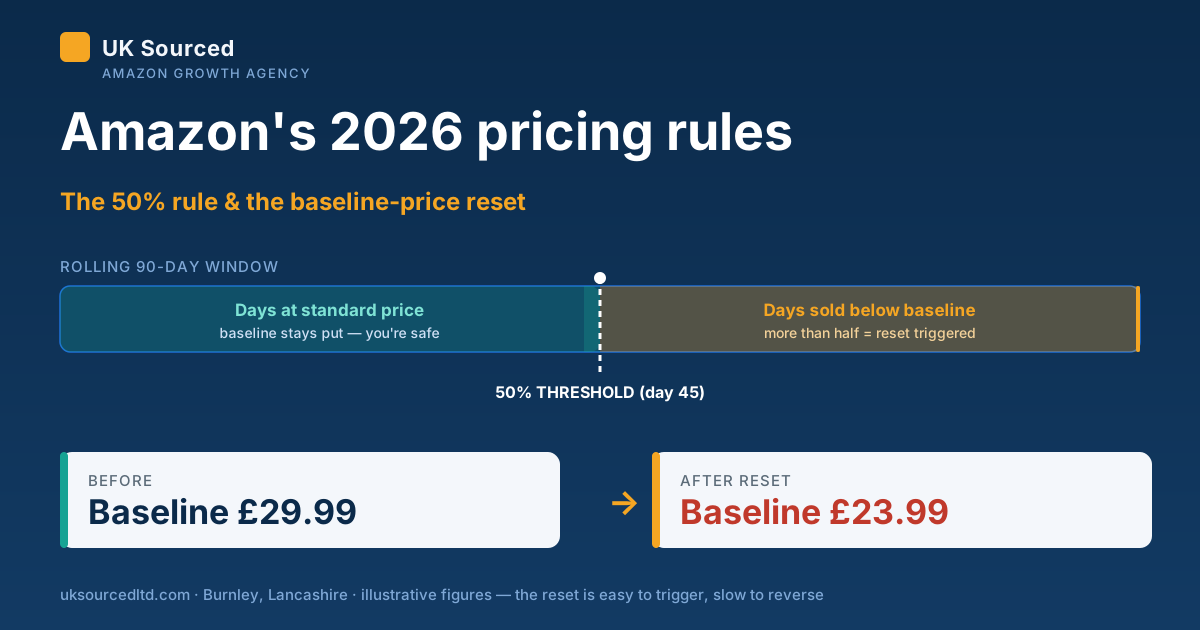
Amazon looks at a rolling window of the last 90 days. It's watching how often you sell below your standard (baseline) price during that window.
If you spend more than half of those 90 days selling below your standard price — through deals, coupons, sale prices, whatever pulls the number down — Amazon takes that as a signal. The signal it reads is simple: this isn't the real price any more, the discounted price is. So it resets your baseline down to match.
Once that happens, a few things follow, none of them fun. Your strike-through "was" price disappears or shrinks, because Amazon no longer believes it. Any future promotion is measured against the new, lower baseline, so your discounts look smaller to shoppers. And clawing the baseline back up is slow, awkward work — you can't just flip a switch and undo it.
Think of it less as a penalty and more as Amazon calling your bluff. If you sell at "20% off" for most of the quarter, then 20% off is your price, and Amazon's algorithm now treats it that way. The rolling window means it never really stops watching, either. There's no annual reset to hide behind.
Why Amazon's doing this (and why it's not entirely mad)
Amazon hates fake urgency. A strike-through price that's been "on sale" for 300 days a year isn't a sale — it's a con, and it erodes trust in the whole marketplace. The 50% rule is the platform's way of forcing the reference price to mean something.
We actually think the intent is fair. (We're not always this generous about Amazon's rule changes.) A genuine £29.99 product with an occasional real discount is exactly the shopper experience Amazon wants. The trouble is the collateral damage — plenty of legitimate sellers lean on near-constant discounting as a ranking and conversion tactic, and those sellers are the ones who'll get their baseline reset without quite understanding why.
Prime Day just got more expensive to join
The second change is about the big deal events. To get your products featured in Prime Day, and increasingly the autumn sale event too, Amazon now expects deeper mandated discounts than sellers were used to. The old approach of a token few percent off to earn the deal badge? That's largely gone. If you want the visibility, you pay for it in margin, and the minimum discount required to qualify has crept up.
Pair that with the 50% rule and you get a genuine squeeze. A deep Prime Day discount, held over the event, eats into your 90-day window and costs you more per unit. Do a couple of these across a quarter without counting the days, and you can trip the 50% threshold almost by accident — earning yourself a baseline reset as a parting gift from an event you joined to grow.
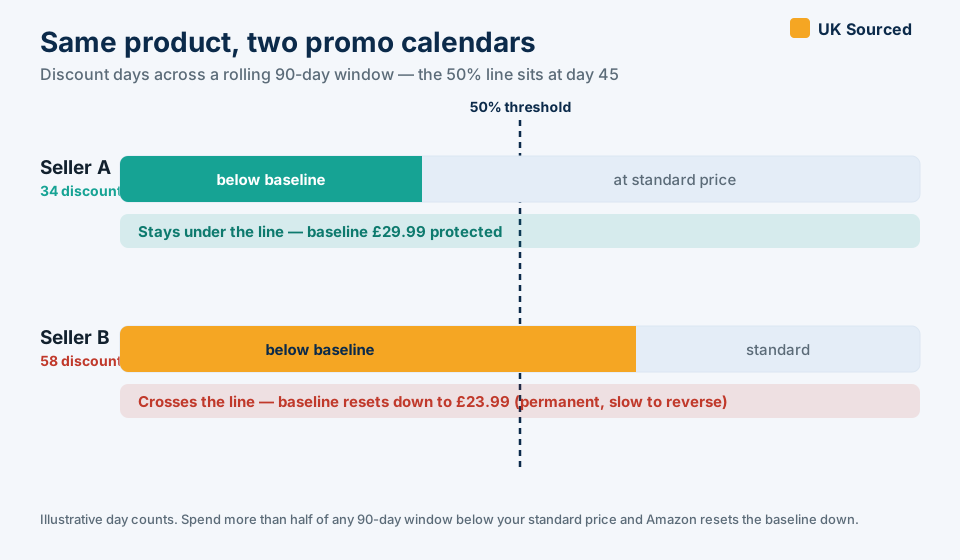 Same product, two promo calendars. One stays safe; one trips the threshold and resets its own baseline down.
So how do you actually protect your margin?
You don't stop running promotions. Discounts still drive rank, reviews and velocity — that hasn't changed. What's changed is that you now have to run them like someone who's counting the days, because Amazon certainly is.
Track your discount days as a budget. This is the big mental shift. You have roughly 44 "below-baseline" days you can spend in any 90-day window before you're in the danger zone. Treat those days as a finite resource. Spend them on the events and pushes that actually move the needle, not on a coupon you forgot to switch off.
Kill your zombie promotions. Go into your account today and look for deals, coupons and sale prices that have been quietly running for months. We find these on nearly every account we take over — a 5% coupon someone added in a launch panic and never removed. Each one is silently burning your 90-day allowance. (One client had four live coupons on a single ASIN. Nobody could remember adding three of them.)
Set a true standard price you're happy to defend. If your "real" price is one you never actually sell at, you've built the problem into your listing. Price the product at a number that works at full margin, then discount from there deliberately. Don't set an aspirational baseline you'll undercut every week.
Plan Prime Day and Q4 backwards from the window. Before you commit to a deep event discount, look at what else you've got running or planned in that 90-day span. If a big event is coming, keep the weeks around it clean so the event itself doesn't push you over the line.
Use the tools that don't count against you. Not every lever pulls the baseline down. Advertising, better images, a stronger title, bundling — these grow sales without touching your standard price at all. When margin's tight, this is where the smart money goes in 2026. Buying rank through permanent discounting was always the lazy option; now it's a costly one too.
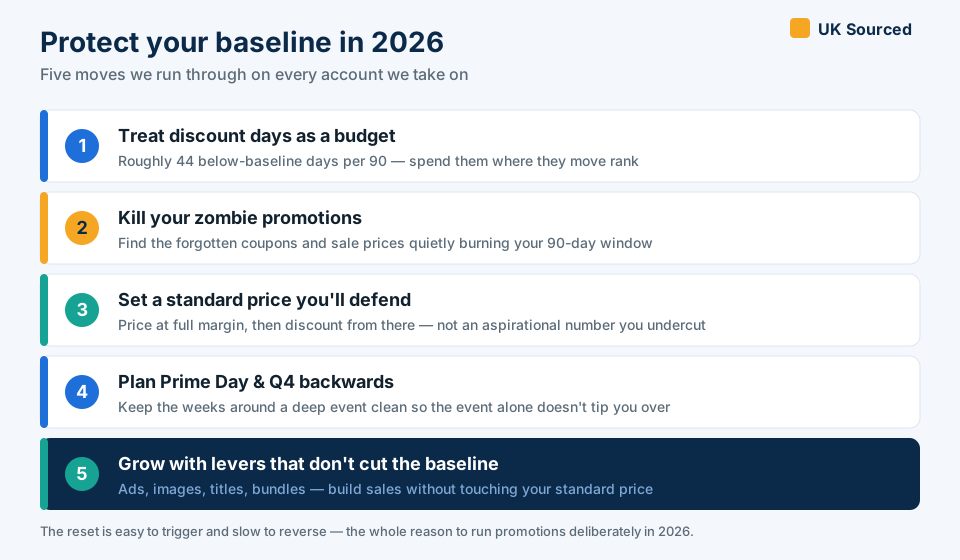 Five moves to keep your baseline intact — the ones we run through on every account.
A quick word on the panic
Some sellers have read the 2026 changes and swung too far the other way — pulling every promotion, terrified of the reset. Don't do that either. A product that never discounts can lose ground to competitors who use deals well and stay the right side of the threshold. The goal isn't zero promotions. It's deliberate promotions, run inside the window, with the standard price protected.
Get that balance right and 2026's rules barely touch you. Get it wrong — drift into constant discounting, forget a coupon, over-commit to events — and you can quietly erode the perceived value of a product you spent years building. The reset is easy to trigger and slow to reverse. That asymmetry is the whole reason to take this seriously now, before your next Prime Day, rather than after.
Auditing a 90-day promo calendar, hunting down zombie coupons and planning event discounts so they don't backfire is fiddly, ongoing work — and it's exactly the sort of thing that's easy to let slide when you're running everything else too. If you'd rather someone kept an eye on your baseline while you get on with the business, that's part of what we do. Drop us a line at enquiries@uksourcedltd.com and we'll take a look at your account.