How do Amazon FBA fees really work in the UK?
Confused by Amazon FBA fees in the UK? A plain breakdown of referral, fulfilment and storage fees — plus the sneaky ones — with a worked example.
You price a product at £19.99, feel pretty good about your margin, and then the first payout lands. It's smaller than you expected. Quite a lot smaller. Where did the money go?
Into fees. And not one fee — a stack of them, some obvious, some hiding in the small print. Amazon FBA (Fulfilment by Amazon) is a brilliant machine, but it takes its cut at several points, and most sellers only find the sneaky ones after they've been charged. Let's pull the whole stack apart so nothing surprises you.
First, the two fees you'll always pay
Before any of the FBA-specific charges, there are two costs that hit almost everyone.
The Professional selling plan costs £25 plus VAT a month. That's a flat subscription, whether you sell one unit or a thousand. It replaces the per-item fee you'd pay on the Individual plan, so once you're shifting more than roughly 35 items a month, the Professional plan is cheaper — and you need it anyway for adverts, the Buy Box and most of the tools that make selling worthwhile.
The referral fee is Amazon's commission on every sale. It's a percentage of the total price the customer pays (item price plus any shipping you charge), and for most categories it's around 15%. Some categories differ — a few sit lower, a handful higher — but if you assume 15% as your working number, you'll rarely be far off. This one you pay on every single order, FBA or not.
So far, so predictable. Now the FBA machine starts charging.
The fulfilment fee: picking, packing, posting
When you use FBA, Amazon stores your stock, picks it off the shelf when an order comes in, packs it, and ships it to the customer. The fulfilment fee pays for all of that, and it's charged per unit sold.
The amount depends almost entirely on size and weight. A small, light item — think a phone case or a paperback — costs Amazon little to send, so the fee is modest. A bulky, heavy item costs more, and a genuinely large one costs a lot more. This is why two products at the same price can have wildly different profitability: the lighter one keeps more of the sale.
The practical takeaway? Weigh and measure your product properly before you commit. We've watched sellers launch something bulky, price it keenly to compete, and only later realise the fulfilment fee was quietly eating the whole margin. (Honestly, this one catches out nearly everyone at least once.)
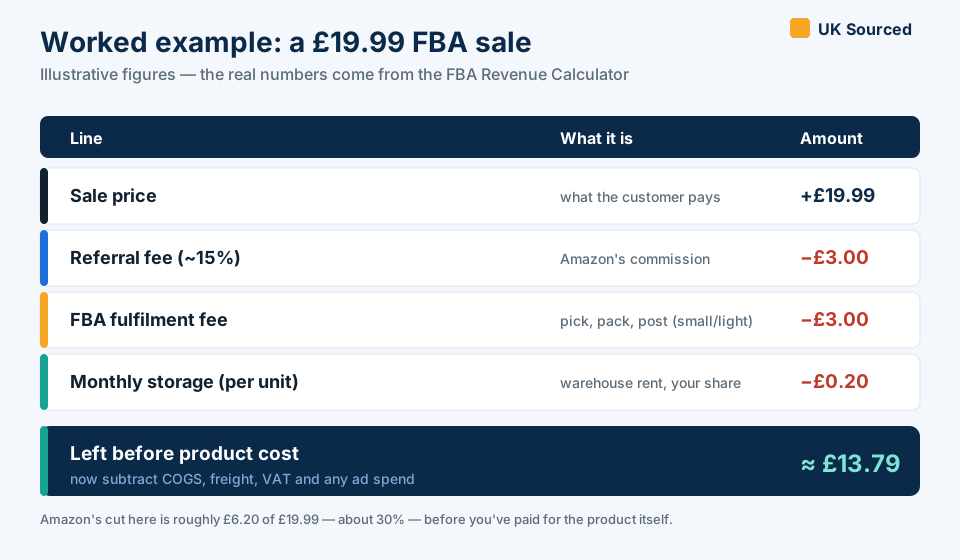 A worked example on a £19.99 sale — illustrative figures, but the shape is real.
Monthly storage: rent on Amazon's warehouse
Your stock sits in an Amazon warehouse, and Amazon charges you rent for the space. Monthly storage fees are calculated on the volume your inventory occupies (cubic metres, not units), and there's a seasonal twist worth knowing: the rate jumps in the busy final quarter of the year, roughly October to December, because warehouse space is at a premium heading into Christmas.
If your stock turns over quickly, storage is a rounding error. If it sits around, it adds up. Which brings us neatly to the fees nobody warns you about.
The sneaky ones (this is where sellers get caught)
These don't show up on the shelf-edge maths. They arrive later, and they're the reason a "profitable" product sometimes isn't.
Long-term storage fees. Stock that lingers gets pricier. Once inventory has sat in the warehouse beyond a set period — think of the very slow movers gathering dust — Amazon adds a surcharge on top of standard storage to nudge you into clearing it. Dead stock isn't just tied-up cash; it's cash that's actively leaking.
The low-inventory fee. A newer and genuinely annoying one. If you consistently run your FBA stock too thin relative to your sales rate, Amazon charges you extra per unit. Their logic is that low stock hurts the customer experience and makes their logistics less efficient. Your logic is that you were trying not to over-order. Both can be true, and you still pay. Steady replenishment is the fix.
Removal and disposal fees. Want your unsold stock back, or destroyed? That costs money too — a per-unit charge to pull it out of the network. Cheaper than paying long-term storage forever, but a cost all the same.
Returns processing. In certain categories, when a customer returns an item, Amazon charges you a fee to handle it — even after you've already paid the fulfilment fee to send it out. High-return categories (clothing is the classic) feel this most. Two fees, one sale, and possibly a refund on top.
None of these are hidden exactly. They're all documented. But they're easy to forget when you're staring at a healthy-looking gross margin, and together they're the gap between the profit you modelled and the profit you banked.
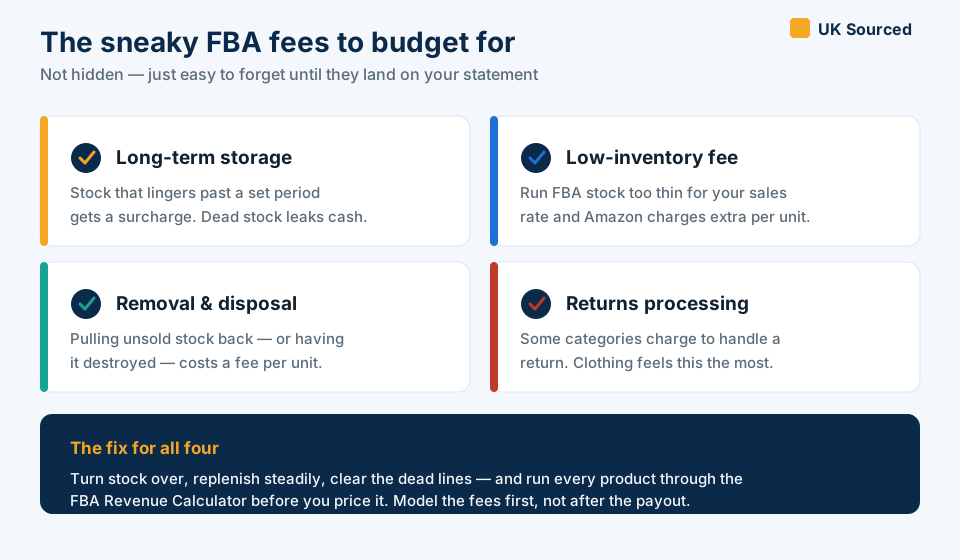 The fees that don't show up in the shelf-edge maths — until they do.
A worked example
Let's put real-ish numbers on it. Say you sell a product for £19.99. Illustrative only — your figures will differ — but it shows the shape.
- Sale price: £19.99
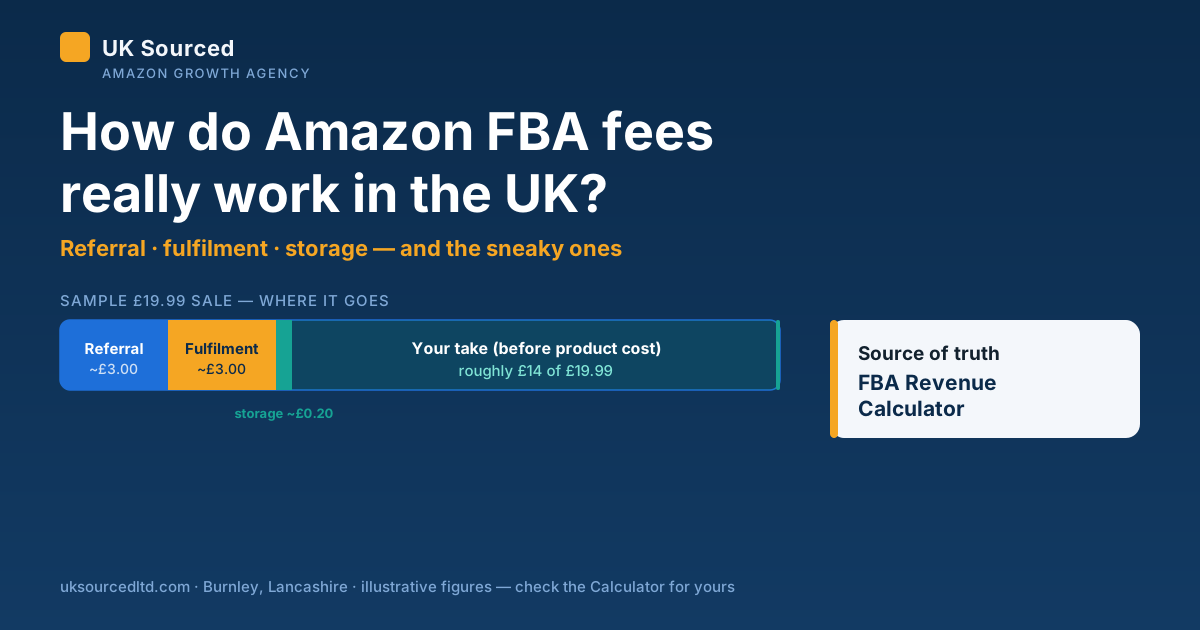
- Referral fee (~15%): about £3.00
- FBA fulfilment fee (small, light item): roughly £2.50 to £3.50 — let's say £3.00
- Share of monthly storage per unit: small, call it £0.10–£0.30
So before you've paid for the product itself, Amazon has taken somewhere around £6 of that £19.99 — call it 30%. Now subtract your cost of goods, your shipping into Amazon, your VAT if you're registered, and any ad spend. Suddenly that "£20 product with a great margin" needs a much closer look.
This is exactly why we tell every seller the same thing: model the fees before you set the price, not after. Reverse into it. Decide the net profit you need per unit, add every fee back on, and that tells you the price you actually have to charge (or the cost price you need to source at).
The single tool that ends the guessing
Here's the good news. You don't have to estimate any of this. Amazon gives you a free tool — the FBA Revenue Calculator — that tells you the exact referral fee, fulfilment fee and storage estimate for any product. Search an ASIN or enter your dimensions, type in your sale price and product cost, and it returns your net proceeds per unit.
Treat the Revenue Calculator as the source of truth. Not a blog (not even this one), not a rule of thumb, not what a mate on a forum told you. The numbers we've used above are deliberately round so you can follow the logic — the Calculator gives you the precise figure for your product, in your category, at your price. Before you launch anything into FBA, run it through there. It takes two minutes and it's saved more launches than we can count.
Working out whether a product actually makes money after Amazon's cut — and then pricing it so it does — is fiddly, and it's the sort of thing that's easy to get subtly wrong. If you'd rather have someone who does this daily sanity-check your numbers, that's part of what we do. Drop us a line at enquiries@uksourcedltd.com and we'll give you a straight answer.