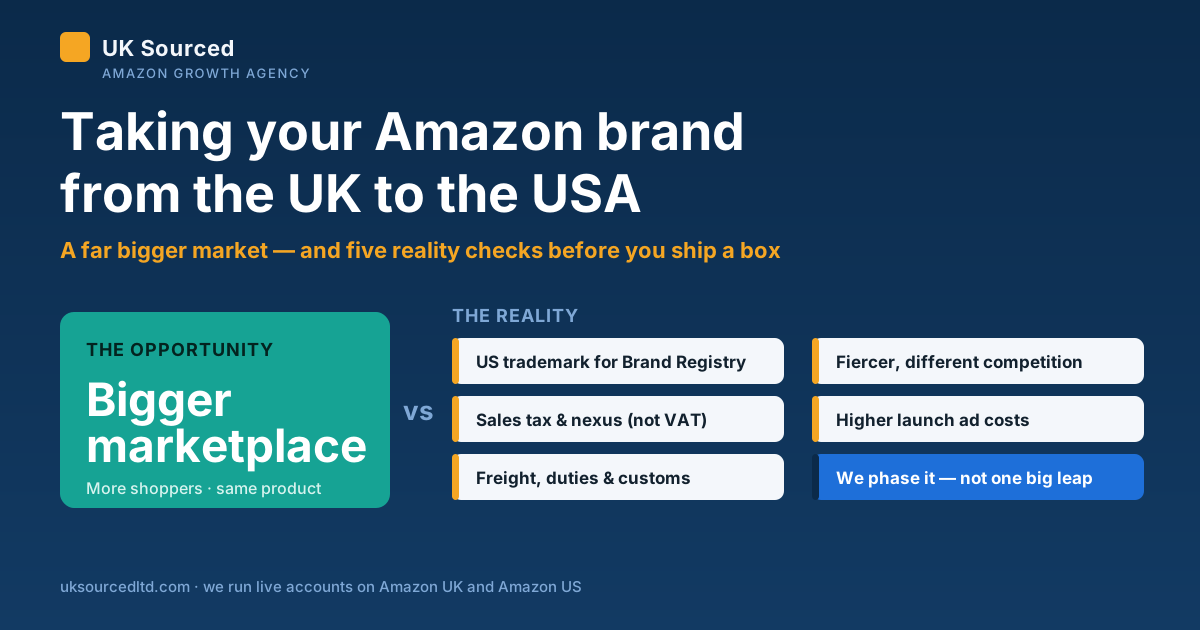
Should I expand my Amazon brand from the UK to the USA?
Thinking of taking your Amazon brand from the UK to the USA? The real opportunity, the trademark and sales-tax traps, and how we'd phase the launch.
The US Amazon marketplace is roughly the size of every European one stacked together. That's the number that gets a founder daydreaming on a Sunday night. Bigger pond, more fish, same product you already sell — what's not to like?
Plenty, if you jump in blind. We run accounts on both Amazon UK and Amazon US, ours and our clients', so this isn't theory for us. The opportunity is real. So are the ways it quietly eats money if you treat the US like a bigger version of home.
Here's the honest version.
The opportunity, briefly
We won't oversell it, because you already get it. The US is Amazon's home turf and its biggest marketplace by a distance. More shoppers, more Prime members, deeper pockets, and a culture that buys online without a second thought.
If your product sells well in the UK, there's a decent chance a version of that demand exists in the States. Same margins, potentially several times the volume. That's the pitch, and for the right brand it holds up.
But "the right brand" is doing a lot of work in that sentence. Let's talk about what actually stands between you and that first US sale.
The five things that trip people up
1. You need a US trademark for Brand Registry
This is the big one, and it's the one most people find out about too late. Your UK trademark does nothing in America. Nothing. Amazon Brand Registry in the US wants a trademark registered (or pending, under the newer IP Accelerator route) with the USPTO — the United States Patent and Trademark Office.
Without Brand Registry you lose the tools that make branding worth doing: A+ content, the Brand Story, Sponsored Brands ads, your Storefront, and — critically — the protection against hijackers who'll happily latch onto a defenceless US listing. A US trademark isn't instant and it isn't free. Budget months, not days, and a few hundred dollars in official fees before you count any attorney help.
Our blunt advice: start the US trademark before you do almost anything else. It's the longest lead-time item on the whole list, so it should be first out of the gate.
2. Sales tax and "nexus" — not VAT, and messier
In the UK, tax is (relatively) tidy. One VAT registration, one threshold, one HMRC. America doesn't do tidy. There's no single national sales tax. Instead you've got a patchwork of state-level rules, and the concept that catches everyone is nexus — basically, a connection to a state strong enough that you owe tax there.
Here's the catch for FBA sellers. When Amazon moves your stock into a warehouse in a given state, that can create nexus there. So your inventory sitting in a fulfilment centre you never chose can trigger a tax obligation you didn't know you had. Most states now make Amazon collect and remit the tax for you (marketplace facilitator laws), which helps a lot — but "helps" isn't "handled". You may still need to register in states where you cross thresholds, and the rules genuinely differ state to state.
Don't guess at this. Get a US-savvy accountant for a couple of hours before you ship a single box. It's cheaper than unpicking it later.
3. Freight, duties and getting stock across the Atlantic
Sending stock from a UK 3PL to a US Amazon warehouse is not the same errand as a domestic restock. You're now dealing with international freight, US customs, import duties, and a customs broker. You'll likely need an EIN (a US tax ID) and, for some product types, an Importer of Record set up.
None of it is exotic — thousands of brands do it every week — but each moving part adds days and cost. Air freight is quick and pricey; sea freight is cheap and slow (think weeks). Get your duty rate wrong and your carefully modelled margin evaporates at the border. Plan the supply chain properly, or your first US stockout arrives about six weeks after launch, right when reviews start landing.
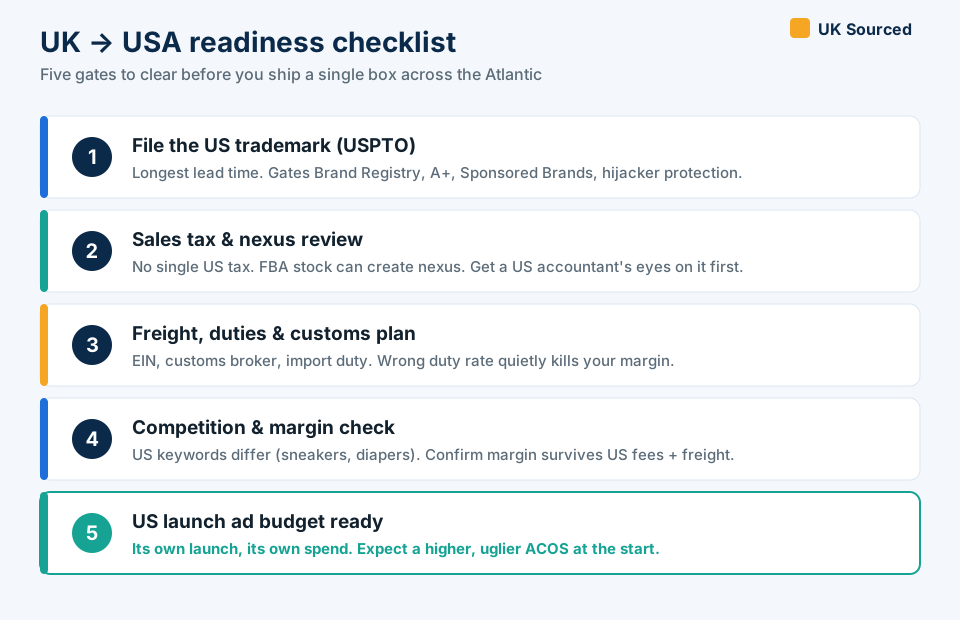 The five gates. Clear all of them before you ship a box, not after.
4. Different competition, different playbook
Your UK bestseller does not arrive in the US with a reputation. You start from zero reviews, zero ranking, and a keyword landscape that reads differently — "trainers" becomes "sneakers", "nappies" becomes "diapers", and the search terms your buyers actually type shift with them. Copy that converts brilliantly in Manchester can fall flat in Miami.
The competition is fiercer too. US categories are often more crowded and more aggressively priced, and you'll be up against sellers with home-turf logistics and years of review history. That's not a reason to stay out. It's a reason to research the specific category properly before committing stock, rather than assuming a UK win transfers automatically. (It sometimes does. We've also watched a sure thing land with a thud because nobody checked the US search terms.)
5. Ad costs and the launch spend
Launching a new listing in a bigger, busier marketplace means the advertising bill to get visible is usually higher than it was in the UK. You're buying your way onto page one against deeper-pocketed rivals, and your early ACOS will look ugly — that's normal for a launch, but you need the budget and the nerve to ride it out.
Treat the US as its own launch with its own budget. It is not a free extension of your UK account.
How we'd actually phase it
Here's the part that matters. We don't launch a US expansion in one big leap, and neither should you. We stage it, so you spend real money only once the cheap checks have passed.
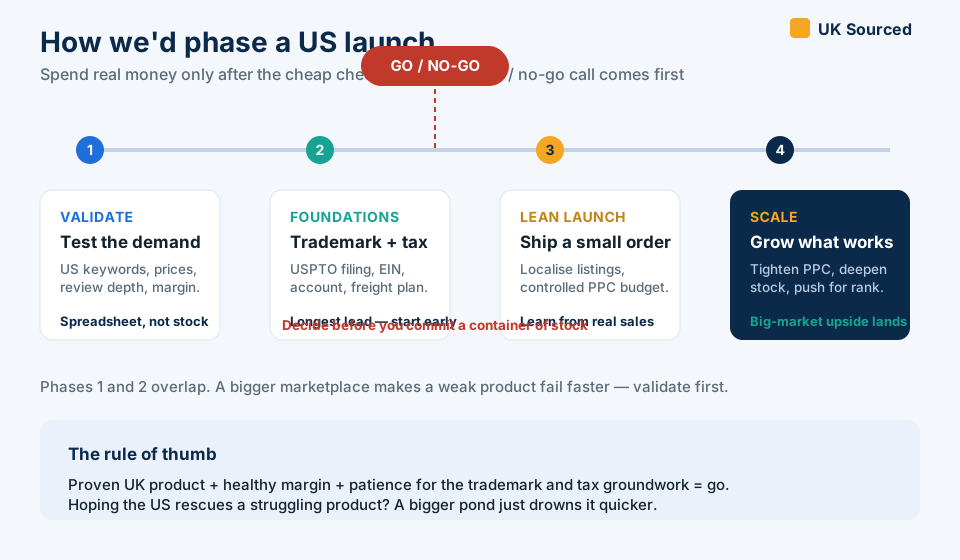 Four phases. The go / no-go call comes before you commit stock, not after.
Phase 1 — Validate (weeks, low cost). Research the US demand and competition for your specific product. Check the keywords, the price points, the review depth of the top listings, and whether your margin survives US fees and freight. This is a spreadsheet exercise, not a shipment. Most of the risk gets killed or confirmed here, cheaply.
Phase 2 — Foundations (runs in parallel). File the US trademark. Sort the tax question with an accountant. Set up the US Amazon account, EIN and freight plan. This phase has the longest lead times, which is exactly why it starts early and overlaps with everything else.
Phase 3 — Lean launch. Ship a deliberately modest first order — enough to test real demand, not enough to bankrupt you if the market shrugs. Localise the listings (US spelling, US keywords, US-relevant imagery), switch Brand Registry on, and start a controlled PPC budget. Now you're learning from actual sales, not forecasts.
Phase 4 — Scale what works. Once the data says the category's biting, tighten the PPC, expand the range, deepen stock, and push for rank. This is where the big-market upside finally shows up — and where an account you've validated properly starts paying you back.
The whole point of phasing is that the go / no-go decision lands before you've committed a container of stock, not after it's sitting unsold in a Kentucky warehouse.
So — should you?
If you've got a proven UK product, healthy margins with room for US fees and freight, and the patience to do the trademark and tax groundwork first — yes, the US is one of the best growth moves available to a UK brand. If you're hoping it'll rescue a product that's already struggling at home, no. A bigger marketplace makes a weak product fail faster, not slower.
Running two Amazon marketplaces at once is genuinely more work than doubling one — different rules, different tax, different competition, two lots of everything. If that sounds like more than you fancy adding to your plate, it's exactly the sort of expansion we handle end to end, because we're already in both marketplaces every day. Drop us a line at enquiries@uksourcedltd.com and we'll tell you honestly whether your product's ready for the trip.