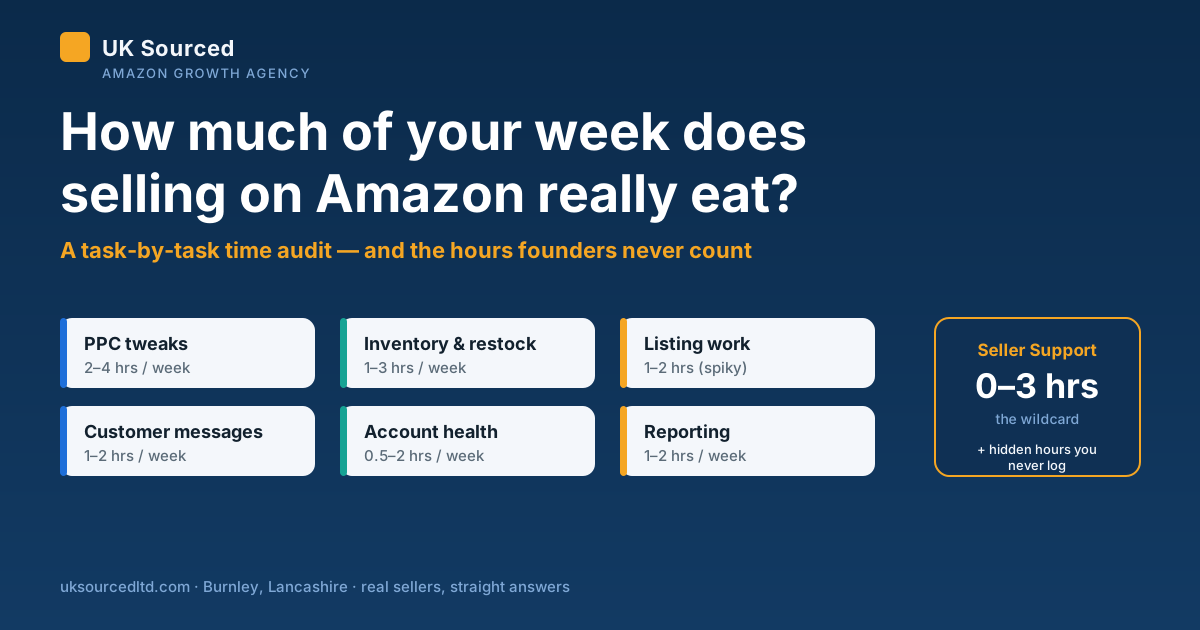
How much of your week does selling on Amazon really eat?
A realistic time audit of running an Amazon business — PPC, inventory, listings, messages, account health, Seller Support. Where the hidden hours go, and when to outsource.
Nobody starts an Amazon business planning to spend Sunday night refreshing a Seller Support case. But there you are.
The pitch you heard was "passive income." The reality, once you're a few months in, is a job — one with no rota, that follows you to the dinner table. We're not saying that to scare you off. Plenty of founders run tight, profitable accounts on a handful of focused hours a week. The trouble is nobody tells you where those hours actually go, so you end up feeling like the work never stops. It's not that it's endless. It's that it's scattered.
So let's count it properly. Task by task, honest numbers, including the hours you don't currently log because they don't feel like "work."
The seven jobs hiding inside "running my Amazon"
"Managing Amazon" isn't one task. It's at least seven, and they don't share a calendar slot. Here's a realistic week for a single-brand seller doing meaningful volume — not a hobby account, not an empire.
PPC tweaks — 2 to 4 hours. Checking search-term reports, adding negatives, nudging bids, spotting the keyword that quietly ballooned your ACOS overnight. If you're actively launching or scaling, it's the higher end. Left alone, campaigns drift, and drift costs money you won't notice until the month-end numbers land.
Inventory and restock — 1 to 3 hours. Working out what to reorder, when, and how much — factoring lead times, sales velocity and the fact that Amazon will happily let you run dry over a bank holiday weekend. Get this wrong and you either stock out (losing rank you paid to build) or tie up cash in dead stock. Neither is cheap.
Listing work — 1 to 2 hours (spiky). Some weeks, nothing. Other weeks you're rewriting a title, swapping a hero image, fixing a variation that broke, or reacting to a competitor who just undercut you. It's lumpy, but it's rarely zero for long.
Customer messages and reviews — 1 to 2 hours. Buyer questions, refund requests, the odd complaint, chasing a review that shouldn't have been one-star. Miss the 24-hour response window too often and your metrics feel it.
Account health — 30 minutes to 2 hours. On a good week, a quick glance at the dashboard. On a bad week, a policy warning, a suppressed listing, or an intellectual-property complaint that swallows your afternoon whole. This is the task with the widest range, and the one that hurts most when it spikes.
Reporting and numbers — 1 to 2 hours. Pulling the figures, checking your real margin after fees, working out whether last week actually made you money. Boring. Skippable. Which is exactly why so many sellers fly blind.
Chasing Seller Support — 0 to 3 hours (and soul-destroying). The wildcard. Most weeks, nothing. Then something breaks, and you're in a loop with a bot, reopening a case for the fourth time, wondering why a "24-hour resolution" is on day nine. (Pro tip from bitter experience: ask for a human early.)
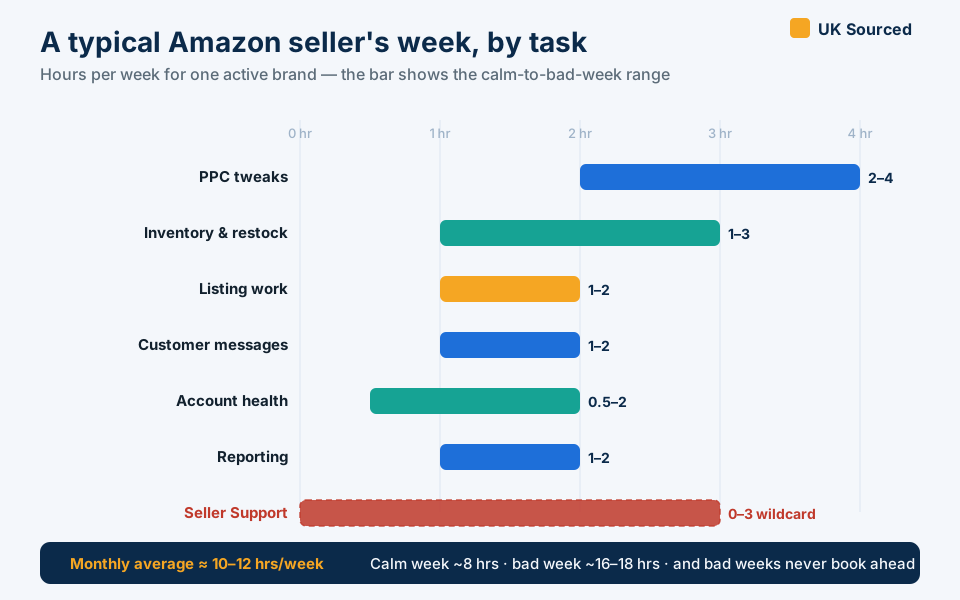 A typical week, task by task. The total swings wildly depending on what breaks.
Add it up
On a calm week, that's maybe seven or eight hours. Manageable. You could do it around a day job.
On a bad week — a listing gets suppressed, a campaign runs away with your budget, and a Seller Support case drags — it's closer to sixteen or eighteen. And bad weeks don't book themselves in advance. They land on the week you'd planned to do something else, which is the whole problem.
So the honest average, across a month, sits somewhere around ten to twelve hours a week for a single active brand run properly. Run more than one product line, sell in more than one marketplace, and it climbs from there fast.
The hours you're not counting
Here's the part that trips people up. The task list above is the visible work. It's not where most founders lose their week.
The hidden hours are these. Context-switching — you don't sit down for a clean two-hour block; you dip into Seller Central eleven times a day between other jobs, and each dip costs you the ten minutes it takes to remember what you were doing. Learning — Amazon changes the rules, the interface, the fee structure, and you spend real time just keeping up (the 2026 pricing rules alone sent a lot of sellers back to school). Worrying — the mental tab that never closes, the "did I sort that case?" thought at 11pm. That's not on any timesheet, but it's the most expensive hour of your day.
And the quiet killer: the work you're not doing. Every hour inside Seller Central is an hour not spent on product development, on your brand, on the next line, on the wholesale deal that would actually move the needle. That's the real cost. Not the time itself — what the time crowds out.
We've watched founders realise this the hard way. Usually it's the moment they turn down a genuine growth opportunity because they're too buried in admin to take it on.
When DIY still makes sense
Now the honest bit, because we'd rather tell you the truth than win a retainer you don't need.
If you're just starting out, do it yourself. Full stop. You need to feel how the account works — how PPC behaves, why a listing gets suppressed, what a healthy ACOS looks like on your own products. Nobody should hand off a machine they've never driven. The early hours are tuition, and they're worth paying.
DIY also holds up if your volume is modest and steady. If you're turning over a few thousand a month, ticking along, not chasing aggressive growth, then eight focused hours a week is a fair price for keeping full control and full margin. Don't let anyone talk you out of that.
And if you genuinely enjoy it — some people do — then the time isn't a cost. It's the job you wanted.
When it's time to hand it over
The tipping point isn't really about hours. It's about what those hours are worth to you, and what they're stopping you doing.
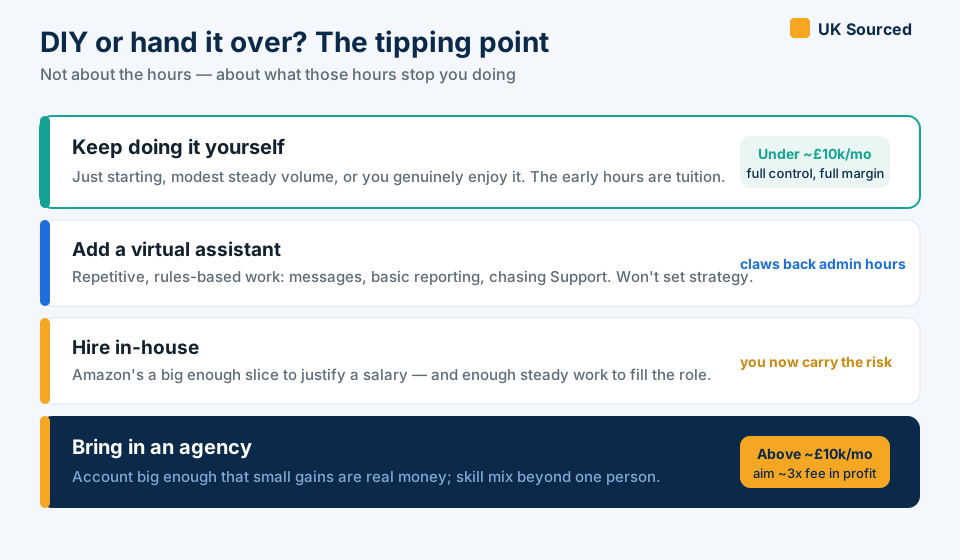 The tipping point: it's less about the hours and more about what those hours cost you elsewhere.
There are three ways out, and they suit different situations.
A virtual assistant handles the repetitive, rules-based stuff — customer messages, basic reporting, chasing Seller Support. Cheap, quick to set up, and it claws back the admin hours. But a VA won't set your PPC strategy or rescue a suspended account. Wrong tool for the clever work.
Hiring in-house makes sense once Amazon is a big enough slice of the business to justify a salary — and once you have enough steady work to keep someone busy. The catch is you're now managing a person and carrying the risk if they leave with all the account knowledge in their head.
An agency earns its keep when the account is big enough that small improvements are worth real money, and when the mix of skills — PPC, listings, brand protection, account health — is more than one person can hold. The rough rule is that a good agency should return around three times its fee in added profit. Below roughly £10,000 a month on Amazon, that maths usually doesn't stack up and you're better off DIY. Above it, handing over the ten-plus hours a week often costs less than the growth you're currently leaving on the table.
There's no shame in any of these routes, and no glory in doing everything yourself until you burn out. The best sellers we work with aren't the ones who grind hardest. They're the ones who worked out early which hours to keep and which to give away.
If your week's quietly filling up with Seller Support cases and PPC tweaks instead of the work that actually grows your brand, that's the sort of thing we take off people's plates. We run our own Amazon accounts too, so we know exactly which hours are worth reclaiming. If it'd help to talk it through, drop us a line at enquiries@uksourcedltd.com — even if the honest answer is "you're fine doing this yourself for now."