How do I win (and keep) the Amazon Buy Box?
What actually drives Amazon Buy Box share — price, fulfilment, seller metrics, stock and account health — plus why you lose it overnight and how to defend it.
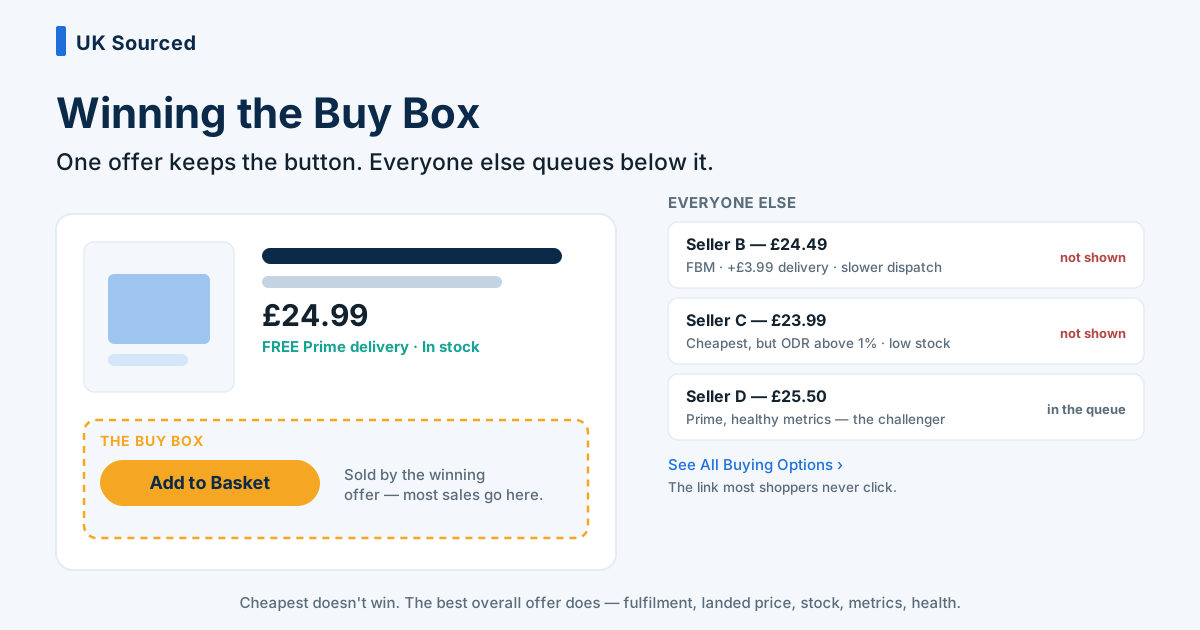
That "Add to Basket" button is worth more than almost anything else on your listing. Win it, and the vast majority of sales on that ASIN flow to you by default. Lose it, and buyers get pushed to a rival or a limp "See All Buying Options" link that most people never click.
So when a seller messages us saying sales halved overnight and "nothing changed", the Buy Box is the first place we look. Nine times out of ten, that's the culprit.
Here's the honest version of how it works — what really moves the needle, why you can lose it without touching a thing, and how to hold onto it.
First, a myth worth killing
Loads of sellers think the Buy Box is about being cheapest. It isn't. Price matters — a lot — but Amazon isn't a price-comparison engine. It's trying to pick the offer most likely to leave the shopper happy: quick delivery, reliable seller, in stock, low chance of a return or a complaint.
If cheapest always won, an FBM seller with a two-week dispatch time would beat Prime on price alone. They don't. Amazon weighs the whole package. That's the mental shift — you're not fighting to be lowest, you're fighting to be the best overall offer.
Worth saying plainly: if you're the only seller on your own private-label listing, you effectively own the Buy Box by default, as long as you stay eligible. Eligibility isn't automatic, mind you — a brand-new account, or one that's fallen foul of a policy, can be shut out even with no rival in sight. This whole battle really matters when you share a listing — reselling, wholesale, or when a hijacker piles onto your ASIN. More on that shortly.
What actually drives Buy Box share
Amazon has never published the exact formula (and it shifts), but after years of running accounts we know the levers that move it. Roughly in order of weight:
Fulfilment method. This is the heavyweight. FBA and Seller-Fulfilled Prime win the Buy Box far more readily than standard FBM, because Amazon trusts its own delivery promise. If you're FBM and losing to an FBA seller at a higher price, that's why. Getting on Prime is often the single biggest fix.
Landed price. Not your headline price — your price plus delivery. A £9.99 item with free Prime delivery beats a £9.49 one with £3.99 postage. Amazon compares total cost to the customer, not the number on your listing.
In-stock and reliable. Run low or go out of stock and your share drops or vanishes — you can't win a button for something you might not ship. Consistent availability is a ranking factor in itself.
Seller performance metrics. Your Order Defect Rate (keep it under 1%), late dispatch rate, cancellation rate, valid tracking, and response times. These are the "can we trust you to not create a support headache" signals. Let them slip and your share erodes quietly.
Account health. Policy warnings, an at-risk account, or an unresolved complaint can knock you out entirely, regardless of price. Amazon won't hand its most valuable real estate to a seller it's worried about. This one blindsides sellers, because it isn't tied to the individual listing at all — a single unactioned notification at account level can suppress the button across everything you sell.
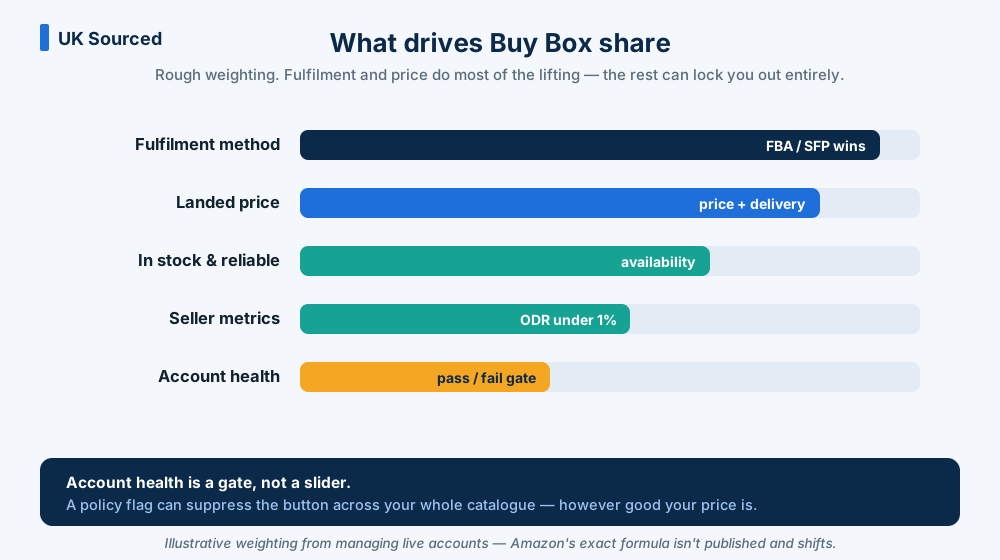 Rough weighting of what drives Buy Box share. Fulfilment and price do most of the heavy lifting — but the rest can knock you out entirely.
Why you can lose it overnight — without changing a thing
This is the part that catches people out, and it's the reason "but I didn't change anything" is usually true. You didn't. Something around you did.
- A competitor undercut you. Someone joined your listing (or an existing seller dropped their price) and now offers a better landed price. You didn't move — they did.
- You quietly ran low on stock. Availability dipped, Amazon got nervous, and your share fell before you'd even noticed the inventory number.
- Your metrics slipped. A cluster of late dispatches or a bad-week spike in your defect rate can drag your Buy Box share down with a lag of a few days.
- An account-health flag landed. A policy notification you haven't actioned can suppress the Buy Box across your whole catalogue, not just one ASIN.
- A hijacker piled on. A counterfeiter or unauthorised reseller jumped onto your ASIN, undercut you, and grabbed the button. Nasty, and more common than you'd like.
None of these show up as an alert with a klaxon. That's the frustrating bit. Your listing still looks perfectly live to you, logged in — the button's just pointing at someone else. (The fastest way to check: open your listing in a private browser window, logged out, and see whose offer is actually being shown.)
How to win it — and then defend it
Winning and keeping are slightly different jobs. Winning is about your offer. Keeping is about your discipline. Here's the short version of both.
To win it:
- Get on FBA or Seller-Fulfilled Prime. If you take one thing from this, take that. It's the biggest lever, full stop.
- Price on landed cost, not headline. Factor delivery in. Match or beat the total the customer pays — you rarely need to be the absolute cheapest, just competitive.
- Keep the item genuinely in stock. Not "technically one left" — comfortably in stock, with a restock buffer.
To keep it:
- Guard your seller metrics like they're the business. ODR under 1%, dispatch on time, tracking valid. Boring, and it's most of the game.
- Clear account-health flags the day they land. Don't let a policy notification sit. It can cost you the Buy Box on every listing you have.
- Watch for hijackers. Check your ASINs regularly for unexpected sellers. Brand Registry and Transparency make this far easier to police — if you own the brand and haven't enrolled, that's a job worth doing.
- Don't over-rely on repricers. Automated repricing is useful, but a badly-set rule can chase a hijacker's fake price into the floor and wreck your margin. Set sensible floors.
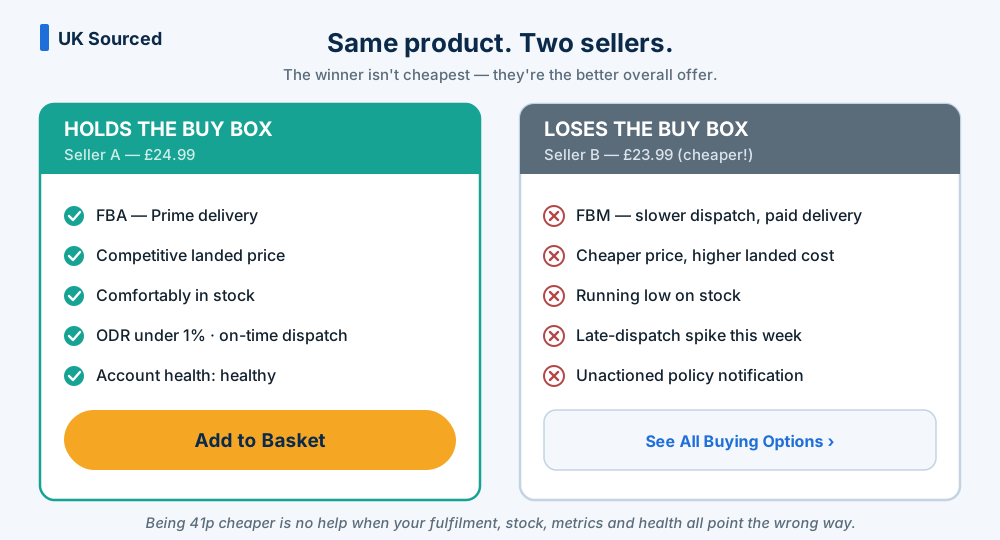 Same product, two sellers. The one who holds the Buy Box isn't cheapest — they're the better overall offer.
The honest takeaway
The Buy Box rewards the seller Amazon trusts to make the customer happy. Fast, reliable fulfilment. A fair total price. Stock on the shelf. Clean metrics. A healthy account. Get those right and you'll win it far more than you lose it — often without being the cheapest offer on the page.
And when you do lose it, resist the urge to panic-slash your price. Diagnose first. Nine times in ten it's stock, a competitor, a metric, or a hijacker — and each of those has a proper fix that doesn't involve giving away your margin.
Keeping an eye on Buy Box share across a catalogue — and catching a hijacker before it dents your month — is a fair chunk of what we do day to day. If yours keeps slipping and you can't see why, drop us a line and we'll help you trace it.