What's a good ACOS on Amazon (and how do I lower mine)?
A good Amazon ACOS depends on your margin and product stage — not one magic number. Here's how to work out yours and bring it down without killing sales.
"Is 32% ACOS good?" Someone asks us this most weeks, usually with a screenshot attached. And the honest answer is the one nobody wants to hear: it depends. On your margin. On how old the product is. On what you're actually trying to do with that campaign this month.
There is no single "good" number, and anyone who quotes you one without asking about your margins first is guessing.
So let's do this properly. First, what ACOS even is. Then the one number that actually matters (your break-even). Then why a "good" figure shifts depending on where your product is in its life. And finally, the practical stuff — how to pull it down without watching your sales fall off a cliff at the same time.
What ACOS actually measures
ACOS stands for Advertising Cost of Sale. It's the percentage of your ad-driven revenue that you spent on the ads themselves. Spend £30 on Sponsored Products, make £120 in sales from those ads, and your ACOS is 25%.
Simple maths. The trap is treating it as a score to minimise. Chase a low ACOS hard enough and you'll strangle your own sales, because the cheapest ACOS of all is zero — achieved by turning your ads off entirely. Nobody wants that.
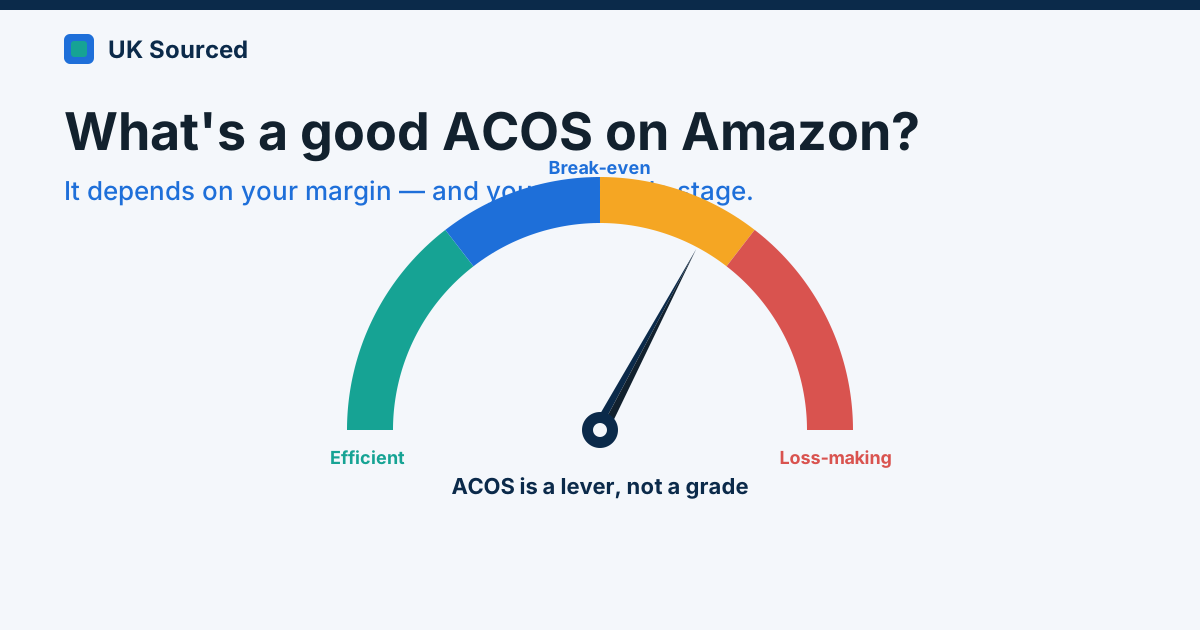
ACOS is a lever, not a grade. What you're really deciding is how much of each sale you're happy to hand to Amazon to win that sale.
The only number that matters: your break-even ACOS
Before you can call any ACOS "good", you need to know the point where advertising stops making you money. That's your break-even ACOS, and it comes straight out of your own margin.
Here's the working. Take your selling price. Strip out everything Amazon and your costs take before profit — the referral fee (usually 15%), the FBA fulfilment fee, your landed cost of goods, VAT if you're registered. What's left as a percentage of your price is your profit margin. That margin figure is your break-even ACOS.
An example. Say you sell something for £25. Cost of goods is £6, Amazon's referral and FBA fees come to about £7.50, and after a few other bits you're left with roughly £9 of profit per unit before any advertising. That's a 36% margin. So your break-even ACOS is 36% — spend more than that on ads to make the sale and you're paying for the privilege of selling.
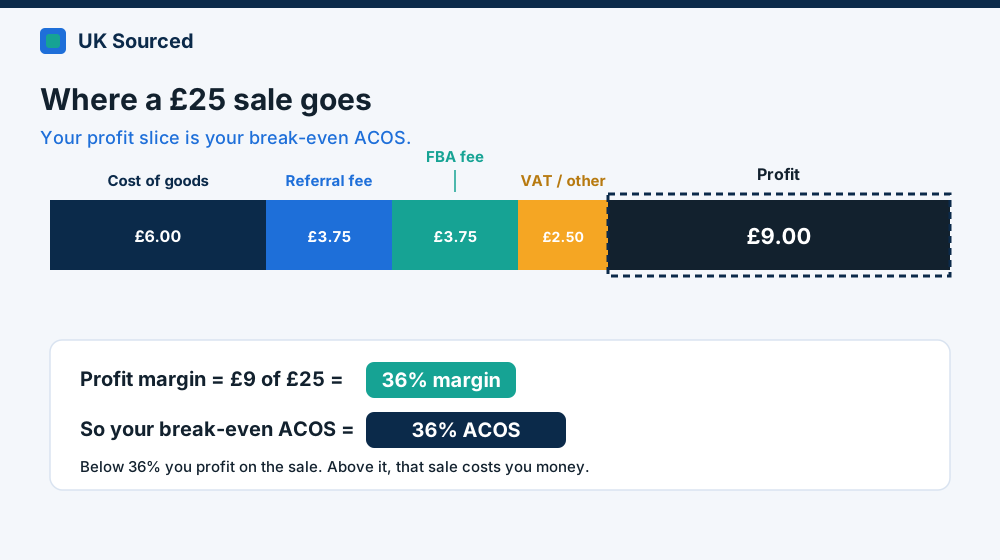 Break-even ACOS isn't a target you copy off a forum — it falls out of your own margin. Work yours out first.
Any ACOS below break-even is making you a profit on that sale. Any ACOS above it is costing you money. Sometimes spending above break-even is the right call — we'll get to that — but you have to know you're doing it on purpose.
Work this out once, per product, and pin it somewhere. It changes the whole conversation. "Is 32% good?" becomes "well, my break-even's 36%, so 32% is fine but tight." Much better question.
Why "good" depends on the product's age
Now the bit the one-number crowd miss entirely. A healthy ACOS for a product you launched last Tuesday is a terrible ACOS for one you've sold for three years. Same category, same margin — different job.
Broadly, three stages:
Launch (roughly 30–50% ACOS). A brand-new listing has no reviews, no ranking history and no organic sales to speak of. You're buying visibility and, frankly, buying data. Running above break-even here is normal and often deliberate — you're funding the climb. It stings, but a listing that never gets seen never gets going.
Growth (roughly 20–30% ACOS). Reviews are trickling in, you're ranking for a few keywords organically, and ads are now supporting momentum rather than manufacturing it from nothing. This is where you tighten the screws gradually — cut the obvious waste, keep the terms that convert.
Mature (roughly 15–25% ACOS). Established listing, steady organic sales, ads doing a support job. Here you can afford to be efficient and precise. If a mature, profitable product is sitting at 45% ACOS, something's off — and it's usually fixable.
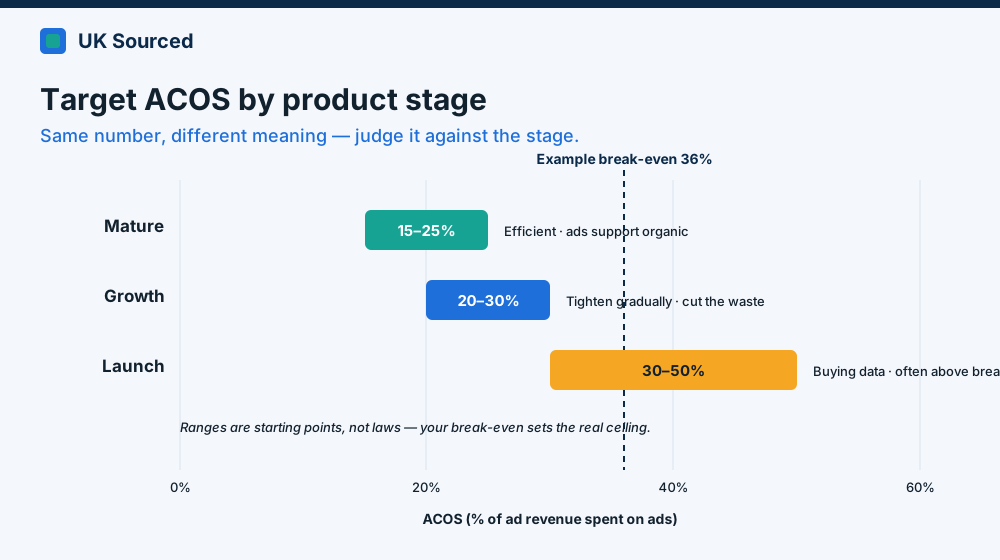 The same ACOS means different things depending on where your product is. Judge it against the stage, not a universal benchmark.
One caveat we'll be blunt about: these are starting ranges, not laws. A product with fat 60% margins can happily sit higher than one scraping by on 25%. The stage tells you the shape of what to expect; your break-even tells you the ceiling.
How to lower your ACOS without tanking your sales
Right — the practical part. When your ACOS genuinely is too high for the stage you're at, here's what actually moves it, roughly in the order we'd reach for them.
Add negative keywords. This is the first place we look, every time. Pull your search term report and find the terms eating spend with no sales — the vaguely-related searches, the wrong-intent clicks, the competitor names that never convert for you. Add them as negatives. You're not lowering bids here, you're stopping money leaking on traffic that was never going to buy. Honestly, this alone fixes more high-ACOS accounts than anything else.
Move your winners to exact match. When a broad or auto campaign turns up a search term that converts well, promote it into its own exact-match keyword and bid on it deliberately. Tighter targeting, less waste, more control over what you pay.
Trim bids on the borderline terms — don't nuke them. Keywords sitting just above break-even don't need switching off; they need a gentle bid reduction so they land back in profit. Cut too hard and you lose the sales along with the cost. This is a scalpel job, not an axe.
Fix the listing, not just the ads. Here's the one people forget. If your ACOS is stubbornly high, sometimes the ads are fine and the listing is the problem — weak main image, thin bullets, a price that's out of step with rivals, not enough reviews. Ads send the click; the listing has to close it. A poor conversion rate quietly inflates every ACOS figure you've got. Sort the page and the ads get cheaper without you touching a single bid.
Give changes time. Amazon's data lags, and conversions attribute back over a window. Judge a change over a week or two, not a Tuesday afternoon. We've watched sellers panic-slash bids on three days of data and undo good campaigns. Don't be that seller.
So, what's a good ACOS?
The one that keeps you comfortably below break-even at the mature stage, and one you're deliberately choosing to exceed while you're still building. That's it. A number with no margin and no context behind it is just a number.
If working out your break-even, then untangling which of these levers your account actually needs, isn't how you fancy spending your week — that's the sort of thing we do all day. Drop us a line at enquiries@uksourcedltd.com and we'll take a look.