When do I have to register for VAT as an Amazon seller?
The £90k VAT threshold for Amazon sellers, explained plainly — why turnover means gross sales not your payout, and what happens if you register late.
"Am I anywhere near the VAT threshold yet?"
We get asked this a lot, usually by someone who's had a good quarter and is suddenly nervous. It's a fair worry. Get the timing wrong and you can end up owing HMRC VAT on sales you already spent the money from. Let's clear it up.
Quick, honest caveat before we start: this is general information from people who run Amazon accounts for a living, not tax advice. Your accountant knows your specific situation. Read this, then have the conversation with them armed with better questions.
The number is £90,000. The trick is how you count to it.
In the UK you have to register for VAT once your taxable turnover goes over £90,000. That figure's been £90,000 since April 2024, so it's current for the 2026 tax year.
Simple enough. But almost everyone reads "turnover" wrong on their first go.
Two things trip people up, and they trip up nearly everyone, so don't feel daft if this is news to you.
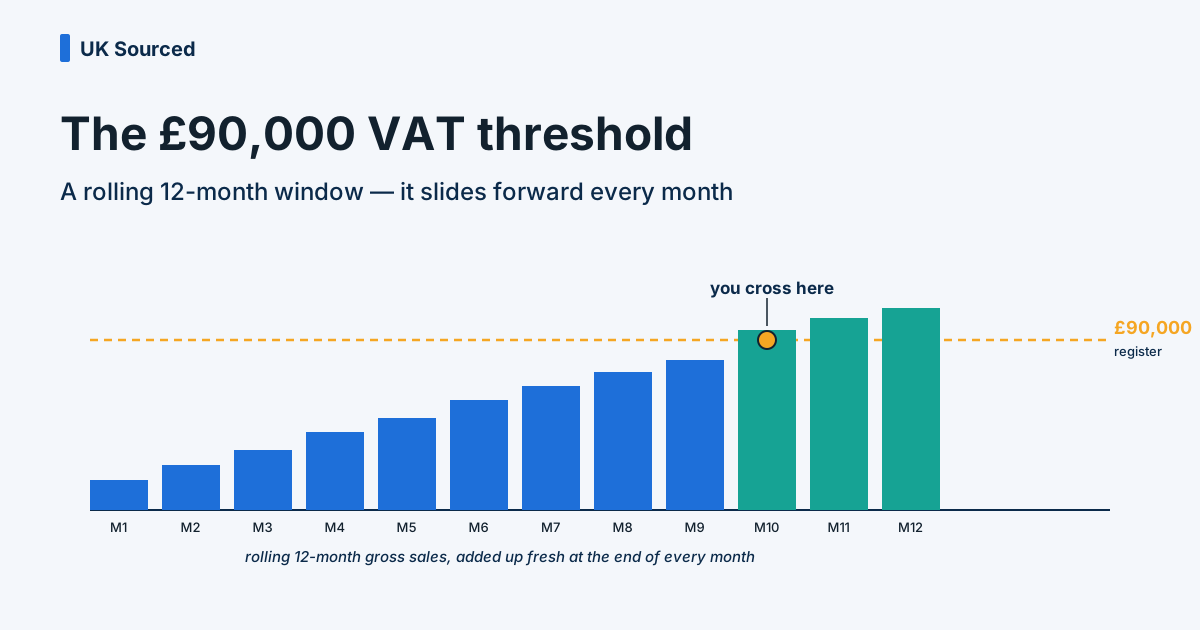
First: it's a rolling 12-month window, not your tax year or calendar year. You don't get to reset the counter every January. At the end of every month you add up the last 12 months of sales — the trailing year — and check whether that total has gone over £90,000. So the twelve months you're measuring today is different from the twelve months you were measuring last month. The window slides.
There's also a second test people forget: if you expect to go over £90,000 in the next 30 days alone — say you've landed a huge wholesale order or a viral moment — you have to register straight away, before the sale even happens. That one catches fast-growing brands off guard.
Gross sales, not your payout. This is the expensive mistake.
Here's the bit that costs people real money.
Your taxable turnover is your gross sales — the full price the customer paid. It is not the amount Amazon drops into your bank account after they've taken their cut.
Think about what Amazon skims off before you ever see a penny: referral fees, FBA fulfilment fees, storage, the lot. On a lot of products that's somewhere around a third of the sale price gone. So your payout might read £62,000 for the year while your actual turnover — the number HMRC cares about — is comfortably north of £90,000.
We've watched sellers relax because their Seller Central "total" or their bank balance looked safe, when the figure that actually matters had already sailed past the line months earlier. By the time they noticed, they owed backdated VAT on a big pile of sales.
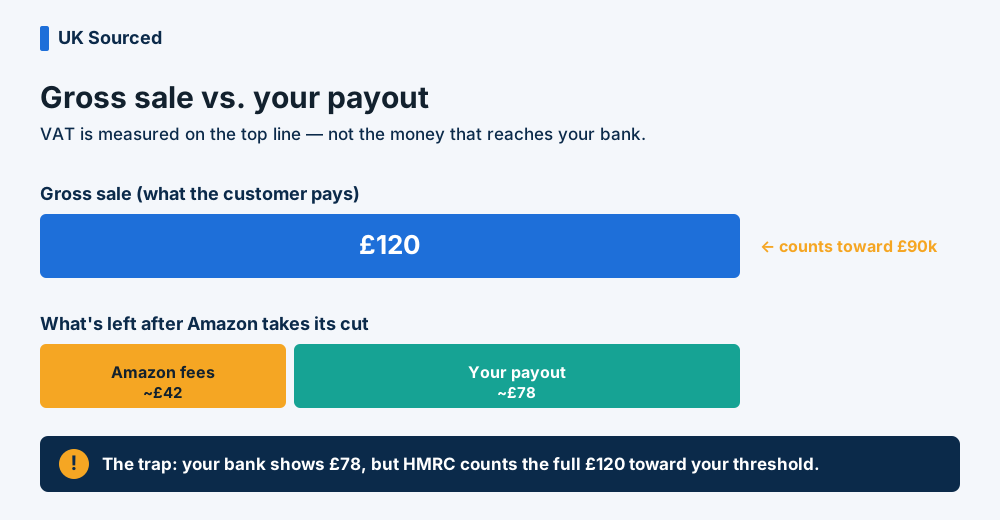 Amazon fees shrink your payout. They don't shrink your turnover. VAT is measured on the top line.
So when you're checking yourself against £90,000, use gross sales across every channel — Amazon, your own Shopify site, eBay, wholesale, all of it added together. VAT registration is a you thing, not a per-marketplace thing. It doesn't matter that the sales are spread across three platforms; HMRC totals them up as one business.
One relief: if you're a sole trader, your personal life doesn't count. Selling your old sofa on Facebook Marketplace isn't taxable turnover. It's business sales we're totting up here.
What actually happens if you register late
Say you cross the line and don't notice for a few months. What then?
HMRC treats you as having been VAT-registered from the date you should have registered. That's the painful part. They don't start the clock from when you finally cotton on — they backdate it. Which means you owe the VAT on all those sales in between, whether or not you charged your customers for it.
And on Amazon, you usually didn't charge for it. Your prices already looked "final" to the shopper. So that VAT comes straight out of your margin. On £30,000 of sales you didn't realise were over the line, that's a bill measured in thousands, out of pocket.
On top of the tax itself, HMRC can add a failure-to-notify penalty. How big depends on whether they think it was a genuine oversight or you were dragging your heels, and how quickly you put your hand up once you realised. Own up early and unprompted and it's treated far more gently than if they have to come and find you. (The actual penalty percentages shift around and depend on your circumstances — that's a conversation for your accountant, not a number we're going to pin down here.)
The takeaway is blunt: late registration is a self-inflicted wound. Watch the number and it simply never happens.
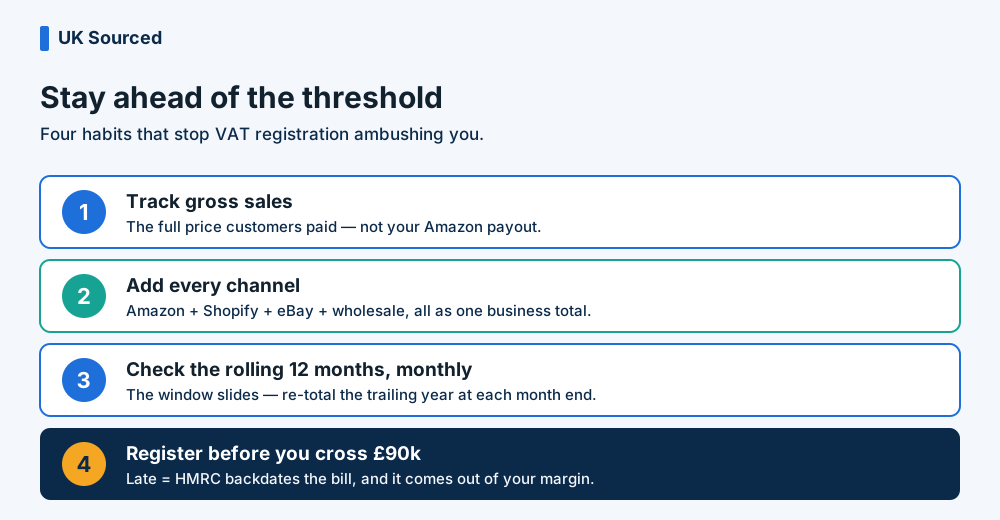 Four habits that keep the VAT threshold from ambushing you.
A few things worth knowing before you get there
You can register voluntarily below £90,000. Sounds mad — why invite the paperwork? But if you sell mostly to other businesses, or you're spending heavily on stock and want to reclaim the VAT on your costs, it can genuinely pay. Loads of Amazon sellers register early on purpose. Whether it suits you depends on your margins and who's buying — again, one for the accountant.
Selling into the EU or the US is a separate rulebook. This whole post is about UK VAT. The moment you hold stock in Germany or sell through Amazon's European programmes, other countries' VAT rules land on your desk, and they don't care about your UK threshold. Expanding abroad? Sort the tax picture out before the stock ships, not after.
Once you're registered, Amazon can handle the mechanics of charging it — but you're still the one who has to file the returns and pay HMRC. Registration is the start of an ongoing job, not a one-off form.
The short version
- The threshold is £90,000 of taxable turnover.
- It's a rolling 12-month window that moves forward every month — not your calendar or tax year.
- Count gross sales — the full price customers paid, across every channel — not your Amazon payout.
- Register late and HMRC backdates the bill and can add a penalty. That VAT usually comes out of your own pocket.
- This is general info. Your accountant is the one who signs it off.
Keeping half an eye on a rolling sales figure across three marketplaces, while also running the actual business, is exactly the sort of thing that slips. If you'd rather someone watched the numbers — VAT threshold included — as part of running your Amazon accounts, that's what we do. Drop us a line at enquiries@uksourcedltd.com and we'll talk it through.