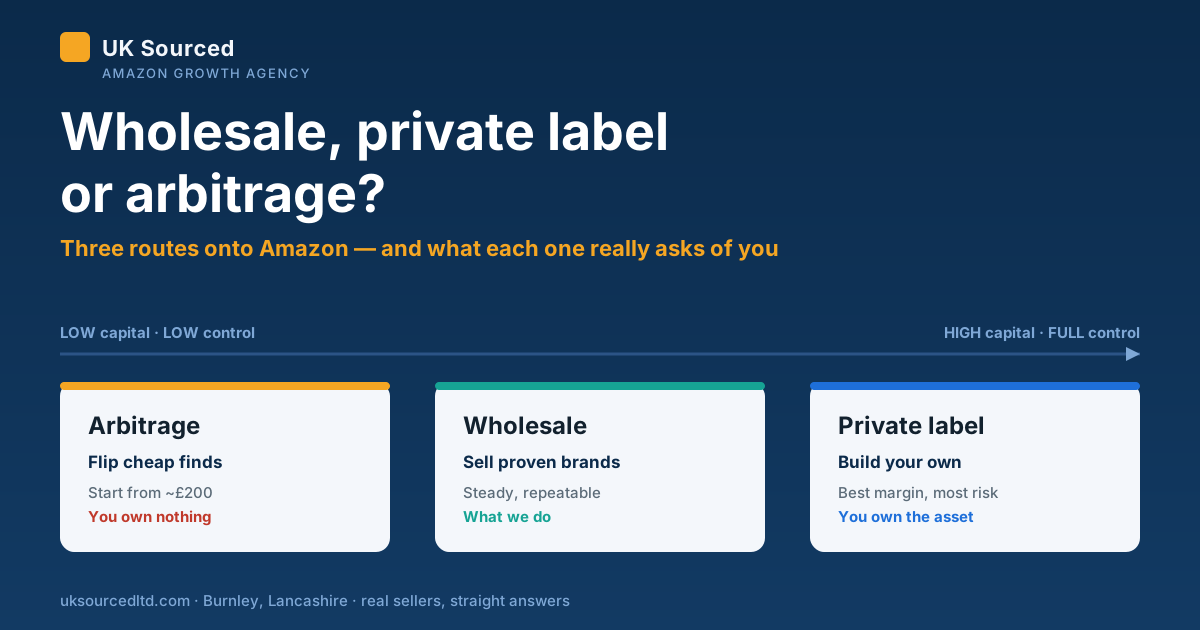
Wholesale, private label or arbitrage — which is right for you?
Wholesale, private label or arbitrage on Amazon? An honest look at the capital, control, margins and risk of each model — and how to pick based on your goals.
Three sellers walk into Amazon. One buys job lots from a supermarket clearance aisle and flips them. One buys a pallet of an established brand and lists it. One spends four months and a chunk of savings creating a product nobody's ever seen. Same marketplace. Wildly different businesses.
People lump them together as "selling on Amazon" and then wonder why the advice they read contradicts itself. It contradicts itself because these are three separate games with different rules, different money, and different ways to lose. So before you pick, let's be honest about what each one actually asks of you.
We run wholesale ourselves and manage private-label brands for other people, so this isn't theory. We've felt where each model bites.
Arbitrage: cheap to start, hard to keep
Arbitrage is the simplest to explain. You find a product selling for more on Amazon than you can buy it for somewhere else — a supermarket, a clearance site, a wholesaler with old stock — you buy it, you list it, you pocket the difference. Retail arbitrage is high-street sourcing. Online arbitrage is the same thing from your sofa.
The appeal is obvious. You can start with a couple of hundred quid and a keen eye. No product to develop, no brand to build, no minimum order of 5,000 units sitting in a warehouse. You learn how Amazon actually works — listings, fees, FBA, the Buy Box — using real money but not much of it.
Now the catch, and it's a big one. You don't own anything. The deal that made you £4 a unit today is gone the moment three other sellers spot it, and they will. Margins get competed to the bone within weeks. You're forever hunting for the next find, which is a job, not an asset — stop hunting and the income stops with you.
Then there's brand gating. More and more brands restrict who can sell their products on Amazon, and Amazon increasingly asks for invoices proving you bought legitimately from an authorised source. A supermarket receipt won't cut it. Plenty of arbitrage sellers have watched a reliable earner vanish overnight because the brand pulled up the drawbridge. Honestly, this trips up nearly everyone who starts here and assumes today's ungated ASIN stays ungated.
Arbitrage is a brilliant classroom. As a long-term business, it's a treadmill.
Wholesale: buy the brand, run the sales
Wholesale sits in the middle, and it's the model we actually build our own selling around. You buy genuine stock of an established brand — in bulk, at trade prices, from the brand or an authorised distributor — and you sell it on Amazon. The product already has demand. People are already searching for it. You're not creating a market, you're serving one.
The economics are steadier than arbitrage because you're buying repeatably. Find a good line, get authorised, and you can reorder the same product for years rather than scrambling for the next fluke. Margins are typically thinner than private label — you're buying at trade, not making at cost — but they're more predictable, and volume does a lot of heavy lifting.
It costs more to start than arbitrage. You're placing real purchase orders, often four or five figures, and that stock is your money tied up until it sells. You need somewhere for it to go and a bit of nerve.
The real work in wholesale isn't listing — it's relationships. Getting a brand to authorise you. Proving you'll represent them well, keep the listing tidy, protect the pricing, not undercut their other channels. This is exactly what we do when we buy a brand's stock upfront and run their Amazon sales for them: they get a clean, well-managed presence without touching Seller Central, and we take the inventory risk off their plate. (A fair few brand owners are quietly relieved to hand over the whole headache.)
You don't control the product or the brand — the owner does. But you control your sourcing, your account, and how well the thing is sold. For a lot of people that's the sweet spot.
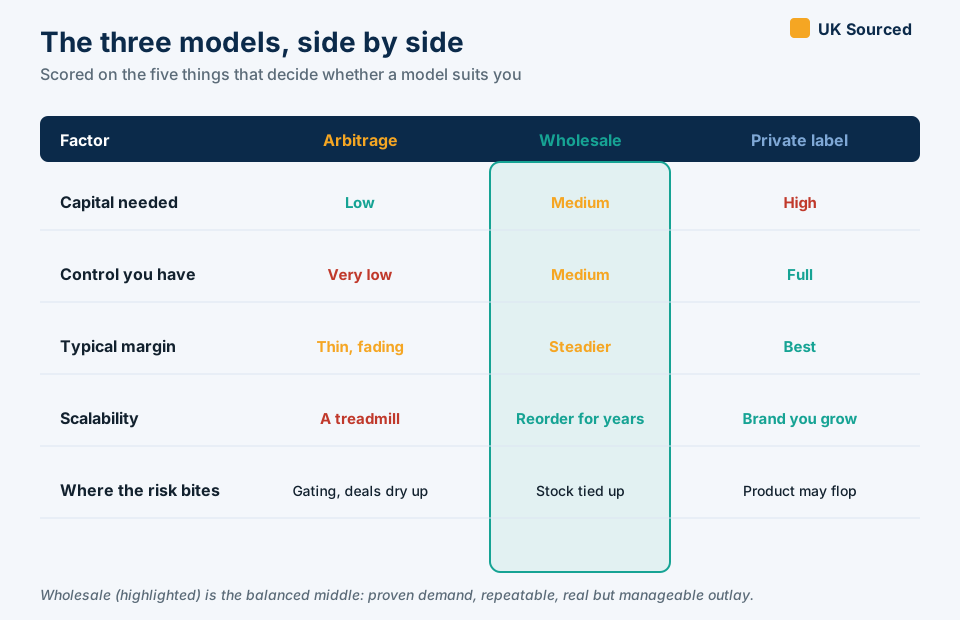 How the three models score on the things that actually matter.
Private label: your product, your rules, your risk
Private label is the one everyone romanticises. You develop your own product — often a twist on something that already sells — put your brand on it, and own the listing outright. No competition on your exact ASIN. If it works, you've built an actual asset: a brand you can grow, defend, and one day sell.
The upside is real. Best margins of the three, because you buy at manufacturing cost and sell at retail. Full control of pricing, images, copy, the customer relationship. Amazon Brand Registry unlocks A+ content, Sponsored Brands, and proper protection against hijackers. This is how you build something worth more than the sum of its sales.
Here's the honest bit nobody puts on the course sales page. It's the most expensive, slowest and riskiest of the three. You're funding product development, samples, minimum order quantities (often thousands of units), photography, and a launch — you're realistically looking at a few thousand pounds before your first sale, and often a lot more. Then you've got to generate demand from a standing start, which means an ad budget and the patience to burn through a launch phase where your ACOS looks frightening (30–50% early on is normal, not a disaster).
And if the product doesn't land? That's a warehouse of stock with your name on it and no established market to sell into. Arbitrage lets you walk away from a bad buy. Private label makes you marry it.
Done well, private label is the biggest prize on this list. Done on a shoestring, without research or runway, it's the quickest way to lose the most money.
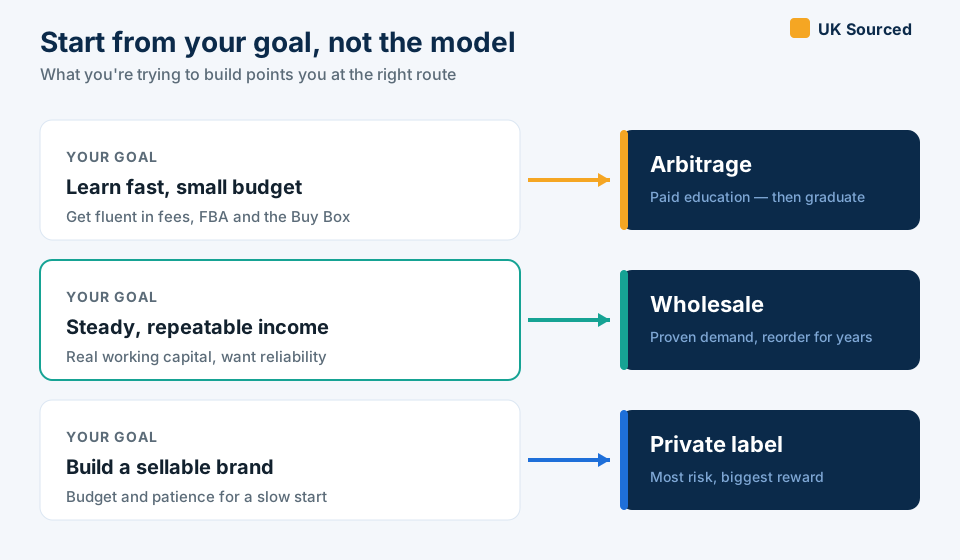 Start from what you're actually trying to build, then pick the model.
So which one is right for you?
Don't start with the model. Start with your goal, your budget and your appetite for risk. The model falls out of that.
If you've got little to spend and want to learn — start with arbitrage. Treat it as paid education, not a career. Get fluent in fees, FBA and the Buy Box on small stakes, then graduate. Nobody serious stays here forever.
If you want steady, repeatable income and can commit real working capital — wholesale. You're buying proven demand and building a sourcing operation you can reorder against for years. Less glamorous than private label, far more reliable. This is where we've put our own money, which should tell you something.
If you want to build a brand you could genuinely sell one day, and you've got the budget and the stomach for a slow start — private label. Just go in clear-eyed: more capital, more time, more risk, biggest reward. Don't do it with your last £2,000 and a dream.
Plenty of good sellers run more than one. A wholesale account paying the bills while a private-label brand finds its feet is a sensible combination — the steady thing funds the ambitious thing.
If you're weighing this up and want a straight opinion on which route fits your situation — or you'd rather someone else took on the stock and ran the Amazon side entirely — that's the sort of thing we do day in, day out. Drop us a line at enquiries@uksourcedltd.com and we'll tell you honestly where we think you'd start.