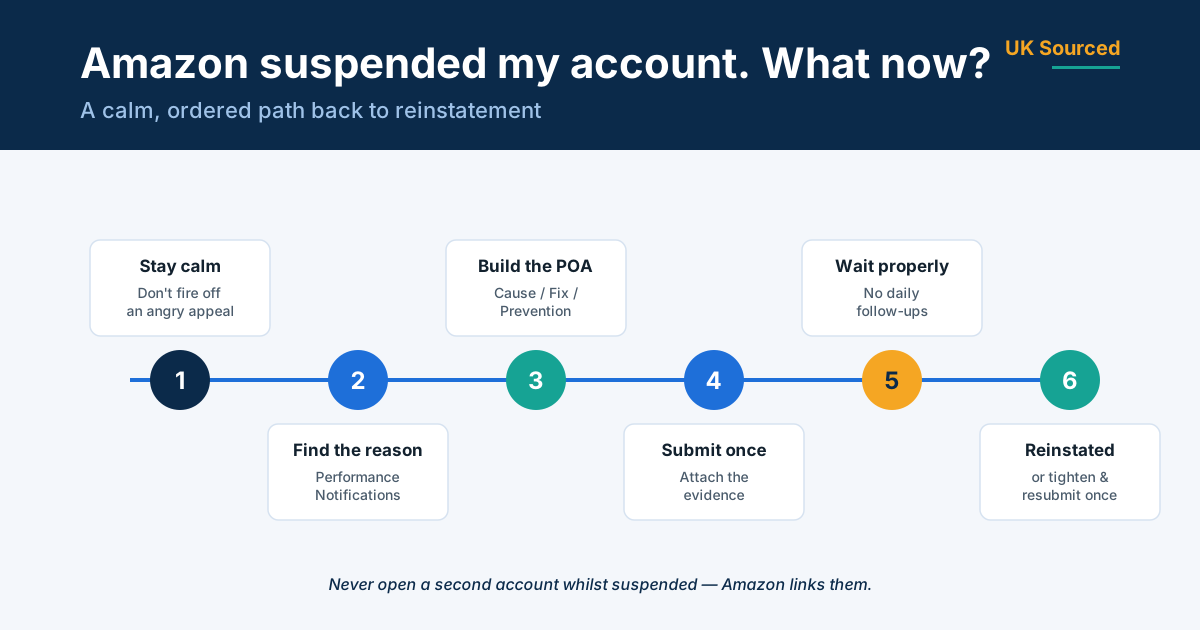
Amazon suspended my seller account. What now?
Amazon suspended your seller account? Stay calm. Here's the ordered plan — find the real reason, build a Plan of Action, and get reinstated without making it worse.
The email lands and your stomach drops. "Your Amazon seller account has been deactivated." No warning, or at least none you noticed. Payouts frozen. Listings gone. And a little voice going: that's my income, and it just switched off.
Breathe. We mean it.
We've walked several brand owners through this, and the single biggest predictor of getting reinstated isn't how serious the issue was — it's whether the seller kept their head in the first 48 hours. The ones who panic, fire off an angry appeal, and start opening backup accounts make it far harder for themselves. The ones who slow down and work the problem tend to come out the other side.
So here's the plan. Not a pep talk — an actual order of operations.
First: do not do these three things
Before we get to what you should do, let's kill the reflexes that sink people.
Don't fire off an emotional first appeal. The urge to write "this is completely unfair, I've done nothing wrong, please fix this immediately" is overwhelming. Resist it. Amazon's appeal reviewers read hundreds of these a week. Emotion, blame, and demands read as noise. Worse, a rushed appeal that misses the real cause burns one of your limited attempts and can flag your case as low-effort. You usually get a handful of goes before things get sticky. Don't waste the first one on a vent.
Don't open a second account. This one feels clever and it's the worst thing you can do. Amazon links accounts by card, bank, address, IP, device — a long list. Open a "fresh" account while one is suspended and you risk that one getting caught too, and now you've turned a recoverable single-account suspension into a related-accounts mess that's genuinely hard to undo. Just don't.
Don't go silent and hope. Suspensions don't heal on their own. The clock is quietly running on your stored inventory and your ranking. Waiting a fortnight "to see" costs you money and momentum.
Step one: find the actual reason (it's in Performance Notifications)
You cannot fix what you can't name. And the reason is almost never fully spelled out in the deactivation email — that thing is deliberately vague.
Go to Seller Central → Account Health, then Performance Notifications. That's where Amazon files the specifics: the policy cited, the ASINs involved, sometimes the exact complaint. Read it slowly. Twice. Screenshot everything, because notifications can get updated or buried later.
Suspensions usually fall into a few buckets:
- Account health / performance — Order Defect Rate crept over that 1% line, late shipments, cancellations.
- Policy violations — restricted product, a listing that breached a category rule, a suspected review manipulation.
- Authenticity or IP — a customer or rights-owner complained your item is inauthentic, used-sold-as-new, or infringing.
- Verification — Amazon wants documents (identity, utility bill, invoices) and something didn't match.
Each bucket needs a different response. An ODR suspension is an operations fix. An authenticity complaint needs supply-chain proof — real invoices from a real distributor. Naming the bucket correctly is half the job, honestly, and it's the half people skip in their hurry to appeal.
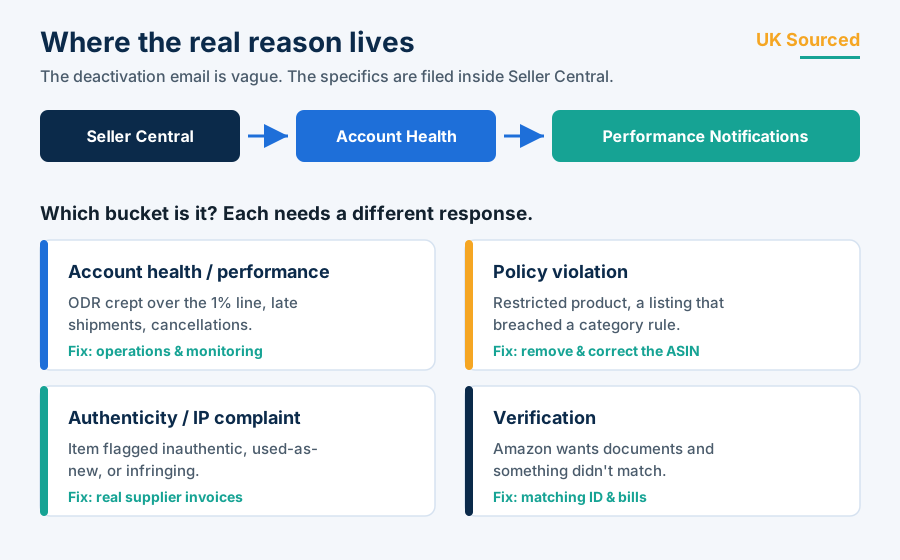 The deactivation email is vague on purpose. The specifics live in Performance Notifications.
Step two: build a proper Plan of Action
Amazon doesn't want an apology. It wants evidence that you understand what went wrong and that it won't happen again. That evidence is the Plan of Action (POA), and it has three parts. Get all three in, in this order.
1. Root cause. What actually caused this — not what you wish had caused it. "We sourced stock from a wholesaler we couldn't fully verify, and a customer received an item they believed was inauthentic." Be specific and take ownership. Vague root causes ("a misunderstanding occurred") get rejected because they signal you haven't diagnosed it.
2. Immediate corrective action. What you've done right now to fix the live problem. Removed the affected ASINs. Contacted the supplier for authorised-distributor documentation. Refunded the affected customers. Concrete, past-tense, already-done actions — not intentions.
3. Preventive measures. What changes so this never recurs. New supplier vetting checklist. Weekly Account Health monitoring so ODR never drifts near 1% again. A named person responsible for policy compliance. This is the part reviewers weigh most, because it's about the future.
Keep it tight. Bullet points, plain English, no grovelling and no legal-sounding waffle. Attach your evidence — invoices, screenshots, tracking — as proof, not decoration. A good POA reads like a competent operator who had a bad week and has already sorted it.
Step three: submit, then wait properly
Submit through the banner in Account Health, attach the POA and documents, and then — the hard part — leave it alone. Reviews can take anywhere from a couple of days to a few weeks depending on the issue and how busy the team is. Spamming follow-ups or re-submitting daily doesn't speed it up; it can push you to the back of the queue.
If it's rejected, don't despair and don't resend the same thing louder. A rejection usually means one of the three POA parts was thin — most often the root cause was too vague or the evidence didn't back the claim. Tighten the weak part, add stronger proof, resubmit once. That's it.
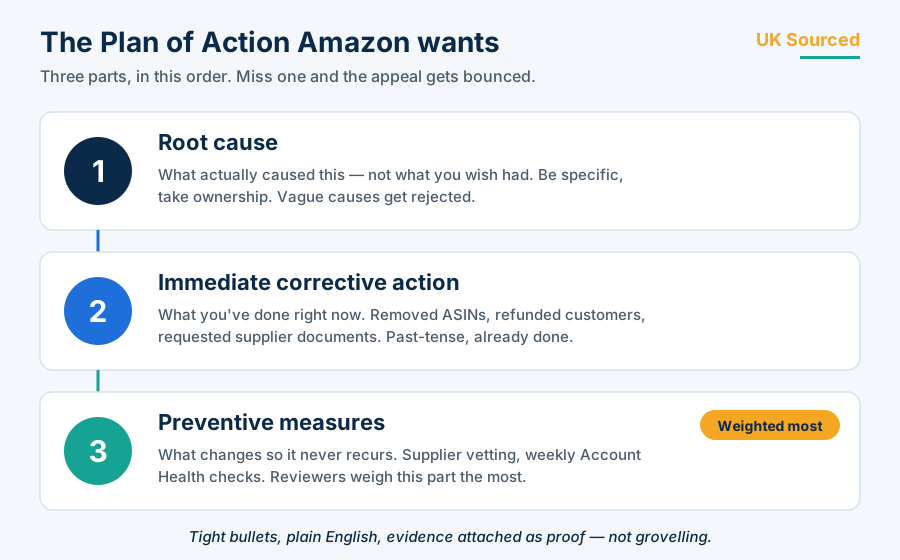 Every strong appeal answers three questions in this order. Miss one and it gets bounced.
A quick word on prevention (for future you)
Most suspensions are avoidable with dull, boring discipline. Check Account Health weekly, not when something breaks. Keep supplier invoices filed and matched to the ASINs they cover, so an authenticity complaint is a two-minute reply instead of a crisis. Watch your ODR like a hawk — 1% arrives faster than you'd think when order volume climbs. And read every Performance Notification the day it lands, even the ones that look like nothing.
The sellers who never get suspended aren't luckier. They're just tidier.
If you're staring at a deactivation right now
Take the pressure off yourself for a second: a first-time suspension with a genuine, fixable cause and an honest, well-built Plan of Action is very often reinstated. This is not the end of your business. It's a bad week that needs a clear head and the right paperwork.
If reading Performance Notifications and writing a Plan of Action while your payouts are frozen isn't how you want to spend the next few days, that's precisely the kind of thing we handle — we've written these appeals before and we know what a reviewer needs to see. Drop us a line at enquiries@uksourcedltd.com and we'll take a look with you.