Is Amazon Brand Registry worth it for a UK brand?
Is Amazon Brand Registry worth the trademark cost and hassle for a UK brand? Here's the honest trade-off — protection, A+ Content, better ads, and the 10% back incentive.
Someone's selling your product on your own listing, undercutting you by 40p, and Amazon won't take them down because — as far as their systems are concerned — you're just another seller in the pile.
That's usually the phone call that makes a brand owner finally look into Brand Registry. Not the A+ Content. Not the fancy Store page. The moment a hijacker turns up and you realise you've got no more authority over your own product than the chancer who copied it. Registry is the thing that fixes that. The catch is it asks for a registered trademark first, and trademarks cost money and take months. So the real question isn't "is it good" — it obviously is — it's "is it worth the trademark faff for my brand, at my stage?"
Let's weigh it up properly.
What you actually get
Brand Registry isn't one feature. It's a bundle, and the value depends on which bits you'll actually use. Here's what's in the box.
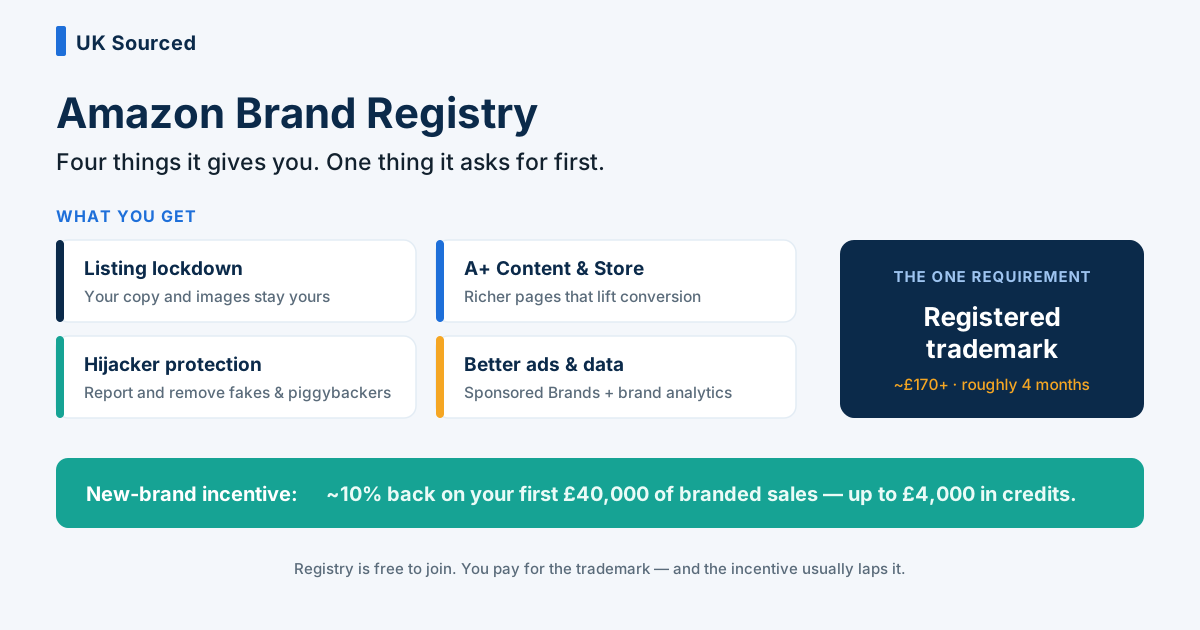
Listing lockdown. This is the quiet one that matters most. Once you're registered, you become the authority on your own listings. Nobody else can casually edit your title, swap your main image, or "fix" your bullet points. Before Registry, any seller on your ASIN — or a bored Amazon algorithm — can change your copy and you'd never know. After it, your content is yours. For a brand that's spent real money getting its listing right, that alone is worth the entry fee.
Hijacker and counterfeit protection. Registry gives you proper tools to report and remove sellers piggybacking on your listing or flogging fakes. You get access to Amazon's Brand Protection reporting, IP complaint routes that actually get actioned, and — crucially — you're treated as the brand owner rather than one voice among many. It's not a magic forcefield (you still have to spot the hijacker and report them), but it turns a hopeless situation into a solvable one.
A+ Content. Those enhanced product descriptions with comparison charts, lifestyle images, and proper formatting instead of a wall of grey bullet points — that's A+ Content, and it's Registry-only. It lifts conversion. We've seen it add a few percentage points to conversion rate on tired listings, which on any decent volume pays for a trademark in a month or two. You also unlock a branded Store, a shopfront for your whole range.
Better ads and better data. Sponsored Brands (the banner ads with your logo across the top of search) and Sponsored Display need Registry. So does Amazon's brand-analytics data — search-term reports, repeat-purchase behaviour, the demographics of who's buying. That last part is genuinely useful and you simply can't get it otherwise. If you're spending on ads, half the good ad types are locked behind this gate.
The cost side — and it's real
Now the honest bit, because we're not here to pretend it's free.
Registry itself costs nothing. Amazon doesn't charge you a penny to enrol. The price is the registered trademark you need to enrol with, and in the UK that's not trivial.
A UK trademark application through the Intellectual Property Office starts around £170 for one class if you file it yourself, more once you add classes or use a solicitor or trademark attorney to do it properly (which, honestly, we'd usually suggest — a botched application is a false economy). Reckon on a few hundred pounds all-in for most brands.
Then there's time. This is the part that catches people out. A UK trademark takes roughly four months to register if nobody opposes it. Four months. You can't shortcut it. So if you're reading this the week a hijacker appeared, Registry isn't a same-day fix — you needed to have started months ago.
There is one useful middle path: Amazon's IP Accelerator, which connects you with vetted law firms and — this is the good part — grants you Registry access based on a pending application, so you don't have to wait out the full registration period to get protected. It costs a bit more upfront but buys you months. For a brand under active attack, that's often the right call.
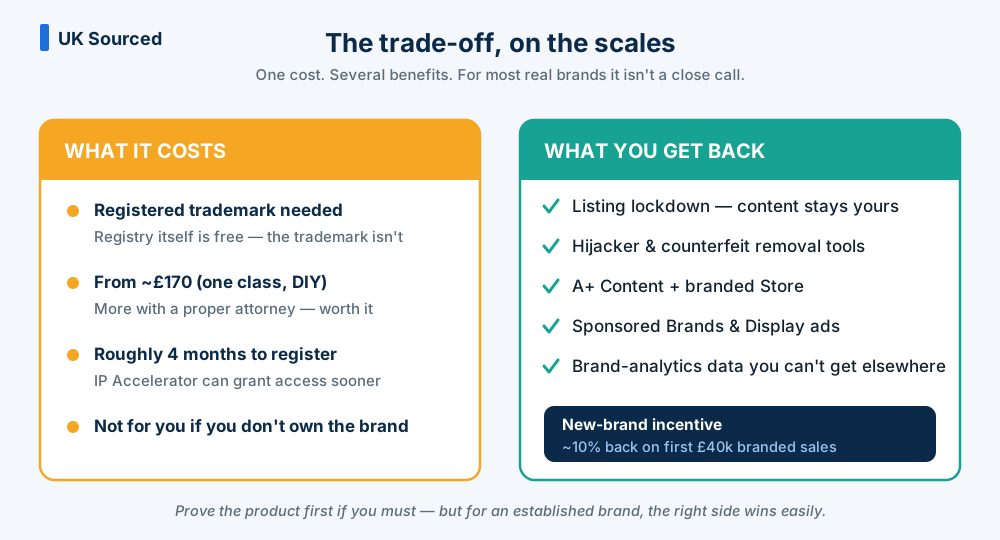 One side asks for a trademark and a few months' patience. The other side is where most real brands land.
The incentive that tips the maths
Here's a number a lot of people miss. Amazon runs an incentive for new brand owners who register: roughly 10% back on your first £40,000 of branded sales in your first year enrolled. Do the sum — that's up to £4,000 in credits, against a trademark that cost you a few hundred quid.
For a brand doing meaningful volume in year one, that single incentive doesn't just cover the trademark — it laps it several times over. It quietly turns "is this worth the cost" into "why haven't I done this yet". (Terms shift and eligibility varies, so check the current offer when you enrol — but the shape of the deal has held for a while.)
So — worth it? Our honest take
For most real brands: yes, and it's not close.
If you own the brand, if you've registered — or are willing to register — a trademark, and you plan to be on Amazon for the long haul, Registry is close to a no-brainer. The protection alone justifies it the first time someone tries to hijack you, and the A+ Content plus better ads earn their keep every single month. Add the new-seller incentive and the numbers stop being a debate.
Now, when might we tell you not to bother? We will, because we'd rather be straight with you.
- You're a reseller, not a brand owner. If you're doing arbitrage or wholesale on other people's brands, Registry isn't yours to claim — you can't enrol a brand you don't own. Different game entirely.
- You're testing the water with one product and no trademark. If you genuinely don't know whether this brand will exist in six months, don't rush to spend on a trademark. Prove the product first, then register. Fair enough.
- You're wound up because a hijacker appeared today. Registry is the right long-term answer, but manage the expectation — you're looking at months unless you go the IP Accelerator route. Start now anyway; the sooner you file, the sooner you're covered.
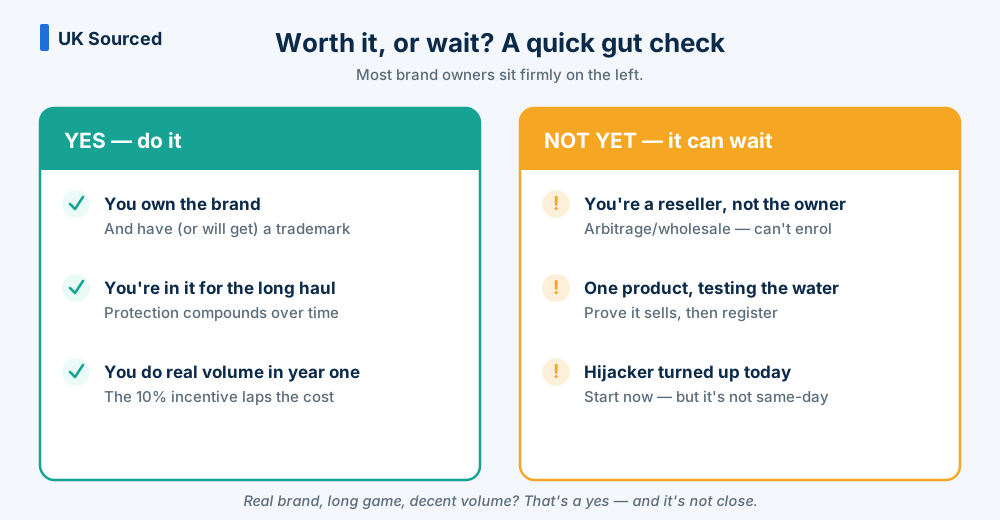 A quick gut check — most brand owners sit firmly on the left.
The bit people underestimate
The genuine value of Registry isn't any single feature on the list. It's control. Before it, you're a tenant on your own listing — Amazon and any third-party seller can rearrange your furniture whenever they fancy. After it, you own the place. Your copy stays put, your images stay yours, and when someone tries to muscle in you've actually got a door you can shut.
That shift — from hoping nobody messes with your listing to knowing they can't — is what you're really buying. The A+ Content and the cashback and the posh ad formats are the bonus.
Getting a trademark filed and Registry set up cleanly is a bit fiddly, and it's the sort of admin that sits on a founder's to-do list for months. If you'd rather it just got done properly — trademark route, enrolment, protection switched on — that's the kind of thing we sort out for the brands we work with. Drop us a line and we'll point you the right way.