Is Subscribe & Save worth it for your brand?
Is Amazon Subscribe & Save worth it for your brand? Who it fits, what the discount really costs against lifetime value, and when it's quietly margin suicide.
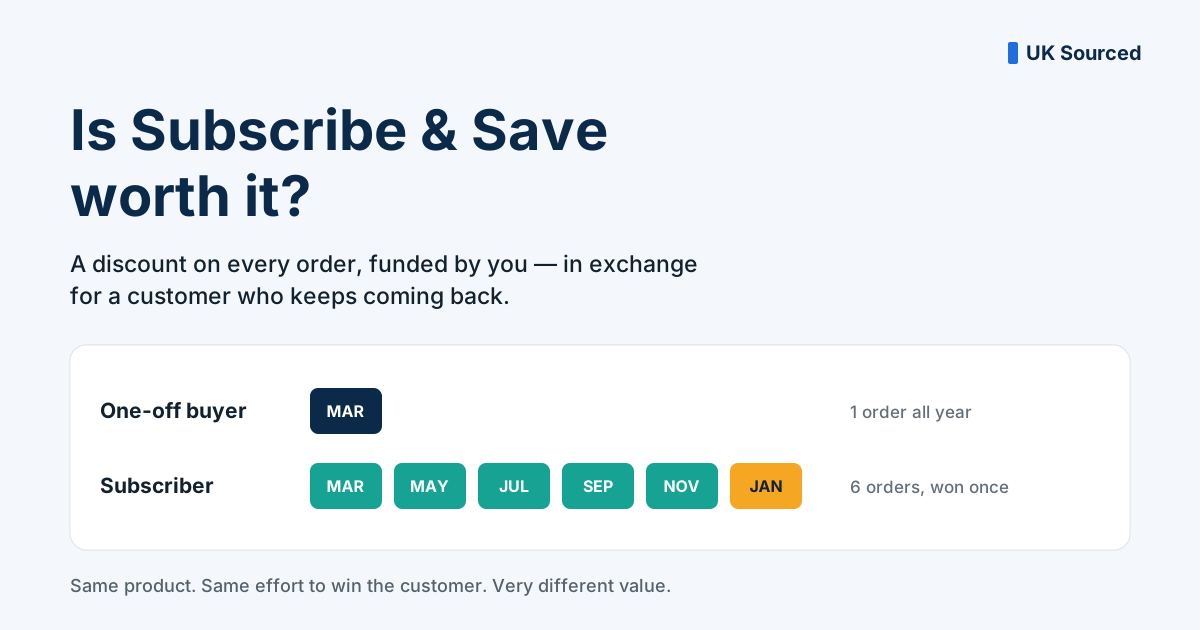
Two customers buy your dog shampoo in March. The first finishes the bottle, quite likes it, and vanishes — maybe they'll reorder, maybe a competitor's advert catches them first. The second ticked Subscribe & Save at checkout. They buy again in May. And July. And September. You paid to win them exactly once.
That's the whole pitch for Subscribe & Save. It's also the whole problem, because every one of those repeat deliveries goes out at a discount — and you're the one funding it. So, is it worth it? For the right product, genuinely yes. For the wrong one, it's a slow leak dressed up as loyalty. Here's how to tell which side you're on.
What you're actually signing up for
Subscribe & Save is Amazon's subscription programme. A customer picks your product, chooses a delivery frequency — monthly, every two months, whatever suits their cupboard — and Amazon reorders it for them automatically. In exchange, they get a discount on every delivery.
Who funds that discount? You do. Enrolment happens SKU by SKU in Seller Central, and you choose the base discount you'll offer — typically 5% or 10%. Customers who bundle several subscriptions into one delivery can see a bigger discount still, and any coupons you're running stack on top. There's no separate programme fee, but your normal referral and fulfilment fees apply to every subscription order, same as any other sale. If you haven't mapped those out recently, our FBA fees breakdown is worth ten minutes of your time first.
One more mechanic matters. Subscriptions renew quietly in the background. That's the magic. Your customer never re-searches the keyword, never sees the competitor's ad, never comparison-shops. The box just arrives.
The only question that matters: does your product actually run out?
Not "could someone buy it again". Will they — on a schedule?
Coffee. Supplements. Pet food. Razor blades, protein powder, cleaning refills, baby wipes. These empty at a predictable rate, and reordering them is a chore people are delighted to automate. That's the natural home of Subscribe & Save, and it's why the eligible categories are the consumable ones: grocery, health and personal care, beauty, pet supplies, baby, household.
If your product doesn't empty, wear out or get used up, stop reading and keep your discount. A phone case doesn't run out. A spirit level doesn't run out. (We once watched a seller enrol a silicone cake mould. It gathered three subscribers, and we'd bet at least two were relatives.) Enrolling a one-off purchase doesn't turn it into a subscription product — it just bolts a permanent discount onto your listing.
The maths: a discount now for a customer you keep
The expensive part of Amazon isn't selling to a customer. It's finding one. You pay for that first order through PPC, through the ranking work that got you seen in the first place. A one-off buyer takes all of that investment and hands you a single order back. If you want them again, you pay again — because at reorder time they're back in the search results with every competitor bidding for their attention.
A subscriber breaks that cycle. The acquisition cost gets spread across every order they place, and the reorders arrive without a penny of ad spend attached. The 5–10% you give away is best understood as a retention fee, and compared with what you'd spend re-winning the same customer through ads, it's usually the cheaper option by a distance.
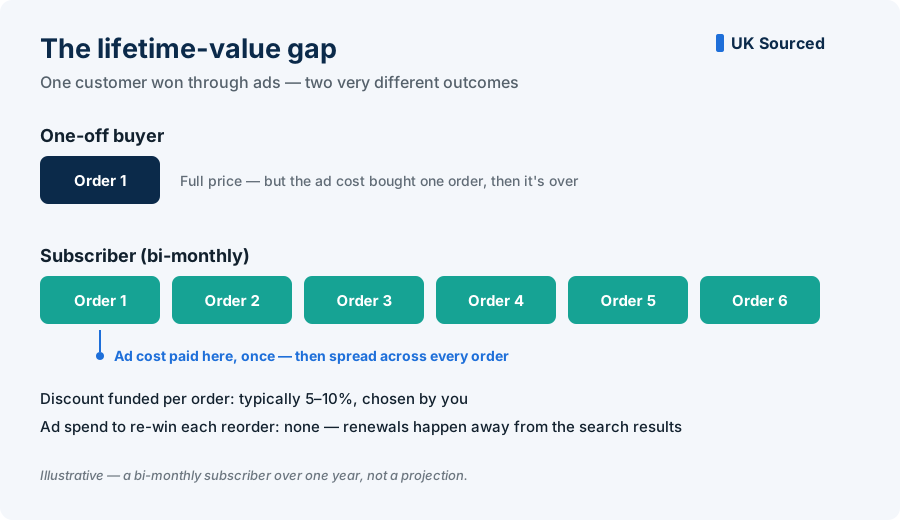 The discount is the price of keeping the customer. Re-acquiring them through ads usually costs more.
Now the honest caveat, because there is one. Some subscribers would have rebought anyway, at full price. The discount partly subsidises loyalty you already had, and anyone who pretends otherwise is selling you something. The real question isn't whether you lose a little margin on those people — you do — it's whether the extra orders and the ad spend you never have to pay outweigh it. On a true consumable with decent margins, in our experience they comfortably do.
Eligibility, briefly
Amazon wants products that won't embarrass the programme, so the bar looks like this:
- FBA stock — your inventory sits in Amazon's network, so deliveries stay reliable
- A healthy account with a solid in-stock record
- An eligible category — the consumables list above
None of that is hard to clear. The discipline that comes after enrolment is the hard part. Which brings us to stock.
The forecasting bonus nobody mentions
Sticky subscribers do something quietly valuable: they turn a chunk of your demand from a guess into a known number. Before the month even starts, you can see the subscription orders already queued up. That baseline makes your FBA send-ins more confident and your stockouts rarer. For a small brand, honestly, the predictability is worth nearly as much as the revenue.
But it cuts both ways. Run out of stock and subscriptions get skipped — and skipped subscribers cancel. You don't just miss a sale; you lose the annuity. If your supply chain is patchy, fix that before you enrol anything, because Subscribe & Save punishes stockouts far harder than ordinary sales do.
When it's margin suicide
Three situations where we'd tell you to leave the box unticked.
Your product is a one-off purchase. Covered above, but it bears repeating because sellers keep doing it. No repeat cycle means the discount is a pure giveaway — a loyalty reward paid to people who were never coming back.
Your margins are already thin. The discount comes off the top of your sale price, but referral and fulfilment fees don't shrink to match. If a product barely clears a profit after fees, handing another slice of it to your most reliable customers can flip the SKU from workable to pointless. Do the sums per product before enrolling, never after.
Your product invites stockpiling. Big multipacks and long-life items attract the subscribe-grab-cancel crowd: they take the discounted first delivery, sometimes a second, then cancel before the relationship ever pays for itself. Smaller pack sizes on subscription tend to behave far better.
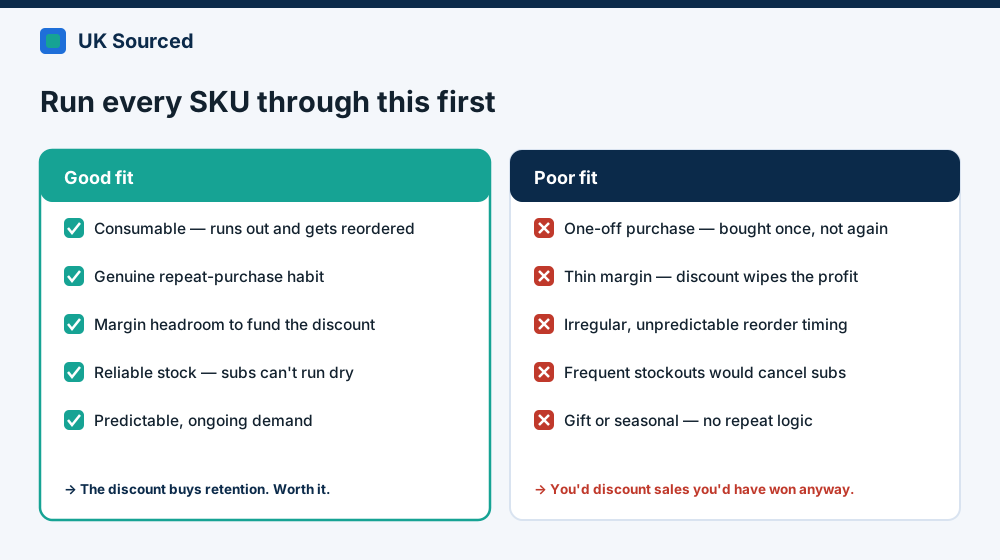 Run every SKU through this before you tick the enrolment box.
There's a softer failure mode too: enrolling everything by default because the tick-box costs nothing. It isn't nothing. Every enrolled SKU is a standing discount, and a standing discount deserves the same scrutiny as any other price cut you'd sign off.
Our verdict
If you sell a genuine consumable, your margins have headroom after fees, and you can keep stock flowing, turn it on. It's one of the most underrated retention tools Amazon offers, and most of the brands it actually fits still haven't bothered. The subscriber base compounds, and the reorders arrive with no ad spend attached.
If your product doesn't run out, or the discount would eat what's left of your margin, skip it without a second thought. Loyalty schemes don't fix weak unit economics — they magnify them.
And if you'd like a second pair of eyes on whether your numbers can carry it, that's the sort of thing we do all day. Drop us a line at enquiries@uksourcedltd.com.