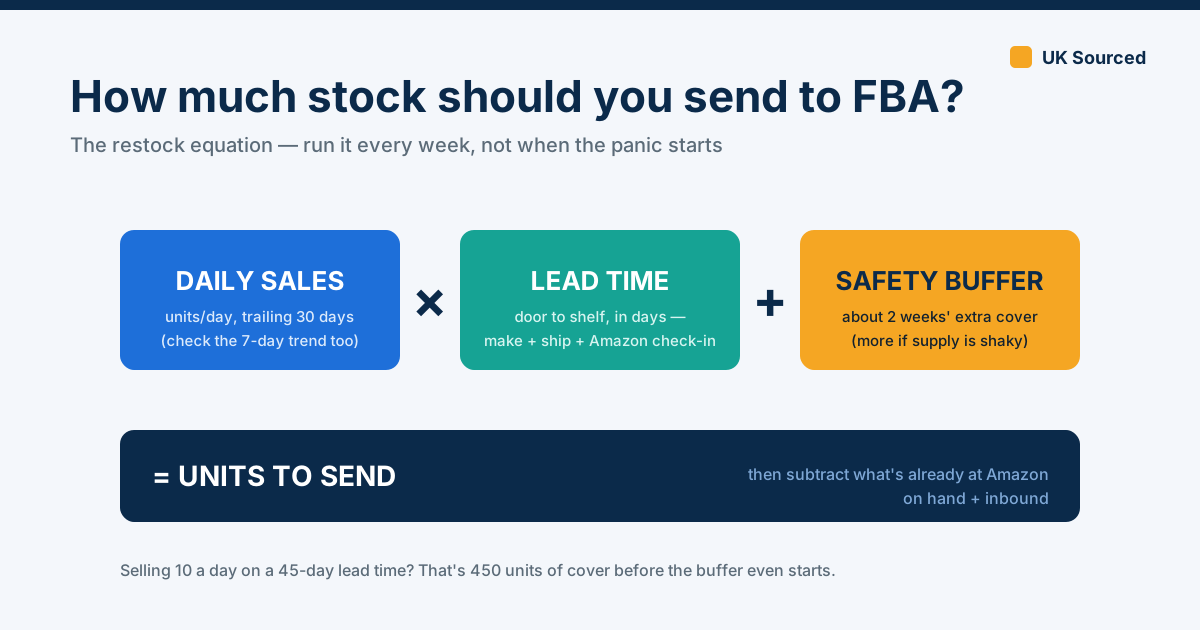
How much stock should you send in to FBA?
How much stock should you send to FBA? A simple restock formula — velocity × lead time + buffer — plus why a stockout costs more than storage fees ever will.
Your best seller has 43 units left at Amazon. Your supplier needs 30 days to make more, the ship takes another three weeks, and you're selling nine a day. Run the numbers and your stomach drops: the stock is gone in under five days, and the replacement is nearly two months away.
That's usually the moment inventory planning stops being boring. Better to get there before the panic, because "how much should I send to FBA?" has an actual answer. Not a hunch. Not "a pallet feels about right". A five-minute calculation you can run every Monday morning with a cup of tea.
Three numbers, one formula
Everything rests on three numbers, and only one of them is hard to get right.
Sales velocity. Units per day, averaged over the trailing 30 days. Not your best week, and definitely not launch week. If the last month included a deal, a stockout or a spike you can't explain, adjust for it — you're trying to capture what normal looks like. Glance at the trailing seven days too: if they're running well above the 30-day average, demand is climbing and yesterday's numbers will undersell tomorrow.
Lead time. This is the hard one, because the honest answer is longer than the one your supplier gives you. Count door to shelf: manufacturing, freight, customs, and Amazon receiving and checking the stock in. That last stage matters more than people think — stock sitting at a fulfilment centre dock isn't sellable stock. If the quote says 30 days but history says the full journey takes 60, your lead time is 60.
Safety buffer. Suppliers slip. Ships queue. Check-in crawls in busy periods. A buffer of roughly two weeks' extra cover suits most stable products; stretch it if your supply chain is long, your demand is spiky, or Chinese New Year is anywhere on the horizon.
Put them together:
Units to send = (daily velocity × lead time in days) + buffer − stock already at Amazon, including inbound
So: you sell 10 a day, your honest lead time is 45 days, and you want two weeks of buffer. That's 450 units of cover, plus 140 for the buffer, minus — say — 260 units on hand and inbound. Send 330.
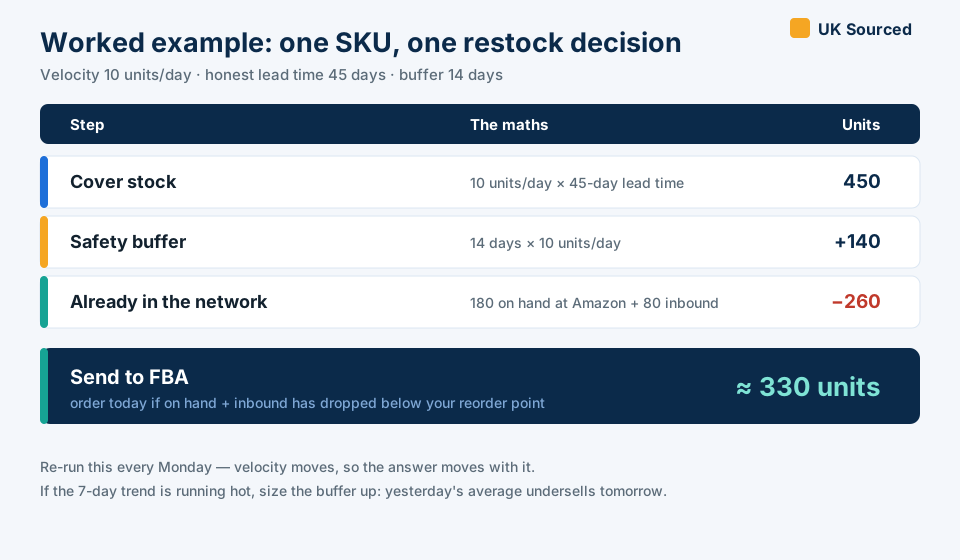 One SKU, one restock decision — the same sum works whether you sell 3 a day or 300.
The two ways to get it wrong (they're not equal)
Send too much and you pay rent on the excess. Send too little and you pay with something far harder to buy back. Sellers treat these as symmetrical mistakes. They aren't.
Overstock is the failure everyone fears, because its costs arrive as line items: monthly storage fees on every cubic metre, rates that jump from October to December, and long-term surcharges once stock has sat around gathering dust. (We've pulled the whole fee stack apart in how FBA fees really work in the UK.) It's real money and it compounds — but it's visible, you can budget for it, and you can usually fix it with a discount or a removal order.
A stockout is quieter, and in our view it's nearly always the dearer mistake. Amazon's algorithm leans heavily on recent sales velocity. Go dark for three weeks and you don't just lose three weeks of revenue — your rank slides, your ads switch off and the campaigns cool, and the shoppers who'd have bought from you buy from whoever's sitting where you used to sit. When stock finally lands, you're not resuming. You're relaunching, often with launch-level ad spend, to claw back a position you'd already paid for once.
The stockout ends. The damage doesn't.
You can discount your way out of excess stock. You can't discount your way back to a rank you lost. (We once watched a seller celebrate their best-ever month, then spend the next quarter paying for it — the spike emptied the warehouse, and the listing never quite got its old spot back.)
You don't even have to hit zero to pay
Running thin has its own price tag, and it starts before the stockout does.
First, the low-inventory-level fee. If your FBA stock consistently runs thin relative to your sales rate, Amazon adds an extra per-unit charge. Their logic is that low stock hurts the customer experience and makes their logistics less efficient. Yours is that you were being careful with cash. Both can be true; you still pay.
Second — subtler — thin stock is a bad signal. Amazon has little reason to push traffic towards a listing that's about to run out, and sellers who watch their numbers closely will tell you visibility softens as cover shrinks. Call it throttling or call it the machine being cautious; the effect is the same. The last few weeks before a stockout are often weaker than they should be, which quietly shrinks the very velocity number you're planning from.
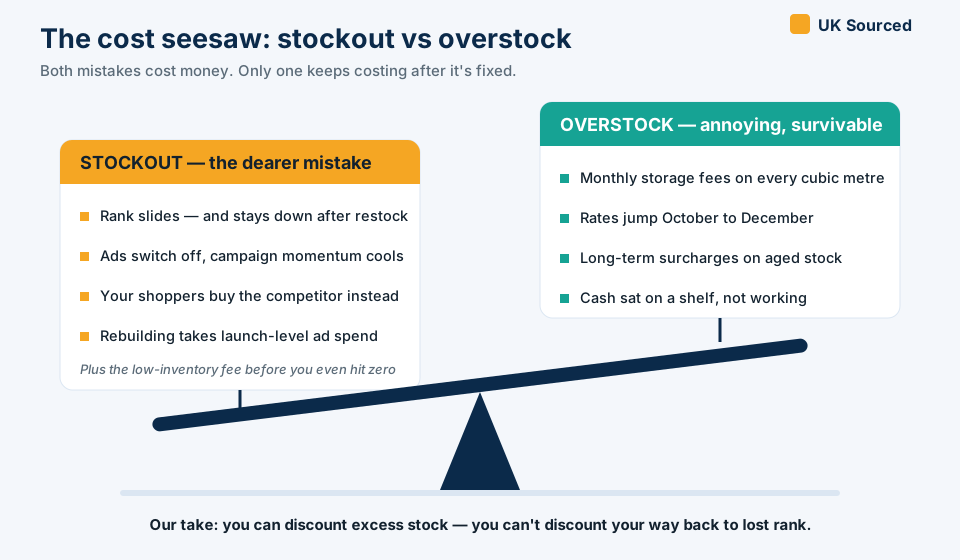 Both pans cost money. Only one keeps costing after the problem is fixed.
The Monday routine (15 minutes, honestly)
Here's the whole discipline, per SKU:
- Pull your velocity. Last 30 days' units sold ÷ 30. Glance at the trailing 7 for trend.
- Know your reorder point. Velocity × honest lead time + buffer. Write it next to each SKU so the decision is pre-made.
- Compare. If on-hand plus inbound is below the reorder point, order today. Not after the weekend — every day you hesitate now is a day of stockout at the other end.
- Cap the order sensibly. Cover the gap until the next batch can land, plus buffer. Not a year's worth. Cash sat on a warehouse shelf isn't working, and from October it's paying peak-season storage rates for the privilege.
- Adjust for the season. If your product peaks at Christmas, plan Q4 off last year's Q4, not off July's numbers.
- Log the misses. Every late shipment and every stockout goes in a note. Over a few cycles, that log turns your supplier's quoted lead time into your true one.
None of this needs software, though tools help once you're juggling dozens of SKUs. A spreadsheet and a recurring calendar slot genuinely covers most brands up to a serious size.
So the honest answer to "how much stock should I send in?" is this: enough to cover your true lead time, plus a couple of weeks for the world being unreliable, minus what's already in the network — recalculated weekly, because velocity never sits still.
If Monday-morning restock maths isn't how you want to spend your week, it's one of the first things we take off a client's plate. Drop us a line at enquiries@uksourcedltd.com and we'll tell you straight whether your stock levels are working for you or against you.