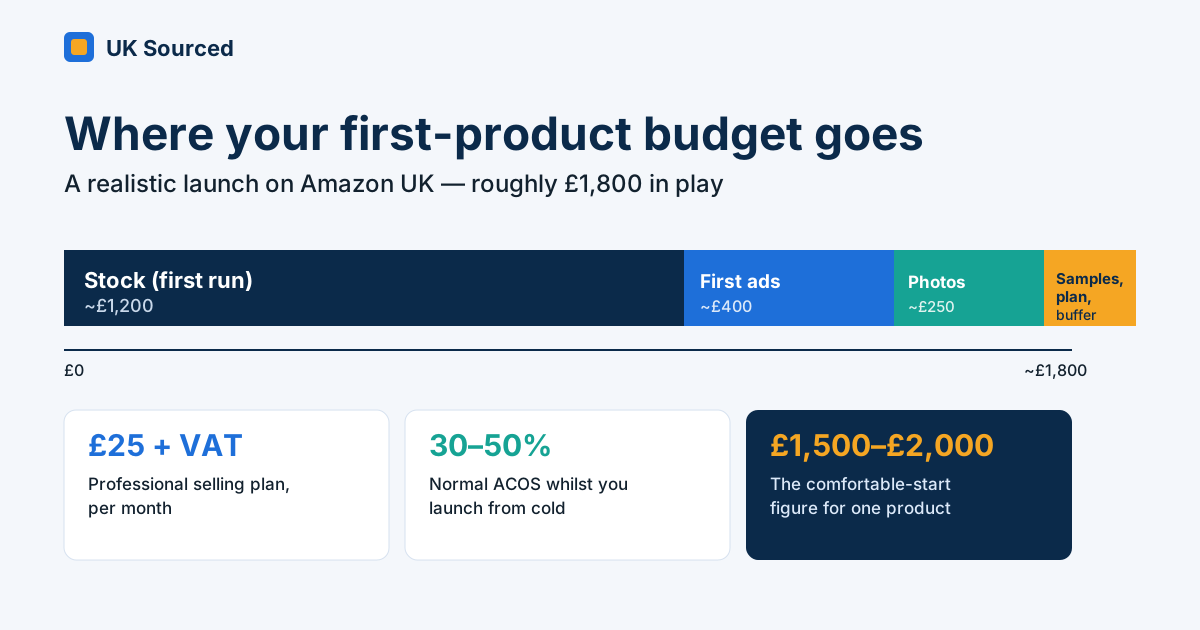
How much money do you really need to start selling on Amazon UK?
How much does it really cost to start selling on Amazon UK? A realistic budget breakdown — stock, the Professional plan, samples, photos and first ads.
"Can I start on Amazon with a few hundred quid?" We get asked this most weeks. The honest answer nobody wants to hear: you can, but you probably shouldn't.
Technically Amazon lets you open a seller account and list a product for very little. The Individual plan costs nothing per month. Print a label, ship a box, off you go. Plenty of people start exactly like that. Then they run out of money three weeks after launch, freeze, and quietly give up — convinced Amazon "doesn't work". It wasn't Amazon. It was the budget.
So let's do the sums properly. Where does the money actually go when you launch a product on Amazon UK, and how much do you genuinely need behind you to give it a fair shot?
The bit everyone forgets: stock eats most of it
Here's the thing sellers underestimate more than anything else. The Amazon fees, the software, the pretty photos — none of it is the big number. Stock is.
Say you're sourcing a product that lands (with shipping and duty) at £4 a unit, and you order 300 units for your first run. That's £1,200 gone before Amazon has seen a single sale. Order 500 to get a better unit price and it's closer to £2,000. Most decent suppliers won't touch you for tiny quantities anyway, or the per-unit cost is so high your margins vanish.
And you need enough stock to not run out. This trips up nearly everyone. You launch, sales start climbing, momentum builds — and then you stock out at week six because you only ordered 150 units to "test the water". Amazon's algorithm loses interest, your ranking slides, and when you finally restock you're starting from cold. A launch that can't sustain itself isn't a test. It's a false start you paid for.
The running costs — smaller than you'd think
Now the ongoing stuff. If you're serious, you want the Professional selling plan, not the Individual one.
The Professional plan is £25 + VAT a month. That's it. The Individual plan skips the monthly fee but charges you roughly 75p per item sold and locks you out of the things that actually matter — running ads, winning the Buy Box properly, bulk tools, category access. Once you're shifting more than about 35 items a month, Professional is cheaper anyway. If you plan to advertise (you should), it's not optional. Pay the £25.
Then there's Amazon's cut on every sale — the referral fee, usually around 15% of the sale price, plus fulfilment fees if you're using FBA. Those don't come out of your startup pot; they come out of each sale. But budget for them mentally, because they shape whether your £4 product at a £15 price actually leaves you anything.
Samples and photography — don't skip these
Two line items people love to cut, and both come back to bite them.
Samples. Order the product yourself before you commit to 500 of them. Hold it. Weigh it. Is it what the supplier promised, or is the stitching loose and the box already crushed? A few samples might cost you £30–£80 with shipping. Cheap insurance against ordering a pallet of tat you then have to apologise to customers for.
Photography. On Amazon, your photos are your shop. Nobody can pick the thing up. A clean main image, a few lifestyle shots, an infographic showing the benefits — this is often the single biggest lever on your conversion rate, and it's the one budget sellers slash first. You can do it yourself with decent light and patience, or pay a product photographer £150–£400 for a set. Somewhere in that range, spend something. Grainy phone snaps on a kitchen worktop will quietly cost you far more in lost sales than good photos ever would.
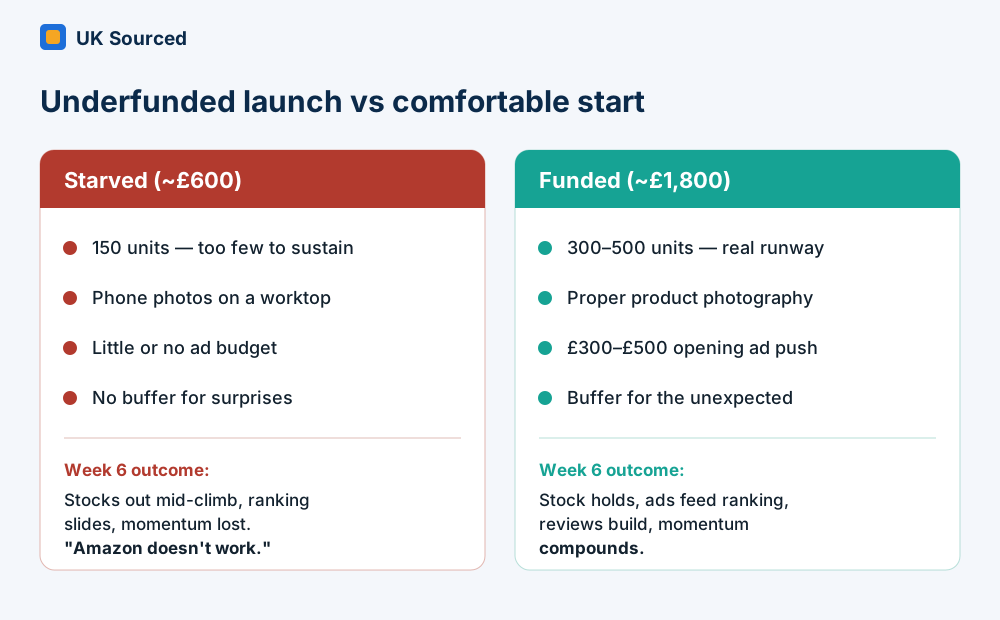 The gap between a starved launch and a funded one usually shows up by week six.
The launch push: first ads
You've listed a product nobody has heard of, on a website with millions of others. Organic sales won't just appear. This is where your first PPC (pay-per-click) advertising budget comes in — you're paying Amazon to put you in front of shoppers searching for what you sell, buying the early sales and reviews that teach the algorithm you're worth ranking.
For a first product, set aside something like £300–£500 for the opening month of ads. Not to be spent recklessly — a tight auto campaign and a couple of manual keyword campaigns — but enough to gather data and get a foothold. Ads in the launch phase run at a higher ACOS (advertising cost of sale) than a mature product; 30–50% is normal early on, before you've earned organic rank. That's the price of visibility from a standing start. Underfund this and your lovely product just sits there, invisible.
So what's the real number?
Add it up. Stock is the bulk — call it £1,000–£1,500 for a sensible first run. The Professional plan, samples, photography and your opening ad budget stack on top. You want a buffer too, because something always costs more than the spreadsheet said.
Realistically, £1,500–£2,000 is a comfortable-start figure for a single product on Amazon UK. Not a fortune. Not "you need ten grand" either — that's usually agencies talking their own book. But meaningfully more than the "start with £200" advice floating around, which sets people up to fail.
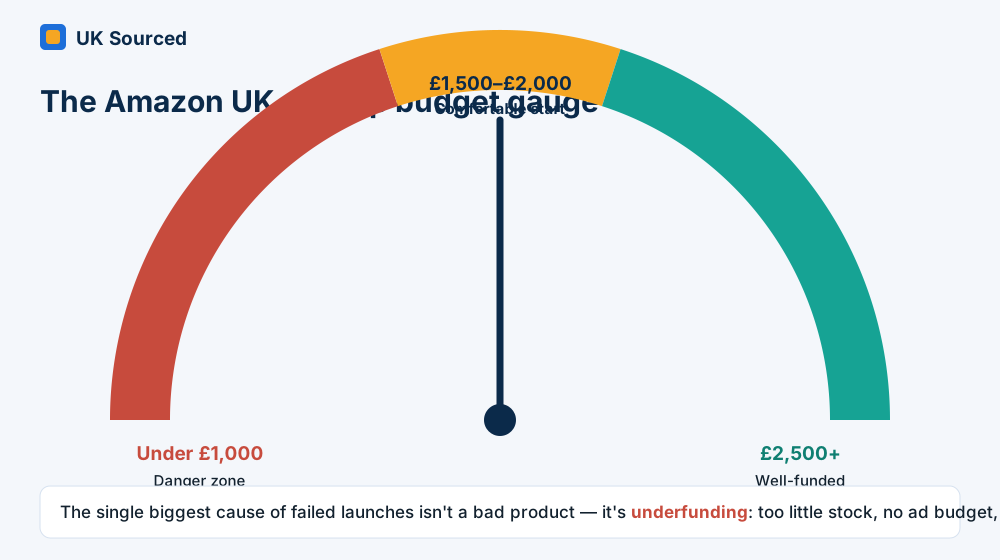 The comfortable-start band — enough stock, enough runway, enough to not stock out mid-launch.
Could you do it for less? Yes, with a cheap, light, simple product and a lot of your own sweat on the photos and listing. We've seen scrappy launches work on under a grand. But the failures we see almost always share one root cause, and it isn't a bad product or bad luck. It's underfunding — too little stock, no ad budget, and no buffer, so the first bump in the road ends the whole thing.
Give your product enough runway to actually get going. A launch with £1,800 behind it and a plan will nearly always beat a better product launched on fumes.
If you're weighing up your first product and want a straight read on the numbers before you commit to a stock order, that's the sort of thing we do all day. Drop us a line at enquiries@uksourcedltd.com — no hard sell, just an honest steer.