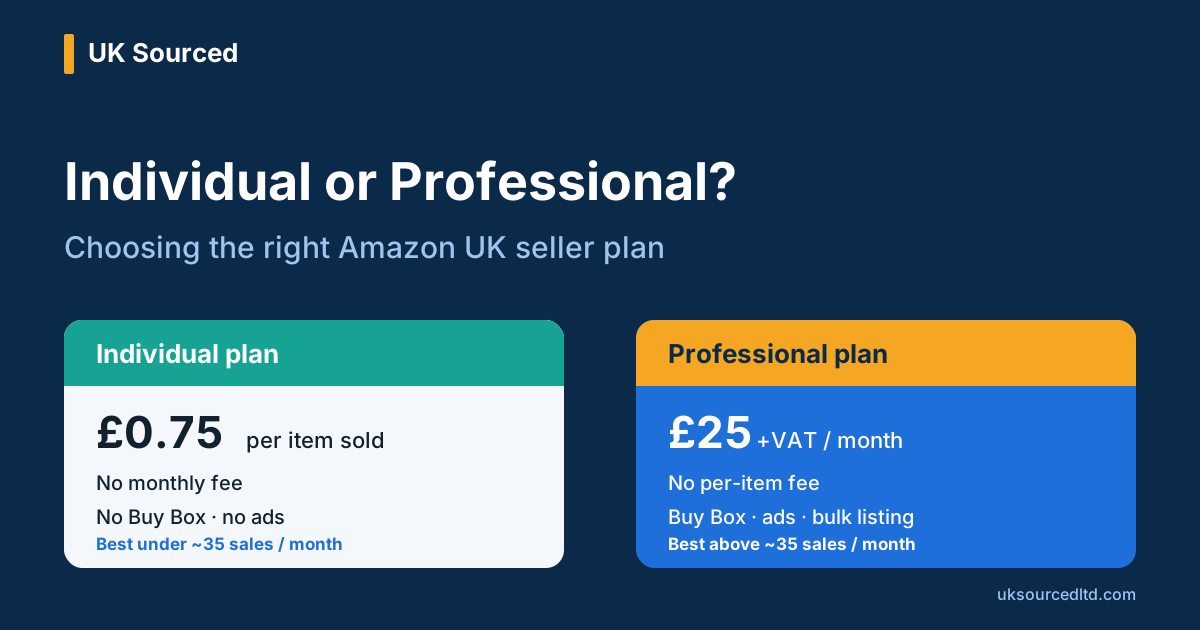
Individual or Professional Amazon seller plan — which do you need?
Individual vs Professional Amazon seller plan in the UK: the ~35-sales-a-month break-even, plus the Buy Box, advertising and bulk-listing catches most people miss.
You're about to sign up as an Amazon seller, and the very first screen makes you pick: Individual or Professional. One looks free. The other wants £25 a month plus VAT before you've sold a thing. Naturally you lean towards free.
Hold on a second.
For most people who are actually serious about this, the "free" plan is the more expensive of the two. That sounds backwards, so let's do the maths properly and then talk about the bits Amazon doesn't put on the sign-up page.
The two plans, in plain terms
The Individual plan has no monthly fee. Instead, Amazon takes £0.75 off you for every single item you sell. That's on top of the usual referral fee (the percentage cut Amazon takes on every sale regardless of plan). So it's not free — it's pay-as-you-go.
The Professional plan is £25 a month plus VAT — call it £30 all in once the VAT is on. That £0.75-per-item charge disappears. You pay the flat fee whether you sell three units or three thousand.
That's the headline difference. But the per-item charge is the bit that decides the money question, so let's chase it down.
The 35-sales break-even
Here's the sum. The Professional plan costs £25 a month. The Individual plan costs you £0.75 per item. Divide one by the other:
£25 ÷ £0.75 = roughly 33 items.
So somewhere around 33 to 35 sales a month, the two plans cost you the same. Below that, Individual is cheaper. Above it, Professional is cheaper — and it keeps getting cheaper the more you sell, because that flat £25 doesn't move while the per-item charges would just keep stacking up.
Sell 100 units a month on Individual and you've handed Amazon £75 in per-item fees alone. On Professional that same month costs you £25. You've overpaid by £50 for the privilege of the "free" plan.
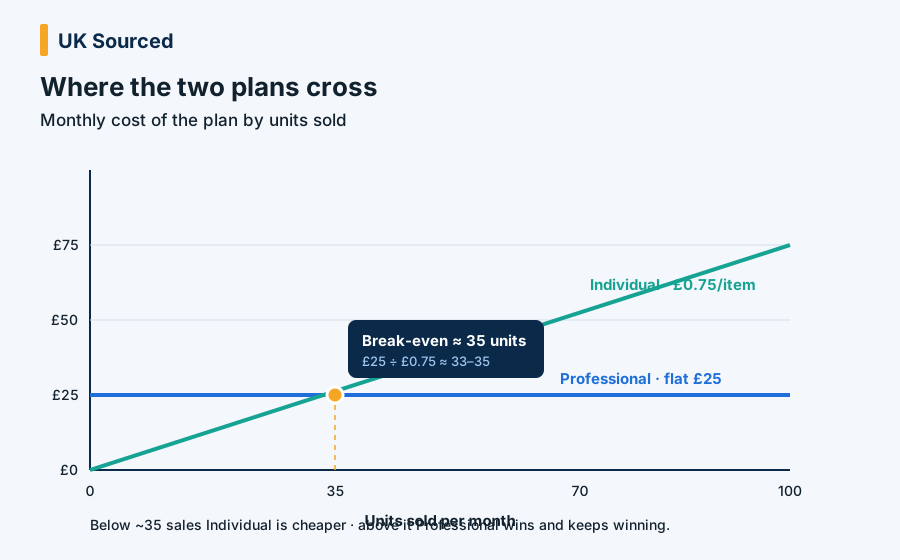 The lines cross at around 35 units. Below that, Individual wins on cost. Above it, Professional pulls ahead and never looks back.
We use ~35 as the round number worth remembering. If you honestly expect to shift more than about 35 items in a month — not in your first fortnight, but in a normal steady month — Professional is the cheaper choice before you factor in anything else.
And there's plenty else.
The bits that aren't on the pricing page
If it were purely about that £0.75, you could just do the sum and move on. It isn't. The Professional plan unlocks a set of features that the Individual plan simply locks you out of, and a couple of them are dealbreakers for anyone treating this as a business rather than a clear-out of the loft.
The Buy Box. This is the big one. The Buy Box is that "Add to Basket" button on a product page — the box that captures the overwhelming majority of sales. Individual sellers are not eligible to win it. Full stop. If you're selling a product that other sellers also list (anything wholesale, anything branded, anything with a shared listing), an Individual account can't compete for the button that actually drives the sale. You'll be shunted to the "other sellers" section that most shoppers never scroll to. For private-label sellers with their own unique listing this matters less day to day — but the moment anyone else lists against you, you're stuck.
Advertising. Want to run Sponsored Products — Amazon's pay-per-click ads that put your product at the top of search? You need a Professional account. Individual sellers can't run PPC at all. Given that most new products need a bit of ad support to get seen in the first place, this quietly rules out the Individual plan for anyone launching something new.
Bulk listing and feeds. On Individual, you list products one at a time through the website. Fine for ten products. Miserable for two hundred. Professional gives you bulk upload via spreadsheets and inventory feeds, plus access to the reports and tools that make managing real stock levels bearable. (Anyone who's tried to load a full catalogue by hand knows exactly the sinking feeling we mean.)
There's more — category approvals, promotions, gift options, some restricted categories that only open up on Professional — but Buy Box and advertising are the two that force the decision for most serious sellers.
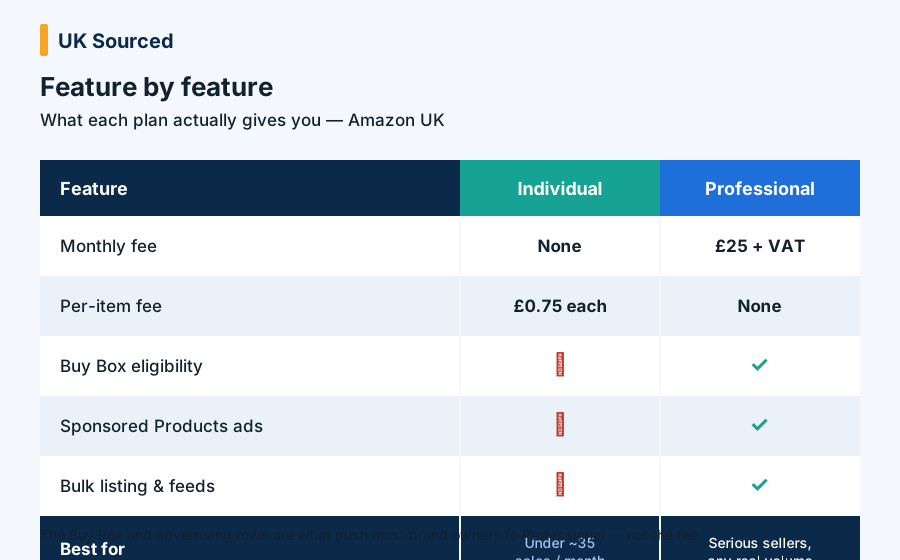 The features, not just the fees. This is usually what tips the decision — not the £0.75.
So who's the Individual plan actually for?
We're not going to pretend it's useless, because it isn't. The Individual plan is genuinely the right pick if:
- You're testing the water with a handful of units and want to learn the ropes before committing to a monthly fee.
- You're selling occasionally — clearing out surplus stock, a one-off batch, a seasonal thing — and don't expect to pass 35 sales a month.
- You've got a unique product nobody else lists and you're deliberately not advertising yet.
If that's you, start on Individual. Save the £30. You can upgrade in about two clicks the moment your volume climbs, and Amazon doesn't penalise you for switching. Honestly, starting cheap and upgrading when the numbers say so is a perfectly sensible way in.
But if you're a brand owner planning to build something — running ads, competing on shared listings, uploading a proper catalogue — go straight to Professional. The plan pays for itself the moment you cross ~35 sales, and the features pay for themselves long before that.
The quick decision
Ask yourself two questions. Will I sell more than about 35 items in a normal month? And do I need the Buy Box or advertising to make this work? If the answer to either is yes, it's Professional. If it's a firm no to both, start on Individual and upgrade when the time comes.
That's the whole thing. Most people who agonise over this end up on Professional anyway — they just wanted permission to skip the "free" trap.
If you'd rather have someone who runs Amazon accounts every day set this up correctly from the start — the right plan, the listings, the ads that actually earn their keep — that's the sort of thing we do. Drop us a line at enquiries@uksourcedltd.com and we'll give you a straight answer.