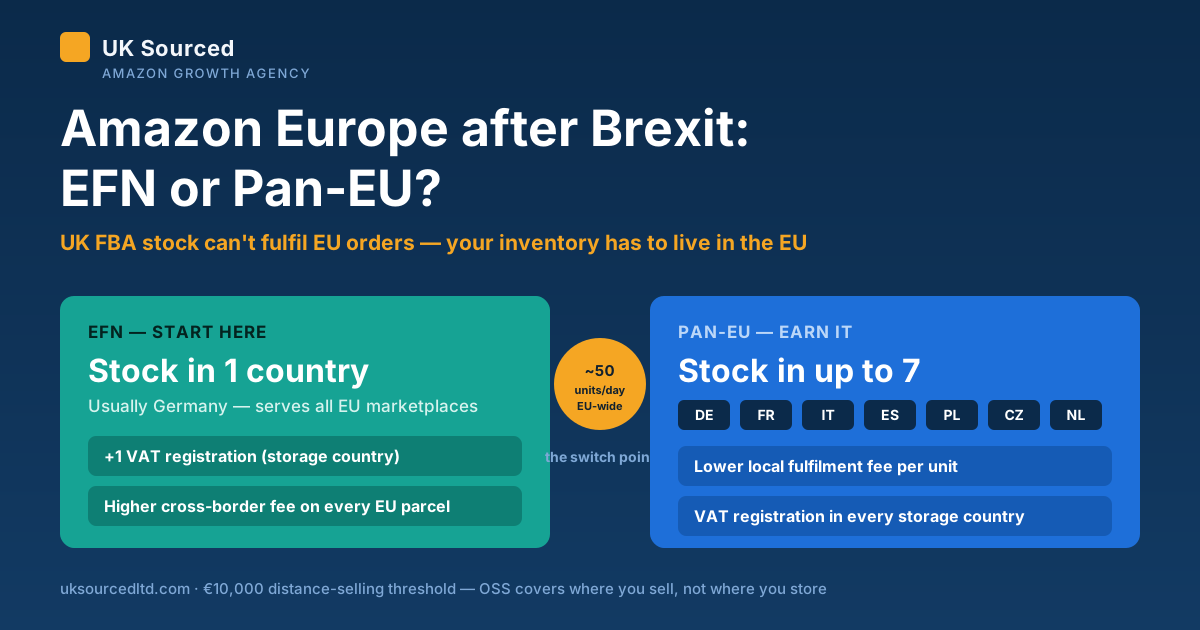
Selling on Amazon Europe from the UK after Brexit: EFN vs Pan-EU
Selling on Amazon Europe after Brexit: why UK FBA stock can't fulfil EU orders, and how to pick between EFN and Pan-EU — VAT, fees and the 50-a-day rule.
Before January 2021, selling across Amazon Europe from the UK was almost boringly easy. One pool of stock in a British warehouse, five EU marketplaces switched on, orders flowing to Munich and Milan while you got on with your day.
That's over. Since Brexit, UK FBA stock cannot fulfil EU orders. At all. Inventory sitting in a UK fulfilment centre is invisible to shoppers on Amazon.de and Amazon.fr — if you want European sales, you have to physically move stock across the Channel and into an EU fulfilment centre first.
Plenty of UK brands heard that, winced, and quietly shelved Europe. We think that's exactly why it's worth doing. Germany is one of Amazon's largest marketplaces anywhere, France isn't far behind, and a fair slice of your UK competition gave up at this precise fence. The paperwork is the moat. Get over it and it starts protecting you.
Once your stock is inside the EU, Amazon gives you two ways to run fulfilment: EFN or Pan-EU. That's the decision this post is really about, because picking wrong in either direction costs you — one way in fees, the other in VAT admin.
Option one: EFN — one warehouse serves the whole EU
EFN, the European Fulfilment Network, is the simple route. You inject stock into one EU country — nearly always Germany — and Amazon fulfils orders for every EU marketplace from that single pool. A customer in Naples clicks buy; the parcel ships from your German stock; you never think about Italian warehousing.
The simplicity has a price, in two parts.
VAT first. Storing stock in Germany means registering for German VAT. That's one extra registration alongside your UK one. Annoying, but contained — a decent EU VAT agent runs it for a modest monthly fee and you barely notice it after the first quarter.
Then fees. Every order that ships from Germany to a buyer in another EU country carries a higher cross-border fulfilment fee than a local order would. On one parcel, small change. Across ten thousand parcels, real money — and that's precisely the lever Pan-EU pulls.
Option two: Pan-EU — stock everywhere, cheaper per parcel
Pan-European FBA flips the trade. Instead of one storage country, Amazon distributes your inventory across fulfilment centres in up to seven: Germany, France, Italy, Spain, Poland, the Czech Republic and the Netherlands. Orders are fulfilled locally, so you pay the lower domestic fee on nearly every unit. Customers get faster delivery promises too, which quietly helps conversion.
The catch is the same rule that got you the German registration — multiplied. Storing stock in a country creates a VAT obligation in that country. Let Amazon spread you across all seven and you're registered and filing in all seven. Different portals, different deadlines, an accountant's invoice for each. (You can restrict which countries Amazon is allowed to store in, which is how sensible brands take the sting out. More on that in the phasing below.)
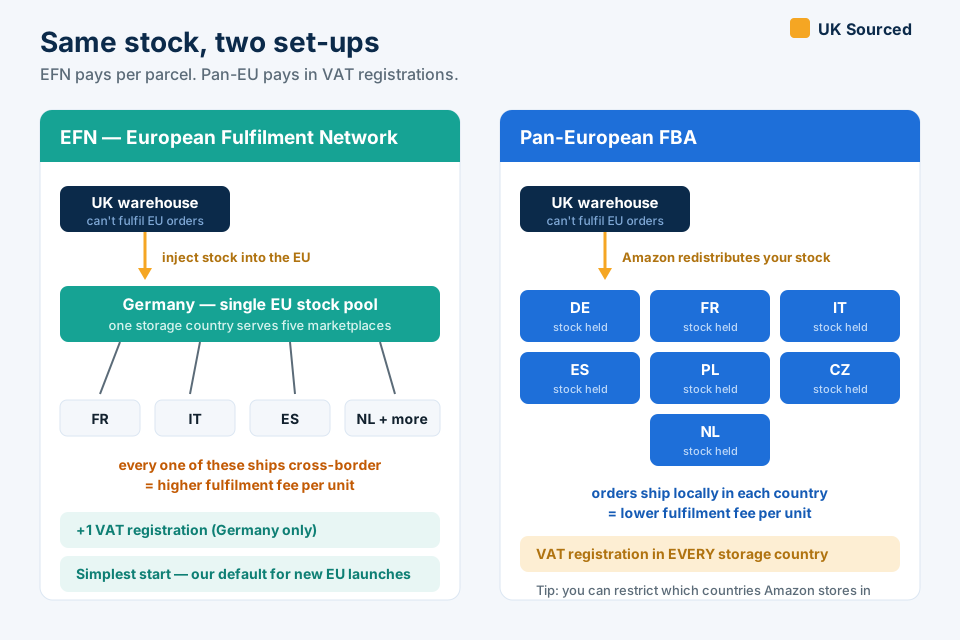 Same stock, two set-ups. EFN pays per parcel; Pan-EU pays in VAT registrations.
The VAT bit almost everyone gets wrong
Two things sound similar here and are not.
The EU's distance-selling threshold is €10,000. Once your total cross-border sales to EU consumers pass it — and on Amazon they will, fast — you're meant to charge each buyer's local VAT rate rather than one flat rate. The fix is OSS, the One Stop Shop: a single quarterly return, filed through one member state, covering all your cross-border EU sales. Genuinely one of the more civilised bits of EU admin.
But OSS covers where you sell, not where you store. Stock on the ground always triggers a local VAT registration, and no OSS return makes that disappear. That's why EFN costs you one extra registration and full Pan-EU can cost you seven. We've watched a founder open their fourth VAT-filing reminder of the month and visibly age. Budget for an agent from day one.
So which one? Use the 50-a-day rule
Our honest steer: nearly every UK brand should start on EFN, and treat Pan-EU as a promotion the numbers have to earn.
The rule of thumb we work to is roughly 50 units a day, EU-wide. Above that, the per-unit savings from local fulfilment comfortably outrun the extra registrations, filings and accountancy fees Pan-EU drags in behind it. Below it, you're paying fixed compliance costs to save pennies per parcel. The maths simply doesn't get there.
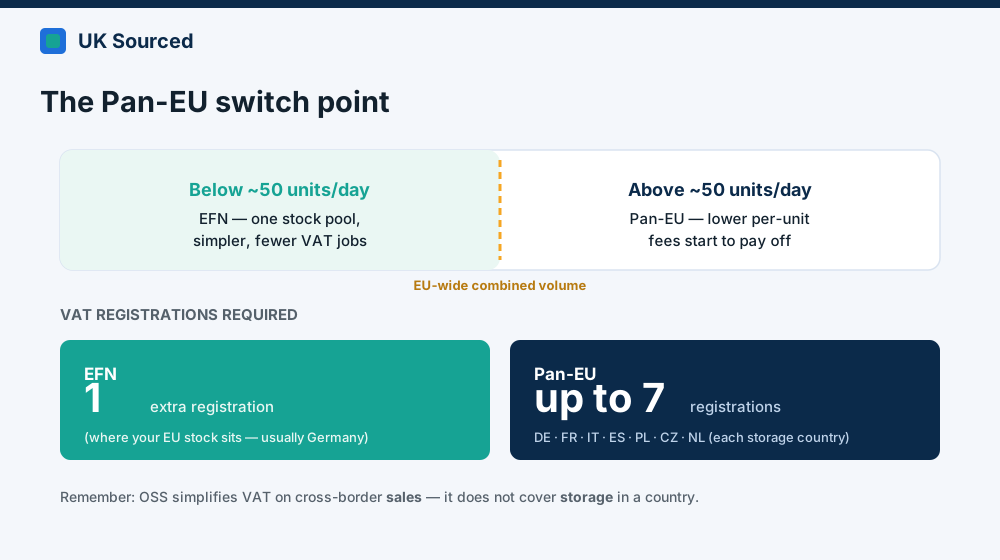 Below ~50 units a day EU-wide, Pan-EU's "lower fees" cost more than they save.
Neither option is better in the abstract. They're tools for different volumes. The mistake we see most often is a brand flattered into Pan-EU by the phrase "lower fulfilment fees" a year before their sales justify a single extra registration — then paying accountants in five countries to file returns on volume that barely exists.
How we'd phase it
Same discipline we use when taking a brand from the UK to the USA: cheap checks first, big commitments last.
Phase 1 — paperwork before parcels. Start the German VAT registration early; it's measured in weeks and months, not days. Sort an EU EORI number, OSS registration, and a proper customs plan for injecting stock — post-Brexit you're an exporter from the UK and an importer into the EU, and that wants setting up once, correctly, not improvised per shipment.
Phase 2 — lean injection, EFN on. A deliberately modest first shipment into Germany. Listings translated by a human who sells things, not machine-translated word soup — German shoppers can smell it instantly. Launch PPC on Amazon.de first: biggest prize, and your stock's already sitting there.
Phase 3 — let the data pick your marketplaces. EFN's whole virtue is that it lets you test five marketplaces from one pool of stock. Watch where the orders actually come from. In our experience two marketplaces end up doing most of the volume, and you won't know which two until real orders tell you.
Phase 4 — earn Pan-EU. When you're holding around that 50-a-day mark and the trend is up, switch — but country by country, enabling storage only where the volume justifies another VAT registration. Nobody hands out prizes for taking all seven at once.
The short version
Brexit didn't close Europe to UK brands. It gated it. Stock must live in the EU, VAT follows the stock, and EFN vs Pan-EU is really just a question of how much you sell. Start simple: EFN, one German registration, one lean shipment. Move to Pan-EU when your daily units say so — not when the fee table makes you wistful.
If sorting German VAT numbers and OSS returns isn't how you fancy spending your next quarter, this is the sort of thing we handle end to end — we've climbed this particular fence before. Drop us a line at enquiries@uksourcedltd.com and we'll tell you straight whether Europe's worth it for your product yet.