How to stop hijackers and counterfeiters on your Amazon listing
A hijacker on your Amazon listing? Here's how to spot one fast, gather proof, get them removed via Brand Registry and Report a Violation, and stop it happening again.
A brand owner rang us one Tuesday, half in a panic. Sales on their best product had dropped off a cliff overnight — down two-thirds, no warning, no changes their end. Their listing looked completely normal when they logged in. Same photos, same title, same everything.
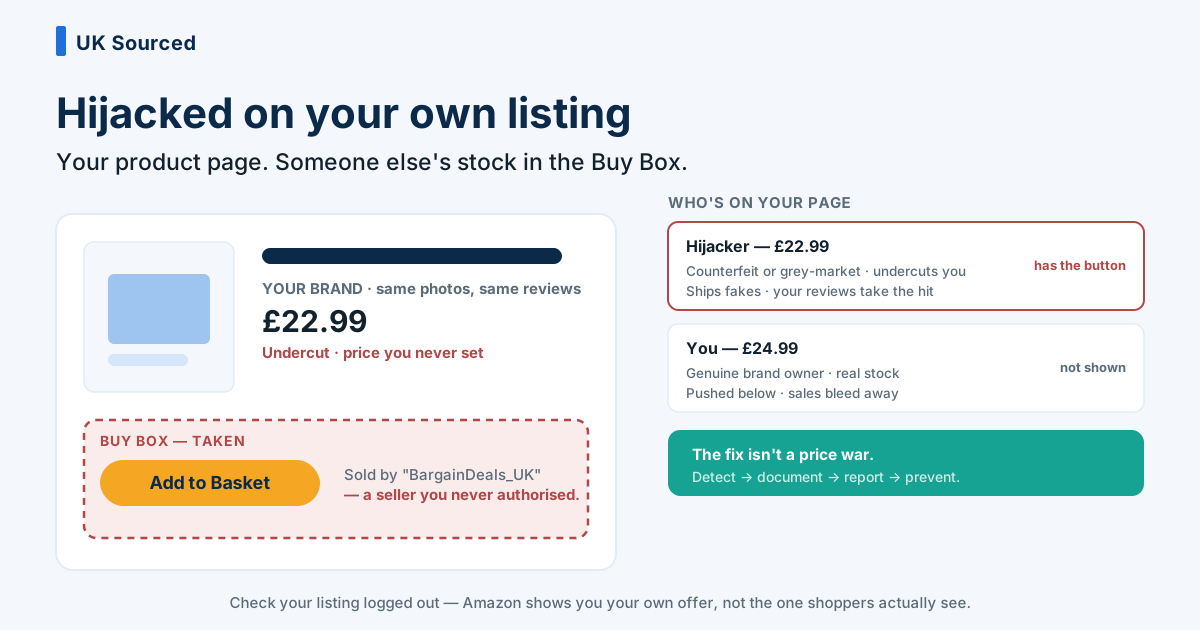
Then they opened the page in a browser they weren't signed into. There it was. A seller nobody recognised, sitting in the Buy Box, £2 under their price, dispatching who-knows-what to their customers. A hijacker.
If you own a brand on Amazon, this is one of those things that feels rare right up until the day it happens to you. So let's go through it properly — what a hijacker actually is, how to catch one quickly, and the exact steps to get them off your listing.
What a hijacker actually is
Every product on Amazon has one listing per ASIN. Multiple sellers can offer against that same listing — that's how the marketplace is meant to work for genuine resellers. A hijacker abuses it. They latch onto your product page, list their own stock (frequently counterfeit, sometimes just cheaper grey-market units), undercut you, and take the Buy Box.
Your customers still think they're buying from you. Same photos, same reviews, same brand name. They've no idea a different seller is now fulfilling the order. And when that seller ships a knock-off, or a battered box, or the wrong variant entirely — guess whose reviews take the hit? Yours. The one-star "this is fake" complaints land on your listing, not theirs.
There are two flavours worth separating in your head:
- The undercutter. Often genuine-ish product, sometimes sourced through a leaky wholesale channel, priced below you to grab the button. Annoying, dents your margin, but the goods might be real.
- The counterfeiter. Selling fakes under your brand. This is the dangerous one — it damages your reputation, breaks the law, and Amazon takes it seriously (once you prove it).
How to spot one — fast
The whole problem with hijackers is that they're quiet. Nothing flashes red. Here's what actually tips you off, roughly in the order you'll notice.
Your Buy Box vanishes. You wake up and you've lost the button on a listing you've held for months. If nothing changed your end — price the same, stock fine, metrics clean — someone joined and undercut you. That's the classic first sign.
Sales drop with no obvious cause. A sudden dip that doesn't match a seasonal lull or an ad you paused. Always worth a look under the bonnet.
The price on your page looks wrong. You see a figure lower than yours — often a suspiciously round or oddly specific number you'd never set. Someone's set it, and it isn't you.
A rash of quality complaints. New reviews or messages moaning about packaging, authenticity, "not as described", or a product that clearly isn't the real thing. That's a counterfeiter's calling card.
An unfamiliar seller name. The tell-tale. When you check "other sellers on Amazon" (or the Buy Box itself), there's a name you've never authorised sitting on your own-brand product.
Honestly, this trips up nearly everyone: the fix is to stop trusting the view you get while logged in. Amazon shows you your offer. Open your listing in a private/incognito window, logged out, and you'll see what a real shopper sees — including whose offer is actually winning.
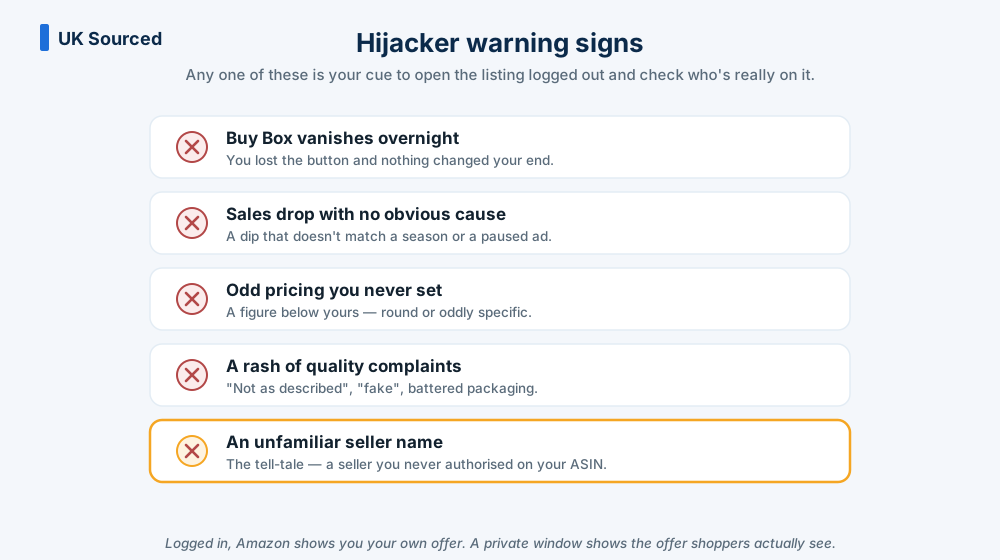 Five warning signs. Any one of them warrants a logged-out look at your own listing.
The four-step playbook to remove them
Right — you've confirmed there's a hijacker. Don't fire off an angry message and don't panic-slash your price to win the button back (all that does is teach them to keep undercutting). Work the process. It goes: detect, document, report, prevent.
1. Detect and confirm
You've done the first bit. Now note the specifics: the seller's name, their storefront link, the price they're at, the date, and a screenshot of the Buy Box showing their offer. Amazon runs on evidence. Get it before you do anything else.
2. Document with a test buy
This is the step people skip, and it's the one that wins the case. Order the product from the hijacker yourself. When it arrives, photograph everything — the packaging, any dodgy labelling, missing serial numbers, poor print quality, the lot. Keep the order confirmation and the item itself.
If it's a genuine counterfeit, that test buy is your proof. It's far harder for Amazon to wave away a documented fake than a vague "I think this seller is dodgy" complaint. If you're enrolled in Brand Registry, this evidence plugs straight into a report.
3. Report through the right channel
You've got a few routes, and picking the right one matters:
- Report a Violation (RAV). The dedicated tool inside Brand Registry. This is the fast lane — it's built specifically for brand owners to flag counterfeits and IP infringement, and reports from it carry real weight. If you're a registered brand, start here.
- Amazon's brand protection / IP teams. For serious or repeat counterfeiting, escalate through Brand Registry's reporting to their brand protection team. Programmes like Transparency and Project Zero exist precisely to let brands police their own listings — Transparency puts a unique code on each unit so fakes get blocked before they ship.
- A cease-and-desist. Direct contact with the hijacker, in writing, demanding they stop. Sometimes a firm, professional legal letter is enough to make a chancer disappear — they'll usually move on rather than deal with a brand that clearly knows its rights. It carries far more weight coming from a genuine trademark holder.
- Seller Support / a violation report. If you're not brand-registered, you're stuck with the general channels — reporting the infringement through Seller Support. It's slower, blunter, and gets less traction. Which is rather the point of the next section.
4. Follow up and hold the line
Amazon isn't always quick. Chase your case, keep your evidence tidy, and don't let it go cold. Once the hijacker's removed, get back on the Buy Box — but at a sensible price, not the rock-bottom one you dropped to in a panic.
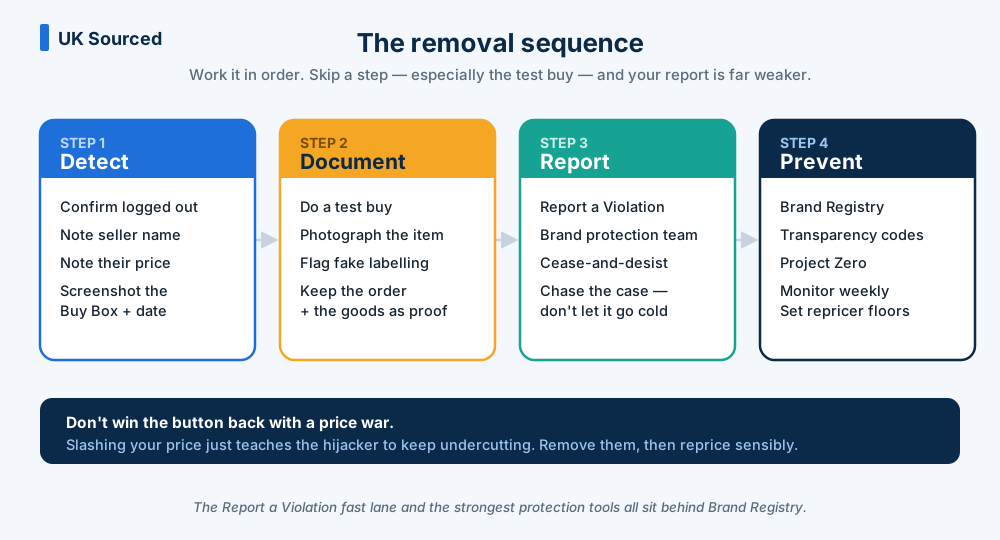 The removal sequence. Skip the "document" step and your report is far weaker.
Prevention beats the cure every time
Here's the honest truth: the single best thing you can do about hijackers is make yourself a hard target before one shows up. And nearly all of that runs through Brand Registry.
- Enrol in Brand Registry. You'll need a registered trademark, which takes time and money — but it's the gateway to every real protection tool Amazon offers, plus the Report a Violation fast lane. If you own a brand and haven't done this, it's the most important job on your list. (For UK brands there's an added sweetener at the moment — an incentive giving roughly 10% back on your first £40,000 of branded sales. Worth having.)
- Use Transparency or Project Zero. Transparency's per-unit codes mean a counterfeit gets stopped at dispatch. Project Zero lets you remove obvious fakes yourself, without waiting on Amazon.
- Monitor your listings regularly. Check your key ASINs for unexpected sellers — weekly if they're high-value. Catching a hijacker on day one instead of day thirty is the difference between a blip and a bad month.
- Set sensible repricer floors. If you run automated repricing, cap the bottom. Otherwise a repricer will happily chase a hijacker's fake price into the ground and shred your margin for nothing.
None of this makes you completely bulletproof. Determined counterfeiters are a running battle, not a one-off fix. But a brand-registered seller who's watching their listings and armed with Transparency is a far less appealing mark than one who isn't paying attention.
The takeaway
A hijacker on your listing is jarring, but it's rarely a disaster if you move quickly and methodically. Confirm it logged-out, gather your evidence, do the test buy, report through Brand Registry, and then shore up your defences so the next one bounces off. Detect, document, report, prevent — in that order.
Watching client listings for hijackers, running the test buys, and pushing the Report a Violation cases through to removal is a regular part of what we do. If you've spotted a seller on your own-brand ASIN and you're not sure what your next move is, drop us a line — we'll help you get them off.