Why have my Amazon sales suddenly dropped?
Amazon sales dropped overnight? Here's the calm, ordered way to diagnose it — check sessions not orders, then rule out ranking, Buy Box and suppression.
Sales were fine on Tuesday. Wednesday morning they're down 40% and you've no idea why.
We get this message a lot. Usually it arrives with an exclamation mark and a screenshot of a graph pointing at the floor. The instinct is to panic, drop your price, and start throwing money at ads. Don't. A sudden sales drop is almost always one of a small handful of things, and you can work through them in about twenty minutes if you go in the right order.
Here's how we diagnose it — the same checklist we run for the brands we manage.
First move: sessions, not orders
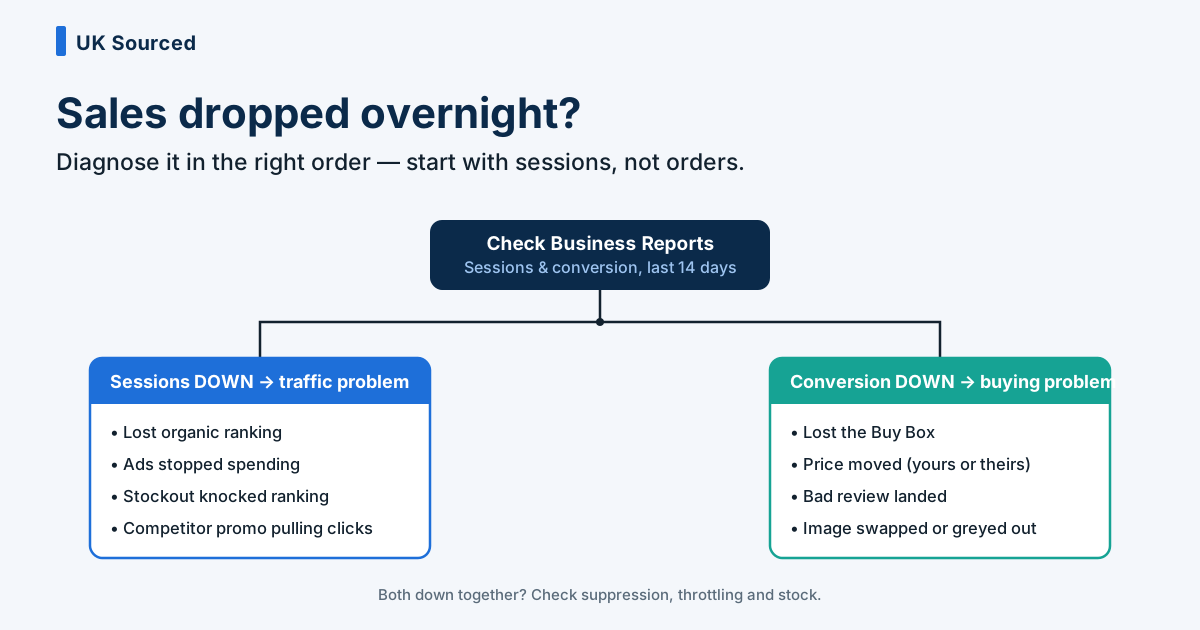
This is the one step almost everyone skips, and it's the most important. Before you touch anything, go to Business Reports → By ASIN → Detail Page Sales and Traffic. Pull the last 14 days and look at two columns: Sessions and Unit Session Percentage (that's your conversion rate).
Why bother? Because a drop in orders tells you nothing on its own. It just tells you the outcome. Sessions and conversion tell you the cause, and the two point at completely different problems.
- Sessions down, conversion steady — this is a traffic problem. Fewer people are seeing your listing. Think ranking loss, ad budget running dry, a competitor's promo pulling eyes away.
- Sessions steady, conversion down — this is a conversion problem. People are still landing on your page, they've just stopped buying. Think a price change, a bad review that landed, a suppressed image, or you've lost the Buy Box.
- Both down — usually something bigger. Suppression, a stockout, or an account-level issue.
That single split saves you hours. If sessions are healthy and it's conversion that's fallen off a cliff, there is no point at all fiddling with keywords. You'd be fixing the wrong thing. Honestly, this trips up nearly everyone the first time.
Right. Depending on which way the numbers point, here's where to look next.
If it's a traffic problem
You've lost organic ranking
Amazon's search results aren't fixed. Your position for a keyword can slide overnight if your recent sales velocity dips, if you went out of stock even briefly, or if a competitor started converting harder than you on the same term.
Check where you rank now versus a week ago for your two or three money keywords. If you've slipped from the top of page one to halfway down page two, that's your drop right there — page-two listings get a tiny fraction of the clicks page-one ones do. A short stockout is the sneakiest cause here. Even 48 hours empty can knock your ranking back, and it doesn't magically return the day you're back in stock. You have to earn the position again.
Your ads quietly stopped spending
If a chunk of your sales came from Sponsored Products, look at whether the campaigns are actually running. Budgets get exhausted early in the day. A card expires. A bid that was competitive last month now loses every auction because someone outbid you. Ad-driven sales can vanish without a single alert firing, so check the ads console, not just your gut.
A competitor launched a promo
Someone in your category ran a Lightning Deal, dropped a coupon, or started an aggressive Sponsored Brands push. For a week or two, they hoover up the demand that used to trickle to you. Annoying, but usually temporary. Worth knowing it's happening so you don't misdiagnose it as your listing breaking.
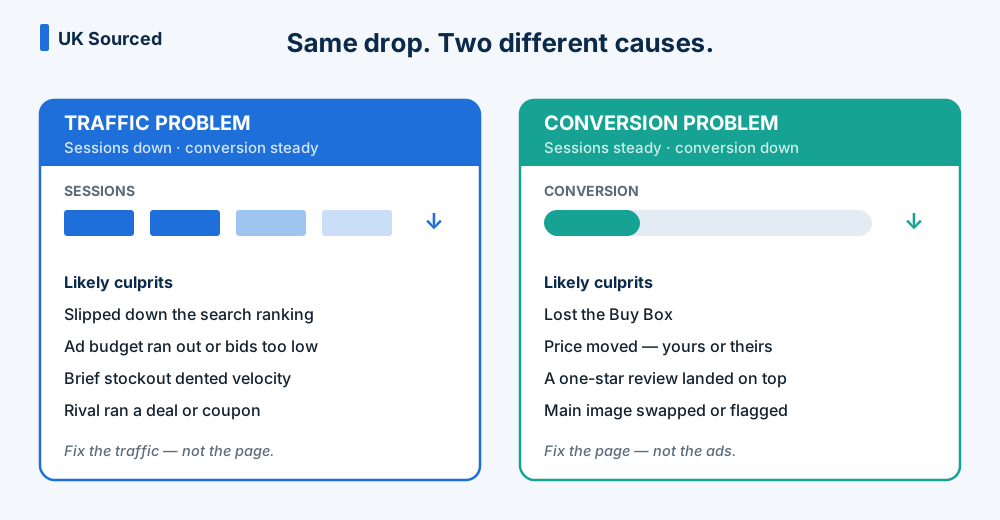 The same drop, two very different root causes. Which panel you're in decides everything you do next.
If it's a conversion problem
People are still arriving. They've just stopped buying. Work through these.
You've lost the Buy Box
This is the big one, and it's easy to miss because your listing still looks live to you. But if you don't hold the Buy Box, that lovely "Add to Basket" button either points at another seller or disappears entirely, replaced by a limp "See All Buying Options" link. Conversion falls off a cliff.
You can lose it overnight for boring reasons: your price crept above a competitor's, your account health slipped, you ran low on stock, or a third-party seller undercut you on your own ASIN. Open your listing in a private browser window (logged out) and see whether you are the one being offered. If you're not, you've found it.
Your price moved — or theirs did
Check whether a repricer nudged you up, or whether a rival dropped under you. Shoppers compare more than you'd think, especially on anything commoditised. A £2 gap can be the difference between converting and bouncing.
A bad review or a broken image landed
A one-star review sitting at the top of the pile can dent conversion for days. So can a main image that's been swapped, greyed out, or flagged. Look at your listing the way a first-time buyer would — cold, on mobile — and see if anything looks off or untrustworthy.
If both are down: check for suppression and stock
When sessions and conversion drop together, something structural is usually wrong.
Suppression. Amazon can hide your listing from search if the title breaks its rules — too long (over 200 characters), stuffed with promotional words, odd formatting, or missing a required attribute. A suppressed listing is still "active" in your inventory, which is why it fools people. Check Fix Your Products and the listing's search visibility. A suppressed listing gets close to zero organic traffic, so sessions crater.
Low-inventory throttling. Here's one that catches sellers out. If your stock runs low, Amazon can quietly reduce how often it shows your listing — it doesn't want to promote something that might sell out mid-order. Your listing's still up. It's just being shown less. Sessions drift down for no obvious reason, and the fix is simply getting more stock in.
A stockout you didn't clock. Obvious once you see it, invisible until you check. A variation went to zero, or FBA marked a batch unfulfillable. No stock, no sales, and the ranking hit lingers after you restock.
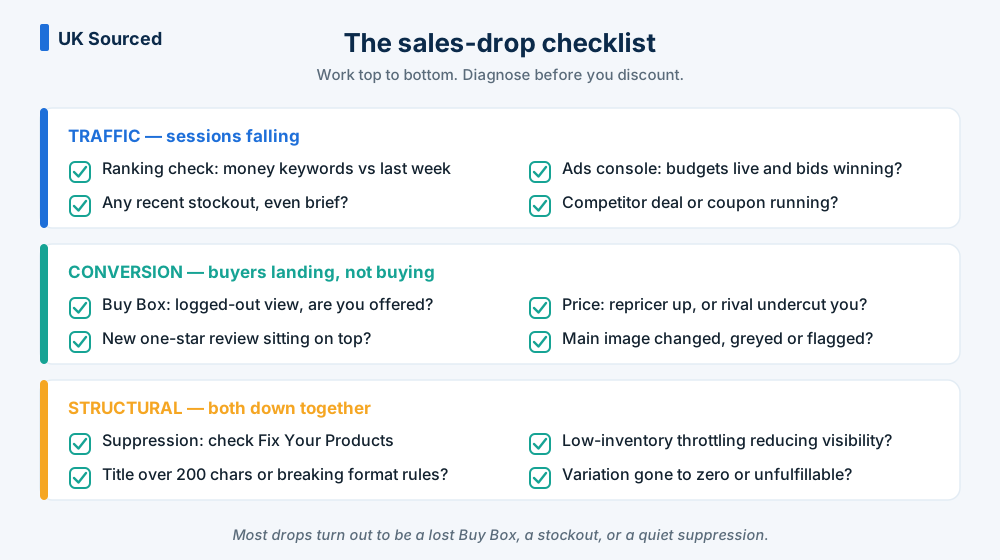 The full checklist we run — work top to bottom and you'll rarely miss the culprit.
The order matters
Notice we never started with "lower your price" or "spend more on ads". Those are what people reach for first, and they're usually the wrong move — you can spend a fortnight discounting to fix a problem that was actually a suppressed title.
Diagnose, then act. Sessions versus conversion tells you which half of the map you're on. From there it's a short list. Most drops we investigate turn out to be a lost Buy Box, a stockout that dinged the ranking, or a suppression nobody noticed. Rarely is it the mystery it feels like at 9am with the graph pointing down.
If you'd rather have someone watching for this so you find out before your customers do — that's a fair bit of what we do day to day. If a drop's got you stumped, drop us a line and we'll help you trace it.