How to do Amazon keyword research (properly)
How to do Amazon keyword research properly: find seed terms, expand them, qualify by buyer intent, and place them in your title, bullets and backend.
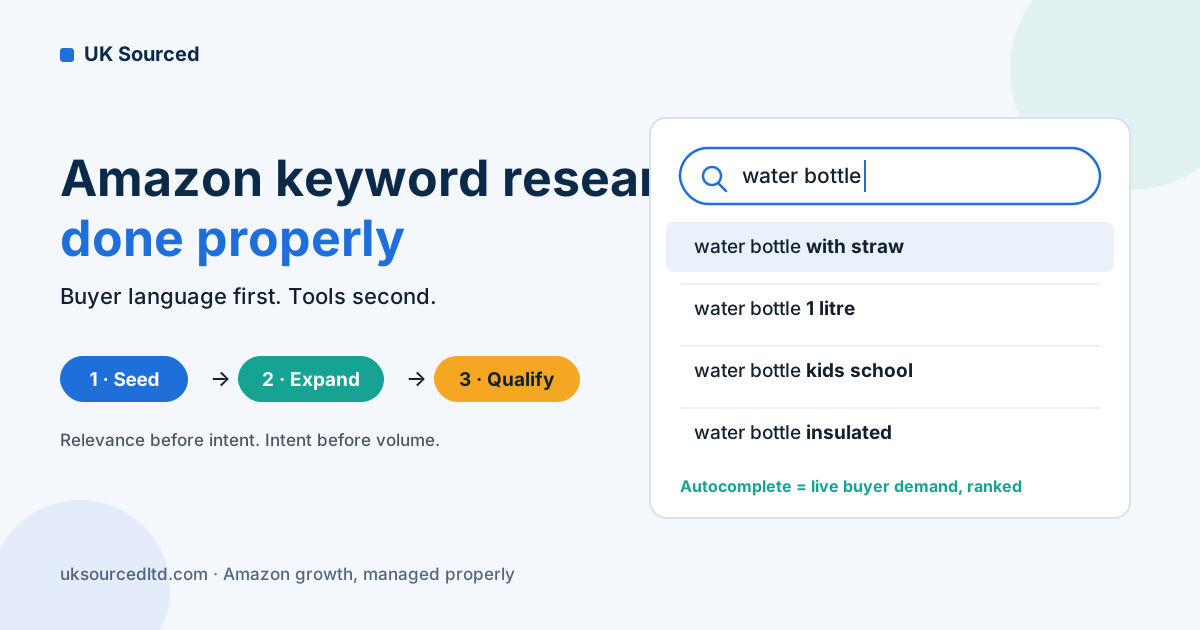
Type "water bottle" into Amazon's search bar and stop before you press enter. That dropdown — "water bottle with straw", "water bottle 1 litre", "water bottle kids" — is real buyer language, ordered roughly by how often people type it. Free keyword research, sitting in plain sight.
Most sellers skip straight past it. They open a paid tool, sort by search volume, cram the top twenty terms into a title, and then wonder why nobody buys.
Keyword research is the least glamorous job on an Amazon account and, we'd argue, the highest-return one. Get it right and everything downstream — ranking, ads, conversion — gets easier. Get it wrong and you'll spend the next year paying for clicks from people who wanted something else. Here's the process we run for client listings, start to finish.
Buyer language first, tools second
Amazon isn't Google. Nobody's there for a leisurely read; almost every search is typed by someone with a card in their hand. That changes what a "good" keyword is. You don't want the polished phrase from your packaging. You want the slightly clumsy thing a real person types at 9pm — "mens running socks cushioned", not "performance athletic hosiery".
So before you open a single tool, answer two questions. What problem does this product solve, in the buyer's own words? And what would your mum type to find it? Genuinely — non-expert phrasing wins far more often than founders like to admit.
Step 1 — collect your seed terms
Seeds are the short, obvious phrases at the core of what you sell. For a cast-iron skillet: "cast iron skillet", "cast iron frying pan", "skillet pan". Five to ten is plenty. Three places to find them:
- Your customers' own mouths. Reviews, emails, the questions people ask on your listing. Buyers hand you their vocabulary if you bother to read it.
- Competitor listings. Pull up the five products you'd realistically sit beside in search results and read their titles and bullets. Phrases that appear on all five aren't a coincidence.
- The search bar. Type each seed slowly and note every autocomplete suggestion. Then add a letter — "cast iron skillet a", "cast iron skillet b" — and watch fresh suggestions appear.
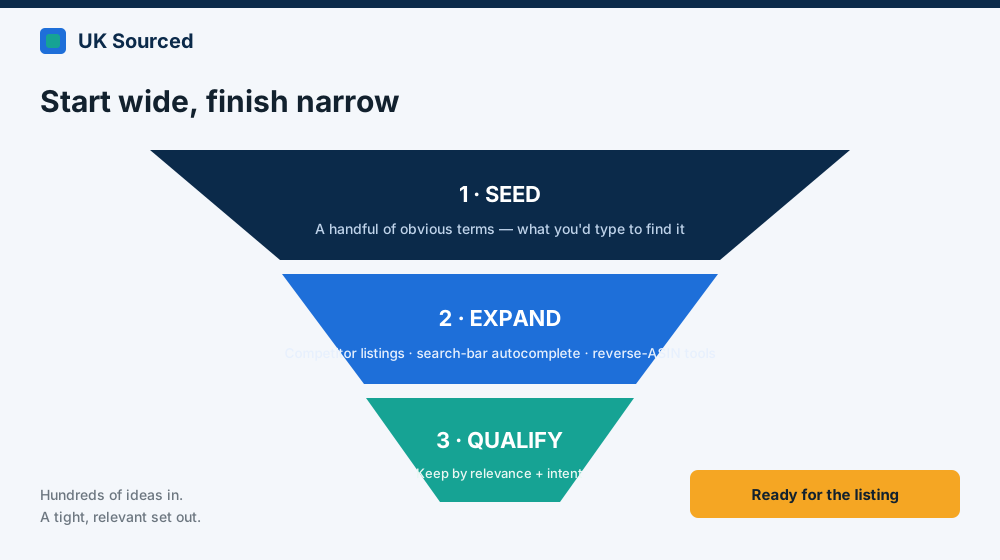
The shape of the job: start wide, finish narrow.
Step 2 — expand the list
Now widen out. This is where tools earn their keep. Reverse-ASIN lookups — plug in a competitor's ASIN, see which terms it ranks for — are the fastest way to surface phrases you'd never guess. Helium 10, Jungle Scout, DataDive: they all do broadly the same job. None of them are magic. They're just quicker than doing it by hand.
And if you're already running ads, your search term report beats any tool on the market. It shows the exact queries real shoppers typed before buying from you. Not estimates — receipts. Harvest the converting ones. While you're in there, deal with the junk queries too; that's a discipline of its own, and we've written the routine up in our negative keywords guide.
Don't prune anything yet. A long, messy list is exactly what you want at this stage.
Step 3 — qualify ruthlessly
This is the step that separates listings that rank from listings that wallpaper page four. For every phrase, ask three questions, strictly in this order:
- Relevance. If someone typed this and landed on your product, would they think "yes, that's what I meant"? If not, cut it. No exceptions, whatever the volume.
- Intent. Is this a buying search or a browsing one? "Cast iron skillet 26cm pre seasoned" is a purchase forming. "How to clean cast iron" is someone off to read a blog post.
- Volume. Last. Deliberately last. A big number on the wrong term is worse than worthless — clicks that don't convert tell Amazon your product disappoints people, and it ranks you accordingly.
Most sellers run those three in reverse. It's the single most common keyword mistake we see, and it quietly caps accounts for years.
Where the keywords actually go
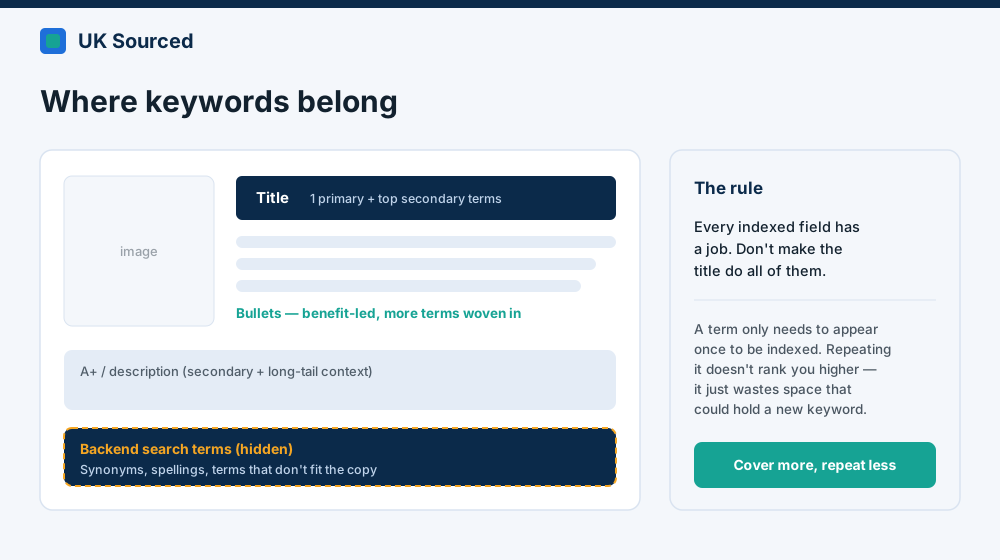
Every indexed field has a job. Don't make the title do all of them.
Research is half the work. Placement is the rest.
Title. Your two or three strongest phrases, front-loaded, arranged so a human can still read the thing. Amazon allows up to 200 characters in most categories, but using all of them usually hurts conversion — and titles that break formatting rules can get a listing suppressed outright. We once audited a title that was one unbroken 200-character keyword soup; it read like a ransom note and sold about as well.
Bullets. Secondary phrases woven into benefit-led copy. Bullets are indexed, yes, but they're read by humans deciding whether to buy. Write for the person first and let the keywords sit naturally inside. A bullet that exists purely to hold keywords converts nobody.
Backend search terms. The hidden field in Seller Central, and the most misused one. It's for everything that didn't fit on the page: synonyms, common misspellings, alternate phrasings ("fry pan", "frypan"). Three rules. Don't repeat words already in your title or bullets — Amazon indexes a word once, so repetition earns nothing. Skip the commas; spaces work fine. And never put competitor brand names in there. It's against policy, and Amazon does check.
Images and A+ content. Not indexed for search in any way you should rely on. They're conversion assets, not keyword storage.
One principle ties all of this together: every word on your listing should either help you get found or help you get bought. If it does neither, it's dead weight.
The mistakes that undo good research
Chasing volume over relevance. Covered above, but it bears repeating because it's everywhere. The specific term you can own beats the giant term you'll never crack the first page of.
Keyword stuffing. Repeating a phrase five times doesn't index it five times; it indexes once. Meanwhile the mangled copy tanks your conversion rate, which drags your organic rank down — the precise opposite of what the stuffing was for. Amazon's algorithm rewards relevance and conversion together. Stuffing sacrifices the second for zero gain on the first.
Doing it once and never again. Search language drifts. Seasons shift what people type, new competitors seed new phrases, and your own ads generate fresh data every day. Re-run the search term report monthly. It's twenty minutes, and most of that is copy-and-paste.
If you'd rather not spend your evenings on this
Keyword research isn't difficult. It's slow, fiddly and never quite finished — which is why it gets skipped, and why so many decent products sit invisible on page five. If you'd rather hand it to a team that does this every week across dozens of listings, that's exactly the sort of work we take on. Drop us a line at enquiries@uksourcedltd.com — we'll look at your listing first and tell you honestly what needs doing.