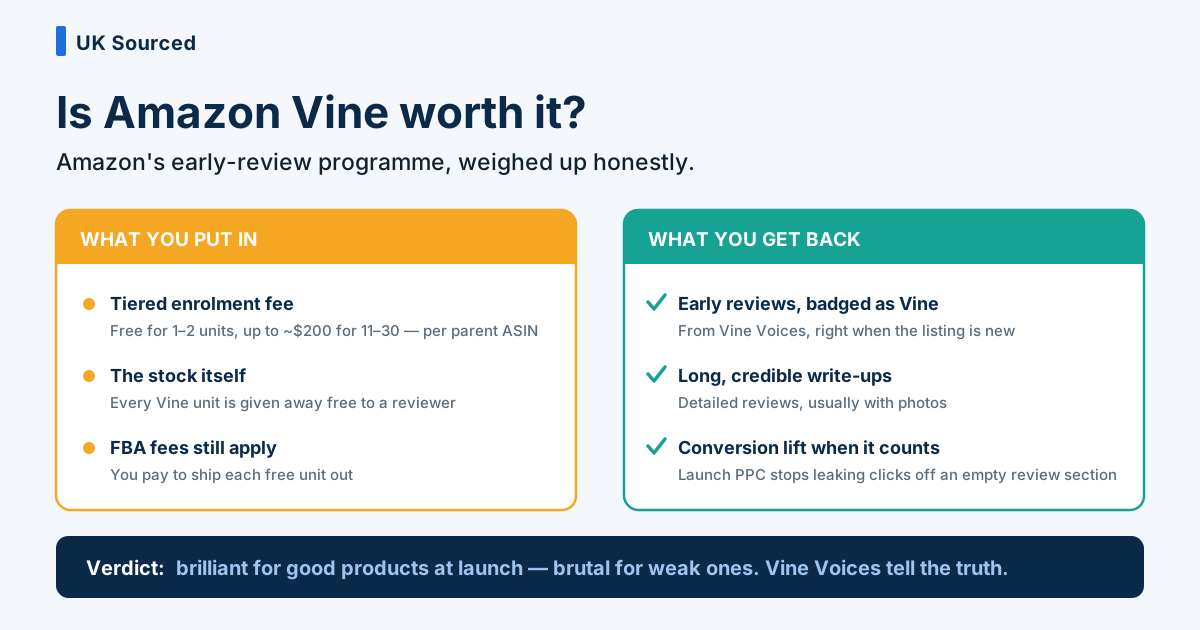
Is Amazon Vine worth it?
Is Amazon Vine worth it? What the tiered enrolment fee costs, when Vine pays off at launch — and when brutally honest Vine reviews punish a weak product.
Your product goes live. The photography's sharp, the title took three evenings, the price is right. A shopper lands, scrolls down to the reviews, finds nothing — and buys the rival with 400 ratings instead. Again and again and again.
That's the cold-start problem, and every new listing on Amazon has it. Shoppers won't buy without reviews; you can't earn reviews without shoppers. Vine is Amazon's official way of breaking that loop, and it might be the most misunderstood tool in Seller Central. Half the sellers we speak to think it's a five-star vending machine. The other half think it's a con. It's neither — and whether it's worth your money comes down almost entirely to one question: is your product actually good?
What Vine actually is
Vine is Amazon's own early-review programme. You enrol a product, Amazon offers free units to its invited pool of reviewers — the Vine Voices — and they post reviews that appear on your listing with a badge marking them as Vine reviews. Amazon brokers the whole exchange, which is exactly why it's allowed. Hand out free units for reviews off your own bat and you're breaking the rules in a way that ends accounts; we've covered the legal routes in how to get more reviews without getting banned.
Three things to know before you get excited. You need Brand Registry. The stock has to be in FBA. And Vine is built for listings with few or no reviews — it's a launch tool, not a rescue plan for a tired five-year-old ASIN.
One more thing, and it's the big one: you get no say in what the reviewers write. Neither does Amazon. Vine Voices keep their invitation by being useful to shoppers, not kind to sellers. Hold that thought — we'll come back to it.
What it costs
The enrolment fee is tiered, charged per parent ASIN, and depends on how many units you put in:
- 1–2 units — free. A genuine no-cost taster.
- 3–10 units — a mid-tier fee. The sensible middle for most launches.
- 11–30 units — the top tier, roughly $200 (or the pound equivalent) per parent ASIN.
Per parent is worth underlining. Six colour variations under one parent share a single enrolment — you don't pay six times over.
But the fee is rarely the real cost. You're giving the stock away, and you still pay FBA fees to pick, pack and ship every free unit. Enrol 30 units of a £35 product and the enrolment fee becomes the smallest line on the bill. Budget for the whole thing, not the headline number.
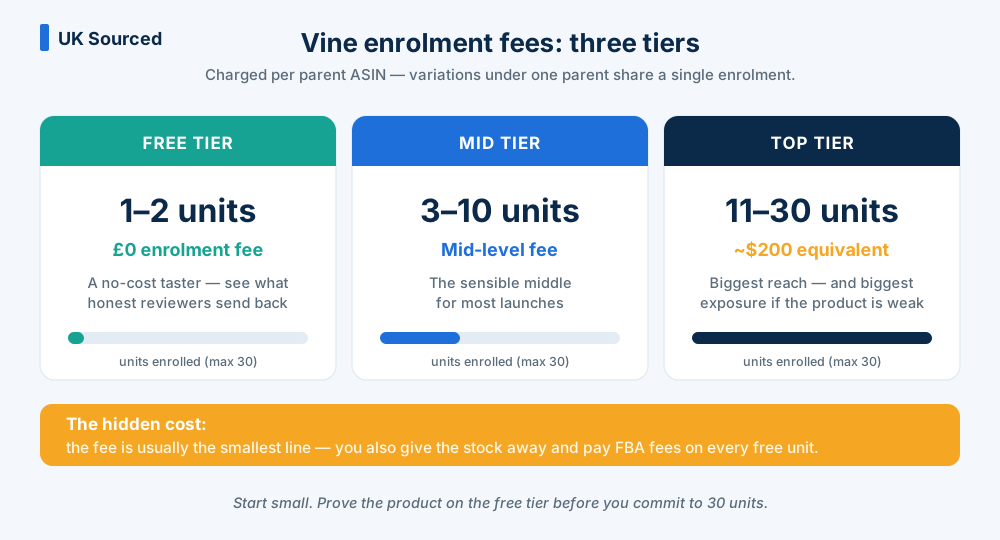 Three tiers, one fee per parent ASIN — and the fee is usually the smallest cost on the bill.
When Vine pays
At launch. The first few weeks of a listing's life are when Amazon is deciding what your product is and whether people want it. A bank of substantial early reviews lifts conversion exactly when conversion data matters most — and it stops your launch PPC paying for shoppers who click, see an empty review section, and leave. You're already tolerating a high ACOS during launch. Vine makes that spend work harder instead of leaking.
On listings stuck at a handful of reviews. Same logic. If an otherwise decent listing has been live for months and the bare review section is what's killing conversion, Vine is the legitimate lever for shifting it.
When the product genuinely deserves praise. Vine reviews tend to be long and considered, often with a proper set of photos. If your product earns a good write-up, Vine puts detailed, credible praise at the top of your listing — worth more than fifty one-line "Great!" ratings, in our view.
Plainly: for a good product at launch, Vine is comfortably the best money you'll spend that month. Better than pushing the same budget into ads that point at a review-less page.
When Vine burns you
Now the flip side, and it isn't small. Vine Voices are brutally honest. They're selected for it. Their reviews arrive early, sit prominently, and land on a listing with nothing else to dilute them.
Weak products get punished. That slightly flimsy hinge you hoped nobody would notice? A Vine reviewer will spot it — then photograph it and rank it against the two competitors they already own. We watched one seller enrol a kitchen gadget whose lid didn't quite sit flush, and the Vine reviews read like a snagging list. Four of them mentioned the lid. The factory fixed it in the next production run, but the reviews stayed, and the listing never properly recovered.
You can't remove them, either. An honest two-star Vine review is a permanent fixture, and because it arrives early it shapes your star rating for months.
The top tier multiplies all of this. Thirty units of an unproven product is thirty invitations to be told the truth in public.
Here's the way to think about it: Vine doesn't change what your product is. It broadcasts it — and there's no volume knob.
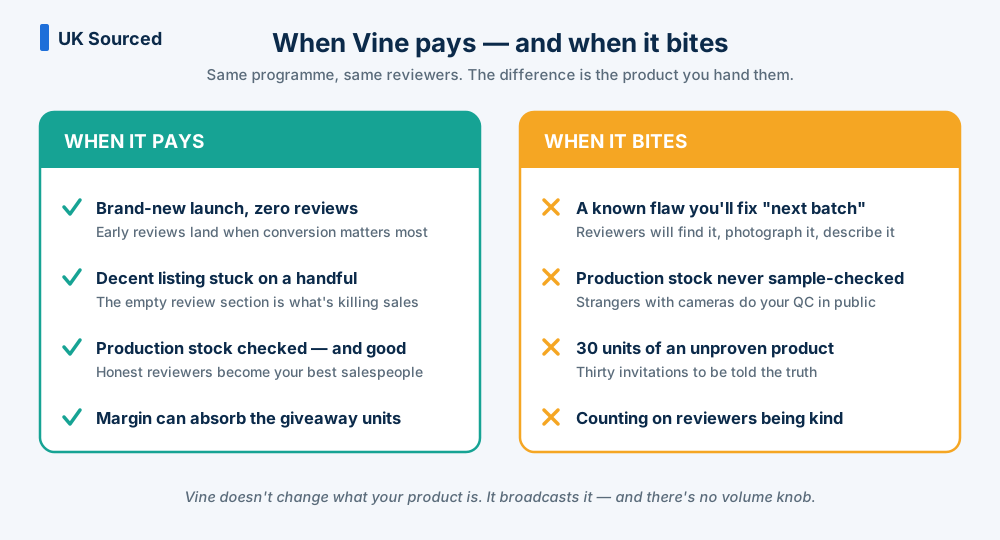 Same programme, same reviewers. The difference is the product you hand them.
Our verdict
Worth it? Yes — emphatically — if the product is genuinely good and the listing is new or review-light. Under those two conditions we'd call Vine the best-value launch spend on Amazon.
Hold off if any of these sound familiar:
- There's a known niggle you're planning to fix "in the next batch". Fix it first.
- You've never personally checked units from the actual production run. Do that before strangers with cameras do it for you.
- The listing already has a healthy review base. The fee buys you very little.
- Margins are tight enough that giving away 30 units genuinely hurts. Start with the small tiers.
And if you're on the fence, there's a sensible middle path: enrol one or two units on the free tier, read what comes back, then commit to the bigger tiers once the product's proven itself. You lose a fortnight. You might save a launch.
Vine rewards sellers who are confident in their product and punishes the ones crossing their fingers — which, honestly, is how it should work.
Getting the sequencing right — sample checks, enrolment size, timing it against your PPC and launch window — is the sort of thing we handle week in, week out for the brands we manage. If you'd rather hand it to someone who's run this play a few dozen times, drop us a line at enquiries@uksourcedltd.com.