How to stop Amazon storage fees eating your margin
Amazon storage fees creeping up? How monthly rates, Q4 peak pricing and long-term surcharges work — plus an aged-stock playbook to claw your margin back.
Somewhere in an Amazon fulfilment centre there's a pallet of your stock that hasn't sold a unit in months. It just sits there. And every month Amazon bills you rent on it — then, once it's lingered long enough, adds a surcharge on top of the rent for good measure.
Storage is the fee sellers think about least and complain about most, usually in that order. But of everything Amazon charges you, it's also the cost you control most. The referral fee is fixed. Fulfilment fees are set by your product's size and weight (we've unpicked the full fee stack separately). Storage, though, is priced entirely on your decisions — how much you send in, and how long you let the slow stuff sit. Change the decisions and the bill changes with them.
The four charges hiding under "storage"
Monthly storage is the baseline: rent, charged on the cubic space your inventory occupies. Not per unit — per volume. A thousand phone cases cost buttons to store, while forty units of a bulky garden product can cost more than all of them put together. If your product is big, storage stops being a rounding error fast.
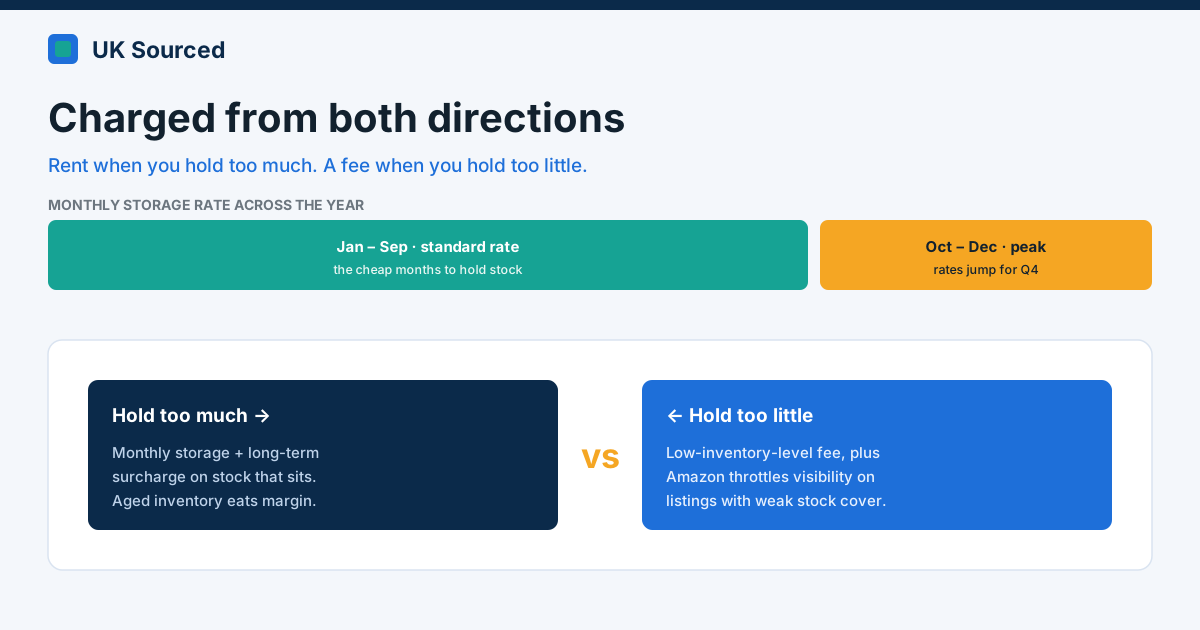
Peak-season rates are the seasonal sting. From roughly October to December the monthly rate jumps, because warehouse space heading into Christmas is the most contested shelf space in retail. The timing is awkward by design — Q4 is exactly when you want maximum stock in the network, and Amazon knows it. The higher rate is their way of making you justify every cubic metre.
Long-term storage surcharges are the punishment tier. Once stock has sat unsold for months on end, Amazon layers an aged-inventory surcharge on top of the normal rent, and it climbs the longer the stock sits. This is the one that quietly wrecks margins, because it compounds with time and nobody's watching. Dead stock isn't just tied-up cash. It's tied-up cash with a meter running.
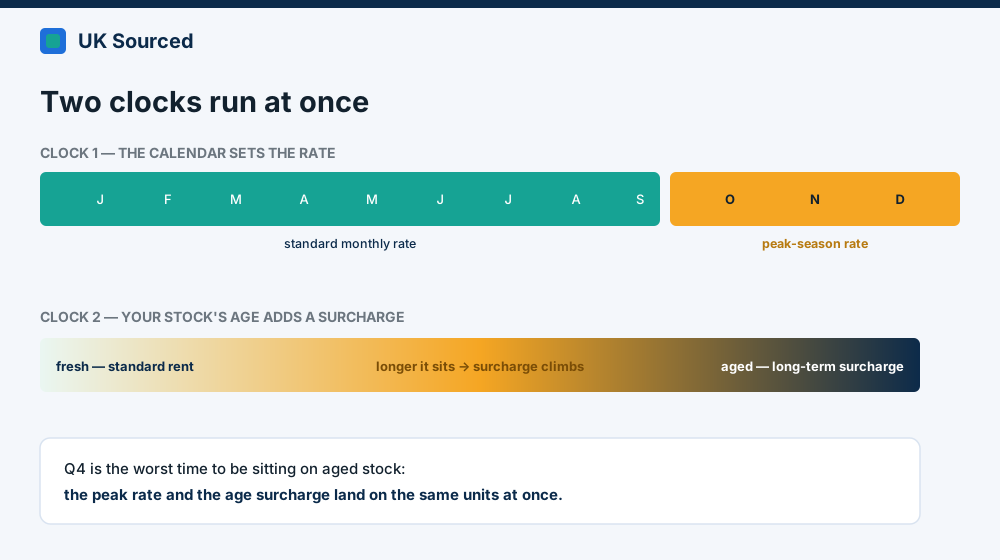 Two clocks run at once — the calendar sets the rate, and your stock's age decides whether a surcharge lands on top.
And then, from the other side: the low-inventory-level fee. Run your stock too thin against your sales rate for weeks at a stretch and Amazon charges you extra per unit shipped. Yes, really — there's a fee for holding too much and a fee for holding too little. Amazon's logic is that chronically thin inventory makes their network inefficient. Your logic is that you were trying to dodge the storage fees above. Both things are true. You still pay.
The squeeze — and where the safe ground is
So you're squeezed from both ends. Overstock and it's rent, peak rates and eventually surcharges. Understock and it's the low-inventory fee, plus the bigger, quieter cost of a stockout: lost sales, and lost ranking that takes weeks to claw back.
The safe ground is a stock level matched to your actual sales velocity — enough weeks of cover to ride out a supplier delay, not so much that January's stock is still on the shelf in September. Getting that number right is its own discipline, and we've written a full method in how much stock should you send in to FBA?. The short version: forecast from real velocity, add a sensible buffer, review monthly. Don't guess.
The aged-stock playbook
Now for the stock that's already old. You've got four moves, ranked here by how much value each recovers. Work down the list in order — don't skip steps.
1. Cut the price before the surcharge does. If a sensible discount would sell it through in the next month or two, take the slim margin and move on. Amazon Outlet is built for exactly this: it puts discounted overstock in front of bargain hunters, and a deal that clears stock at break-even beats a surcharge every single time.
2. Pull it out. A removal order ships the stock back to you for a per-unit fee. The fee stings, but it's a one-off; long-term storage is a subscription. Once it's home you can sell it through your own site, shift it on eBay, or bundle it with a faster mover.
3. Liquidate. Amazon's liquidation programme sells your inventory to bulk buyers and pays you a fraction of its value. Pennies in the pound, honestly. But pennies plus a stopped meter beats a monthly invoice for stock nobody's buying.
4. Dispose. Pay Amazon to destroy it. Feels terrible. Occasionally it's still the right answer — when the recovery from options one to three is smaller than the cost of chasing it.
(We once took over an account where a single slow SKU had racked up more in storage and surcharges over a year than the remaining units were worth. The stock was fine. The decision-making wasn't — nobody wanted to admit the product was a dud, so the meter just kept running.)
Our view, for what it's worth: dead stock isn't bad luck, it's a decision you haven't made yet. And every month you defer it, Amazon invoices you for the privilege.
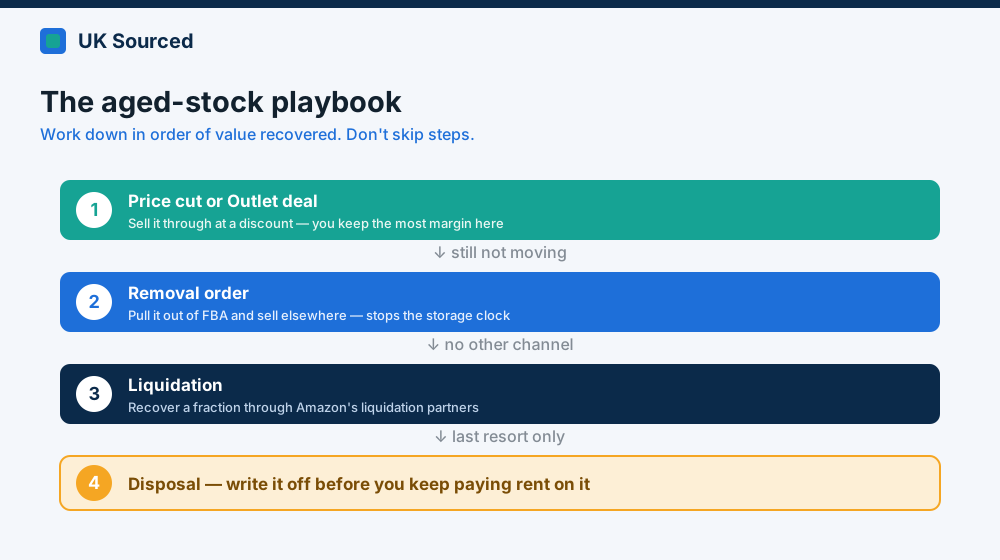 The aged-stock playbook — work down the list in order of value recovered, and don't skip steps.
A twenty-minute monthly routine
You don't need software for this, or a consultant. You need a recurring calendar entry.
- Open the inventory age report. Anything creeping towards the long-term threshold gets a decision today — playbook above, no deferrals.
- Check days of cover on your best sellers. Too thin invites the low-inventory fee. If a restock is due, book it now, not "next week".
- Hunt stranded inventory. Stranded units pay rent while earning nothing — fix or remove them.
- From late summer, run the Q4 test. Before peak rates land in October, ask of every SKU: will this genuinely sell through by January? If the honest answer is no, it shouldn't be sitting in Amazon's warehouse at Christmas prices.
Twenty minutes. Once a month. It's dull, and it's worth real money — the sellers who do it barely notice storage fees, and the ones who don't are quietly funding everyone else's warehouse.
If your aged-inventory report has become the tab you avoid opening, this is a job we do weekly for the brands we manage — forecasting, clear-outs, and the awkward "this product's a dud" conversations included. Drop us a line at enquiries@uksourcedltd.com and we'll tell you what we'd clear and what we'd keep.