Do you need a trademark to sell on Amazon?
Do you need a trademark to sell on Amazon? No — but Brand Registry needs one. UK cost (~£170), the four-month wait, and the IP Accelerator shortcut.
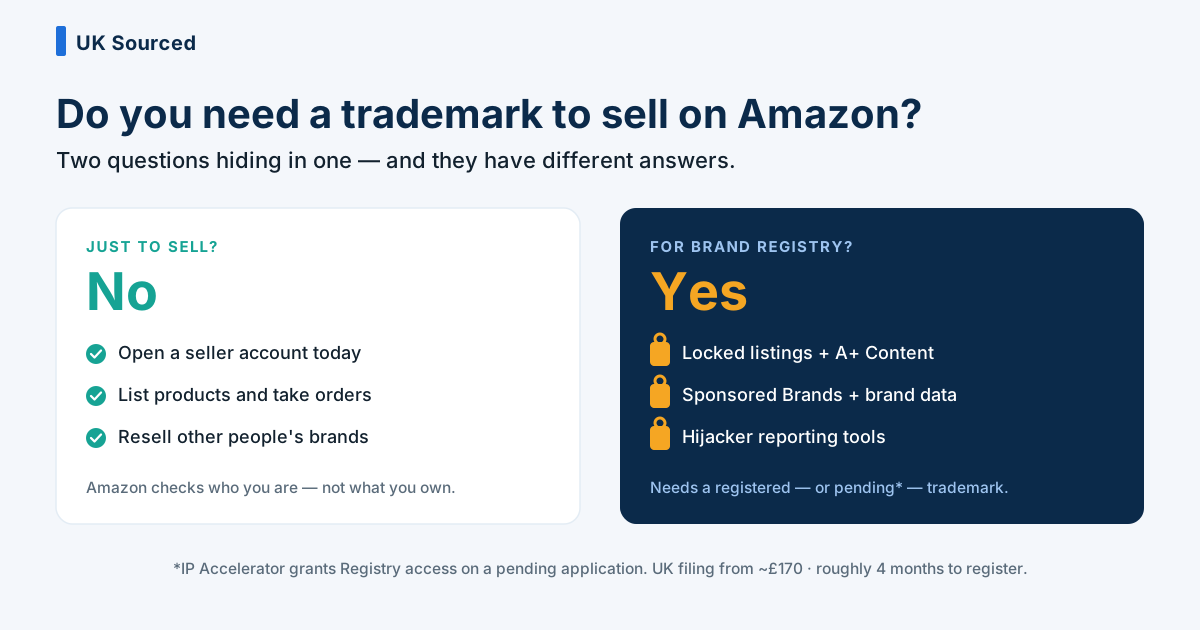
No. You don't need a trademark to sell on Amazon.
You could open a seller account this afternoon, list a product tonight and take your first order by the weekend without ever exchanging a word with the Intellectual Property Office. Amazon verifies who you are — identity, address, bank details — not whether you own a brand. Thousands of resellers trade on the platform every day with no trademark to their name, entirely legitimately.
Right. Now the "but". You could feel it coming.
A trademark isn't required to sell, but it is required for Brand Registry — and Brand Registry is where Amazon keeps nearly everything that makes running a brand on the platform bearable. If you own the products you sell, that distinction is the whole question. Let's take it apart.
The question behind the question
Selling without a trademark is allowed, normal and — for resellers — often permanent. What you can't do is enrol in Brand Registry, and here's what sits behind that gate:
- Control of your own listings. Without Registry, other sellers on your ASIN can push edits to your title, images and bullets, and Amazon may take them. With it, your content is locked to you.
- A+ Content and a Store. The richer product pages and the branded shopfront. Registry-only.
- Sponsored Brands and brand analytics. Half the useful ad formats, plus search-term and customer data you can't see any other way.
- Proper hijacker tools. Reporting routes that treat you as the brand owner rather than one seller among many.
- The new-brand incentive. Roughly 10% back on your first £40,000 of branded sales in your first year enrolled — up to £4,000 in credits.
We've weighed that whole bundle up in Is Brand Registry worth it for a UK brand?, and the short version is: for a genuine brand, comfortably yes. Which means the trademark question really splits in two. Reselling other people's products? You may never need one. Building your own brand? You'll want one sooner than you think — probably sooner than you were planning.
What a UK trademark actually costs
Less than most people guess. A UK application through the Intellectual Property Office starts at about £170 for one class of goods if you file it yourself. Add more classes and the fee climbs; have a trademark attorney search and file it properly and you're into a few hundred pounds all-in.
That's it. That's the famous barrier. A single decent product photoshoot costs more — and the photoshoot doesn't stop someone else registering your name out from under you. For a brand with any real intention behind it, we'd call £170 the cheapest insurance in ecommerce.
The catch was never the money.
The catch is the four months
A UK trademark takes roughly four months to register if nobody opposes it. Your application is filed, examined by the IPO, published so anyone with a conflicting mark can object, and — assuming silence — registered. There's no express lane at the IPO. No fee jumps the queue.
Those four months are exactly why "I'll sort a trademark when I need it" is a plan that fails on contact. The day you need it is the day a hijacker lands on your listing or a stranger edits your title — and on that day, you're four months from the fix. The sellers who get this right file early, while everything is still calm.
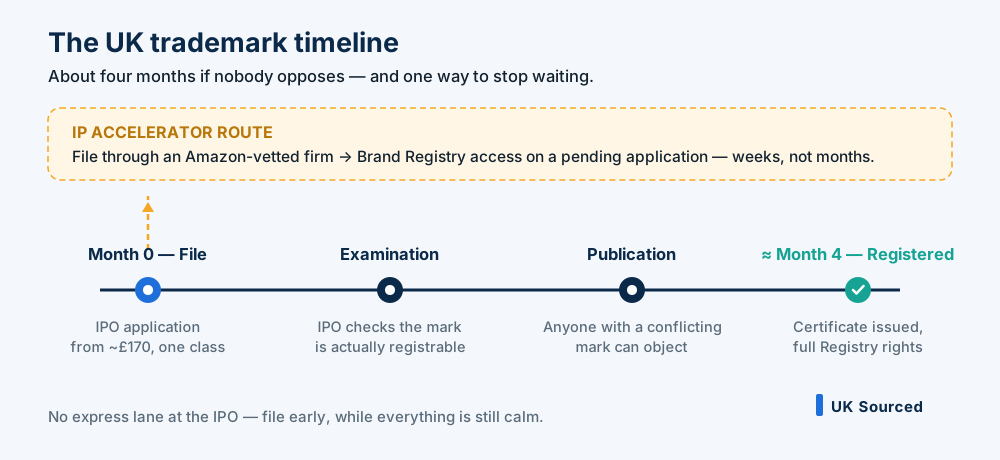 The standard route takes about four months end to end. IP Accelerator doesn't speed up the IPO — it gets you into Brand Registry while you wait.
The queue-jump: IP Accelerator
There is one genuine shortcut, and it's Amazon's own. IP Accelerator connects you with law firms Amazon has vetted, and — this is the part that matters — gets you into Brand Registry on the strength of a pending application. You don't wait for the certificate. You file through an approved firm, and Registry access follows in weeks rather than months.
It costs more than a bare self-filed application, because you're paying a proper firm to search and file. But if your brand is already live on Amazon — or already being interfered with — buying back three or four months of protection is usually the right trade. We've pointed clients down that route more than once, and none of them regretted the extra spend.
Pick a name the IPO will actually register
Here's the bit nobody thinks about at the naming stage, and it's the one that bites hardest.
The IPO won't register a mark that merely describes what you sell. "Soft Bamboo Socks" for bamboo socks. "Premium Pet Supplies" for pet supplies. Names like that are descriptive — every seller in the category needs those words, so nobody gets to own them. They'll be refused, or come back so narrowed they protect nothing. (Honestly, about half the brand names we see on new Amazon accounts fall into this trap — the category with "Pro" or "Premium" stapled on the end.)
What registers cleanly is a brandable name: an invented word, or a real word with no connection to the product. Distinctive beats descriptive every time. And we'd argue descriptive names aren't just hard to register — they're weak brands full stop. Keywords belong in your title and bullets, where Amazon's algorithm actually reads them. Your brand name has a different job: being ownable.
Before you commit, spend twenty minutes searching the IPO's online register and Amazon itself for lookalikes. Twenty minutes now, or a rebrand later. Your choice.
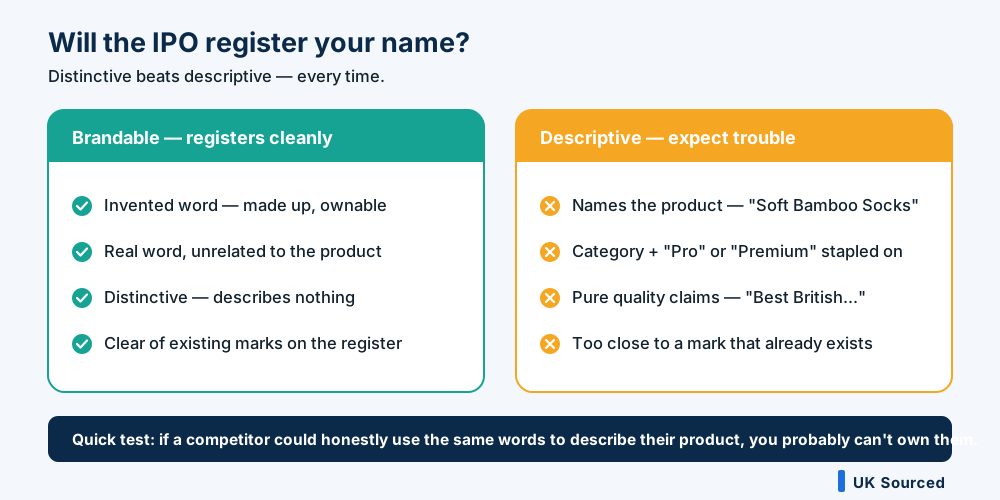 A quick gut check before you fall in love with a name. The IPO rewards distinctive, not descriptive.
When you genuinely don't need one
We'll be straight, because this isn't a trademark sales pitch:
- You resell other people's brands. Arbitrage and wholesale sellers can't enrol a brand they don't own, so a trademark buys you nothing on Amazon. Skip it.
- You're testing one product under a name you're not attached to. If the brand might not exist in six months, prove the product first. File once you know it's real.
Everyone else — anyone building something they intend to still own in five years — should treat filing as part of the launch checklist, not a someday job.
Where this usually lands
So: no trademark needed to sell. One absolutely needed to build. File it the same month you commit to the brand, pick a name the IPO will actually accept, and use IP Accelerator if you need Registry before the certificate turns up. Future-you, staring at a hijacked listing with a four-month wait ahead, will be very glad present-you spent the £170.
And if you'd rather hand the whole thread to someone who's run it before — name checks, filing route, Registry enrolment — that's the sort of thing we handle for the brands we manage. Drop us a line and we'll tell you what your situation actually needs.