FBA or FBM — which fulfilment is right for your product?
FBA vs FBM — an honest framework for choosing Amazon fulfilment: margins, size, velocity, the Prime badge, returns, and when running both on one listing wins.
"Should we just send everything into FBA?" We hear it on nearly every discovery call, and nine times out of ten the honest answer is yes. It's the tenth seller we worry about — usually someone selling garden furniture, or shifting four units a week of something bulky, who's about to post their margin straight to Amazon's storage department.
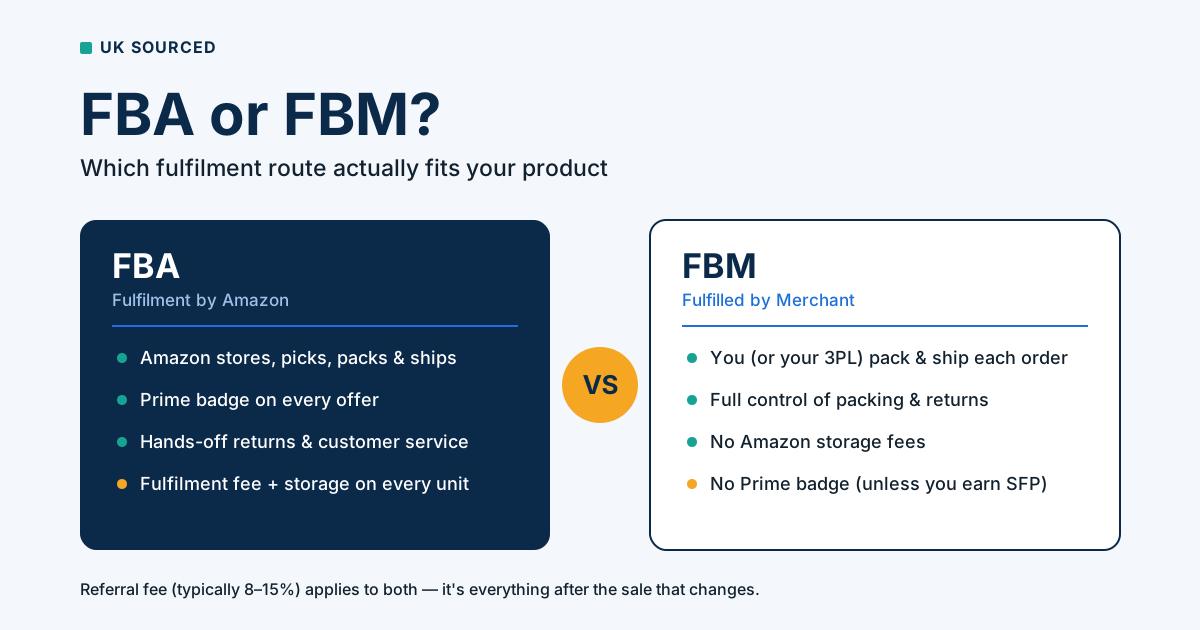
Quick definitions, then the framework. FBA (Fulfilment by Amazon) means you ship stock into Amazon's warehouses and they handle storage, picking, packing, delivery, returns and most of the customer service. In exchange you pay a fulfilment fee on every unit sold, plus storage charges for the space your stock occupies. FBM (Fulfilled by Merchant) means the order lands in Seller Central and you ship it yourself — from your unit, your spare room or a third-party warehouse. Amazon's referral fee (typically 8–15% of the sale price) applies either way. It's everything after the sale that changes.
Neither is better. The right answer depends on the product, and five questions decide it.
The five questions that actually decide it
1. Does your margin survive the fees? FBA's per-unit fulfilment fee doesn't care how much room you've got. On a £40 product it's a rounding error. On an £11.99 product with a thin margin it can be the difference between a business and a hobby. Before a single carton goes in, run the product through Amazon's Revenue Calculator with real dimensions and a realistic selling price — we've broken down where the money actually goes in our guide to UK FBA fees.
2. How big and heavy is it? FBA pricing scales with size and weight, and it isn't gentle about it. Bulky products get hit twice: a higher fulfilment fee on every order, and more cubic space on the storage bill every month. A carton of phone cases is one thing. A rattan sofa set is quite another — and for genuinely oversized items, a specialist courier you arrange yourself will often beat Amazon's oversize tariff comfortably.
3. How fast does it sell? FBA is built for stock that moves. Every week a unit sits on a shelf it costs you money, and once stock has sat for months the long-term surcharges start stacking on top of the standard ones. A product doing thirty orders a day earns its keep. A product doing four a week pays rent 52 weeks a year on sales it isn't making.
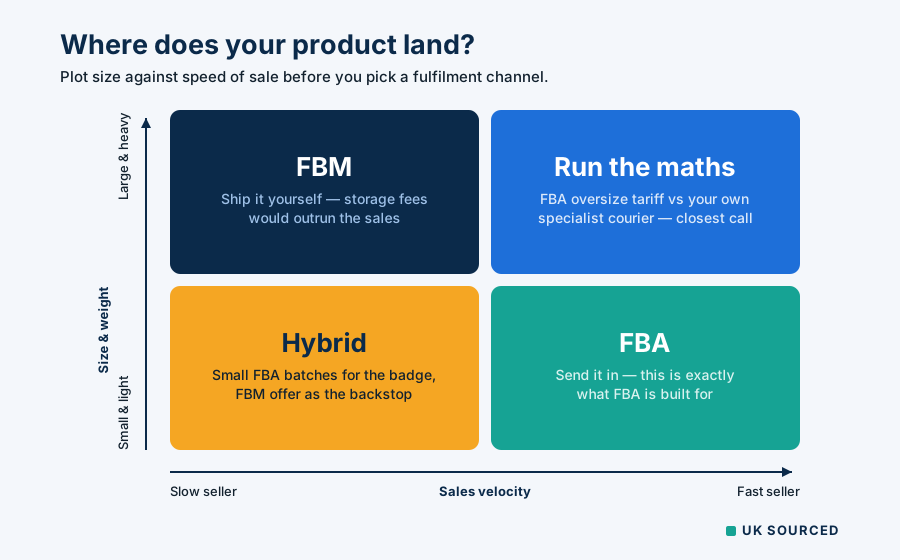
Fast and small points to FBA; slow and bulky points to FBM. The other two boxes are where the real thinking happens.
4. How much is the Prime badge worth to you? This is FBA's trump card, and Amazon knows it. The badge lifts conversion because a huge share of shoppers filter by Prime before they've read a single bullet point. If your competitors have it and you don't, you're fighting with one hand tied behind your back. Seller Fulfilled Prime does exist — you fulfil orders yourself and keep the badge — but the qualification bar is brutal, with weekend deliveries and near-perfect dispatch metrics, so for most small brands it's a later conversation rather than a starting point.
5. Who do you want handling returns? FBA means Amazon's returns policy, which is famously generous to buyers and famously indifferent to you. For most products that's fine — the odd return comes back, gets graded, life goes on. For fragile or high-value stock it stings: items come back damaged, get marked unsellable, and you pay for the privilege. FBM puts you back in charge of packing and puts a human eye on every return. The trade-off is that the workload and the metrics are now yours — your order defect rate has to stay under 1%, dispatches must leave on time and tracking must be uploaded, or Amazon will quietly bury your offers.
When FBM quietly wins
FBM has a reputation problem. Plenty of sellers treat it as the budget option for people who can't stretch to FBA. That's wrong — it's simply the better tool for certain products:
- Oversized or heavy stock, where your own courier arrangement undercuts the oversize tariff
- Slow movers, where storage fees would outrun the sales
- Fragile items that survive your packing better than a warehouse's
- Personalised or made-to-order products, which FBA physically cannot do
- Q4, when storage surcharges spike just as warehouse space gets tight
(We once watched a client's slowest line rack up a January storage bill bigger than the line's December profit. Once. It doesn't happen twice on our watch.)
Storage costs are a rabbit hole of their own — monthly fees, long-term surcharges, the low-inventory penalty — and worth understanding properly before Q4 arrives, whichever route you take.
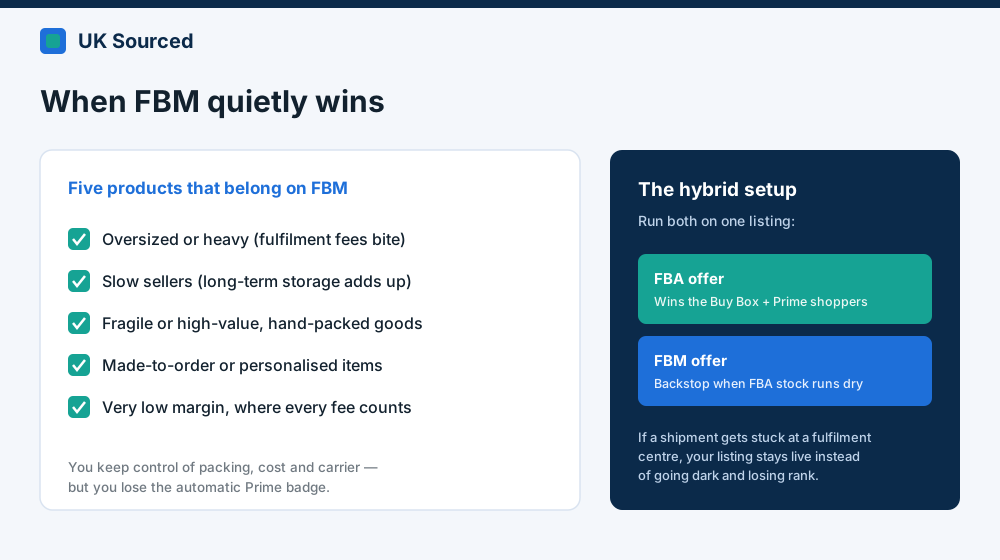
The FBM shortlist — and the hybrid setup we think every seller who can pack a parcel should have.
Run both — the hybrid most sellers ignore
Here's the bit that surprises people: you don't have to choose. One listing can carry an FBA offer and an FBM offer at the same time. While FBA stock sits in the warehouse, the FBA offer wins the Buy Box and wears the Prime badge. The moment FBA runs dry — a delayed shipment, a pallet checked in late, a Q4 sellout — your FBM offer steps in, keeps the listing live and protects the ranking you've spent months building. A stockout doesn't just pause sales; it hands your keyword positions to competitors, and buying them back costs real ad money.
Our opinion, plainly: if you're physically capable of packing a parcel, set up the FBM backup offer. It costs nothing while it's dormant. Some of our clients go further and split the catalogue — fast movers in FBA, the long tail on FBM — which keeps the fee bill honest across the whole range.
The short version
Small, light, quick-selling, decent margin? FBA. Don't overthink it. Oversized, slow, fragile or personalised? FBM deserves a proper look, at least for part of your range. And decide per product, not per account — the sellers who get this wrong are nearly always the ones who picked a side years ago and never re-ran the numbers.
If you'd rather someone ran those numbers SKU by SKU — fee modelling, storage forecasts, the hybrid setup — that's a normal Tuesday for us. Email enquiries@uksourcedltd.com and we'll give you a straight answer, even if that answer is "you're fine as you are".