Got a 1-star review? Here's what you can (and can't) do
How to handle a negative Amazon review without breaking the rules: what you can do, what gets sellers banned, and when Amazon will remove a 1-star review.
One star. Half the time there's no text with it — just the star, sat there dragging a 4.8 down to a 4.5 while you read it for the ninth time, composing replies in your head.
Every seller gets these. Every single one. What separates the brands that shrug them off from the accounts that get suspended is what happens in the next hour — because the obvious response, the human response, is against Amazon's rules, and Amazon enforces those rules with a hammer.
So let's split this properly: what you can't do, what you genuinely can, and the short list of situations where Amazon will actually take a review down.
First, the rules that protect your account
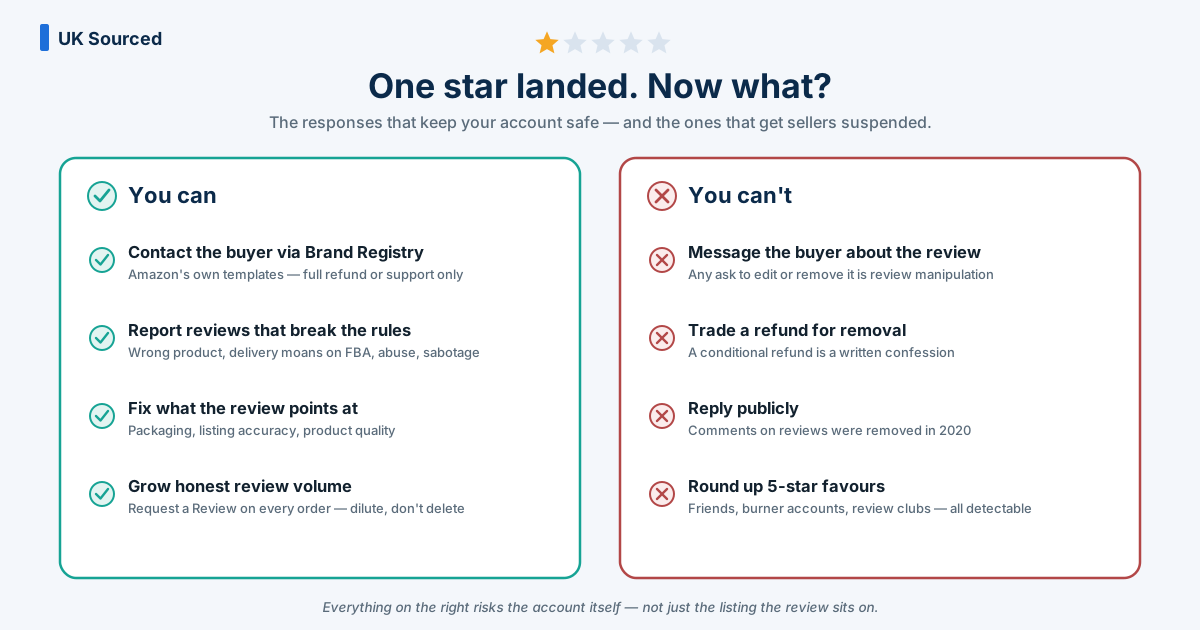
You can't contact the buyer about the review. Not through buyer–seller messaging, not by finding them on Facebook, not via a mate who "knows them". Asking a customer to change, edit or remove a review is review manipulation, and Amazon suspends sellers for it. The trap is the polite version — "we've refunded you in full, would you consider updating your review?" — because it feels so reasonable. It isn't. It's a written confession, and Amazon reads buyer–seller messages.
You can't trade a refund for removal. Refund the customer if a refund's deserved, absolutely. But the second the money is conditional on the review, you've crossed the line.
You can't respond publicly. Amazon removed the ability to comment on reviews back in 2020, so any advice about "owning the narrative with a classy public reply" is years out of date. There is no reply button. Stop looking for it.
You can't fight fire with fake fire. No friends and family leaving five stars, no burner accounts marking the review unhelpful, no review clubs. Detection here is genuinely good, and the penalty lands on the account, not the listing.
Frustrating? A bit. But the same wall that stops you touching reviews also stops your competitor buying fifty 5-stars, and if your product is decent that trade works in your favour.
What you can actually do
Four moves, in the order we'd make them.
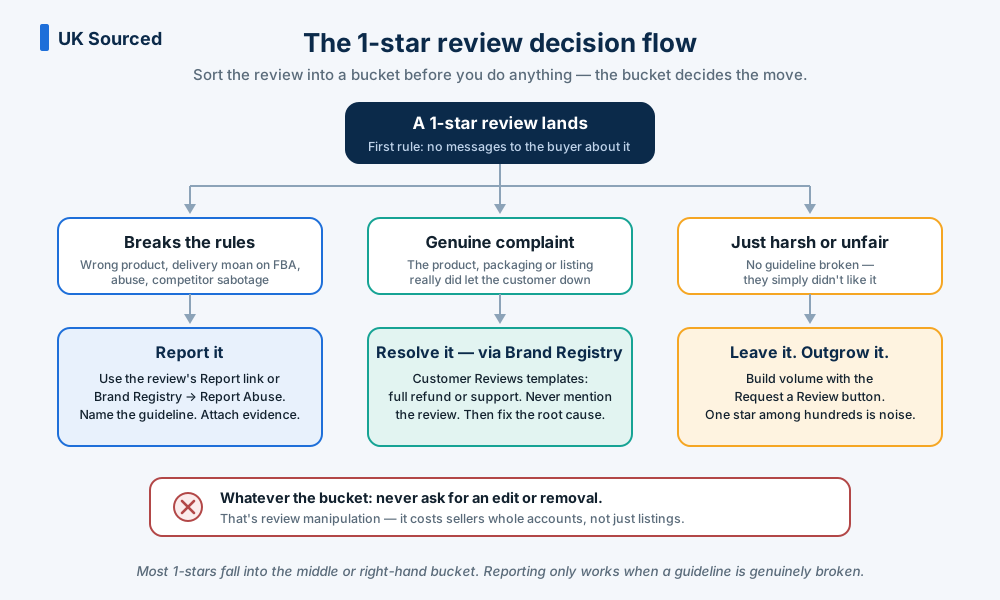 Sort the review into a bucket before you act — the bucket decides the move.
1. Contact the buyer the legal way — through Brand Registry
If you're brand registered, Seller Central has a Customer Reviews tool (under the Brands menu) that lets you reach buyers who've left 1–3 star reviews. You contact them through Amazon, using Amazon's own templates, with exactly two things on offer: a full refund or replacement, or help resolving the problem.
Notice what's missing — any mention of the review itself. The templates won't ask for an edit and neither can you. That's deliberate, and it's what keeps the tool compliant. The quiet upside: solve someone's problem quickly and graciously and a fair few will update their review of their own accord. You just can't be the one to suggest it.
2. Fix whatever caused it
An honest 1-star is free quality control. "Arrived smashed" is a packaging problem. "Nothing like the photos" is a listing problem. "Stopped working after a week" is a supplier problem. Fix the cause and the review stays a one-off; ignore it and it's a preview.
We'd argue this is the only response that compounds. Everything else just manages the symptom.
3. Report it — if it genuinely breaks the rules
Covered in full below, because the bar is higher than most sellers think.
4. Dilute it with volume
The least glamorous fix is the most reliable one. Reviews are an average, and averages obey arithmetic: one 1-star landing on ten 5-stars drags you to about 4.6. The same review landing on a hundred 5-stars leaves you at 4.96. Nobody notices the second one.
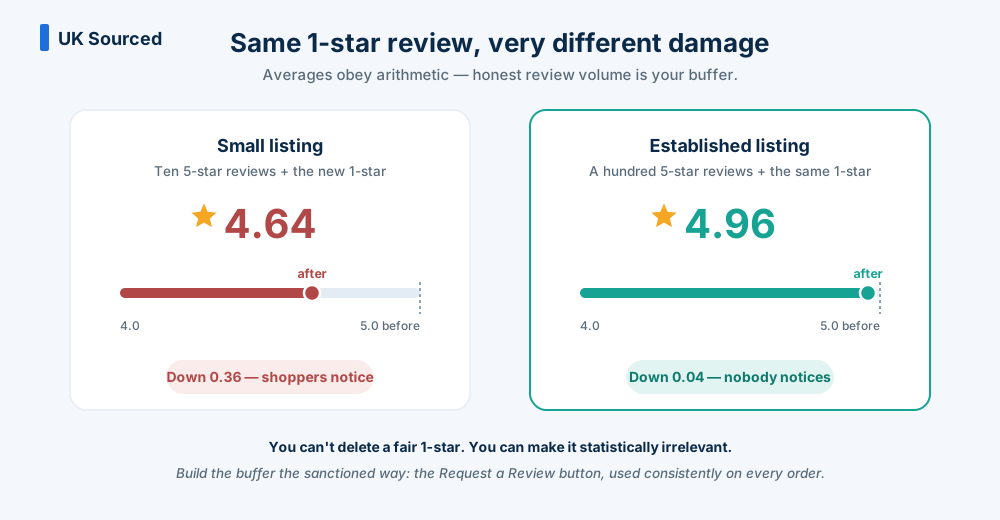 Same review, wildly different damage. Volume doesn't remove the 1-star — it makes it irrelevant.
The sanctioned way to build that buffer is the Request a Review button, used consistently on every order — we've covered the how (and the ways sellers get banned doing it wrong) in our guide to getting more Amazon reviews. No incentives, no cherry-picking the customers you know are happy. Just steady asking, at scale.
When Amazon will actually remove a review
Amazon removes reviews that break its community guidelines — not reviews that hurt your feelings or your average. The realistic list:
- It's about delivery, not the product. An FBA order where the review moans about a late courier or a box dumped in the rain. That's Amazon's failure, not yours, and these are the easiest removals to win.
- It's for a different product entirely. The reviewer describes an item you've never sold. Happens more often than you'd think with similar-looking products.
- It's abusive. Profanity, harassment, someone's personal information.
- It's sabotage. A competitor, or someone connected to one, leaving 1-stars. This is the hardest to prove — you'll want a pattern, like a cluster of 1-stars in the same week from accounts that all reviewed a rival glowingly.
- It's promotional or paid-for.
To report one, use the "Report" link on the review itself, or Report Abuse inside Brand Registry. Be precise: name the guideline you believe it breaches and attach your evidence. And set your expectations before you start — "the customer is being unfair" is not a violation, "it broke" stays up even if you privately doubt it, and repeatedly re-reporting the same review gets you flagged instead.
Keep it in perspective
Shoppers hunt for the negative reviews on purpose. It's the first filter most of us apply to anything we buy. A lone, slightly unhinged 1-star sitting among a few hundred thoughtful 4s and 5s often helps you, because it makes the rest look real. We'd take a 4.6 with four hundred reviews over a flawless 5.0 with nine every single time — perfection reads as purchased.
(We once watched a client draft four replies to the same review, each one slightly less polite than the last. None were ever sent; there was nowhere to send them. The product got a lid that didn't leak instead, and the next quarter was their best on record.)
One star is a data point. Ten of them saying the same thing is a product problem. Know which one you're looking at, act on the right one, and leave the buyer alone.
If you'd rather someone else watched the reviews, worked the removals and chased the root-cause fixes, that's a normal Tuesday for us. Drop us a line at enquiries@uksourcedltd.com.