How to launch a new product on Amazon (and use the honeymoon period)
How to launch a product on Amazon properly: pre-launch checklist, Vine reviews, launch pricing, 30–50% ACOS tolerance and a 90-day plan that protects your rank.
Most Amazon launches fail before launch day. Not because the product's wrong — because the listing goes live half-finished. Three photos. No review plan. A vague intention to "sort the ads next week". By the time everything's patched up, the one free tailwind Amazon gives a brand-new product has been and gone.
Sellers call that tailwind the honeymoon period, and using it properly is most of the game.
What the honeymoon period actually is
Amazon has never confirmed it exists. Ask anyone who launches products for a living, though, and you'll hear the same thing: new listings get a short spell of grace. The algorithm has no sales history to judge you on yet, so it hands you impressions you haven't earned — a trial run in front of real shoppers. Convert well during that window and Amazon keeps the traffic coming. Convert badly, or turn up with a half-built page, and it quietly loses interest. Buying that attention back later costs real money in ads.
Which is why the biggest launch mistake is treating launch day as the start of the work. It's the end of it. Nearly everything that decides how your first 90 days go happens before you press publish.
The pre-launch checklist
Here's the standard we hold our own launches to — and we sell on our own accounts, so this isn't theory. If a line isn't done, the date moves. We'd rather slip a fortnight than go live at 70 per cent.
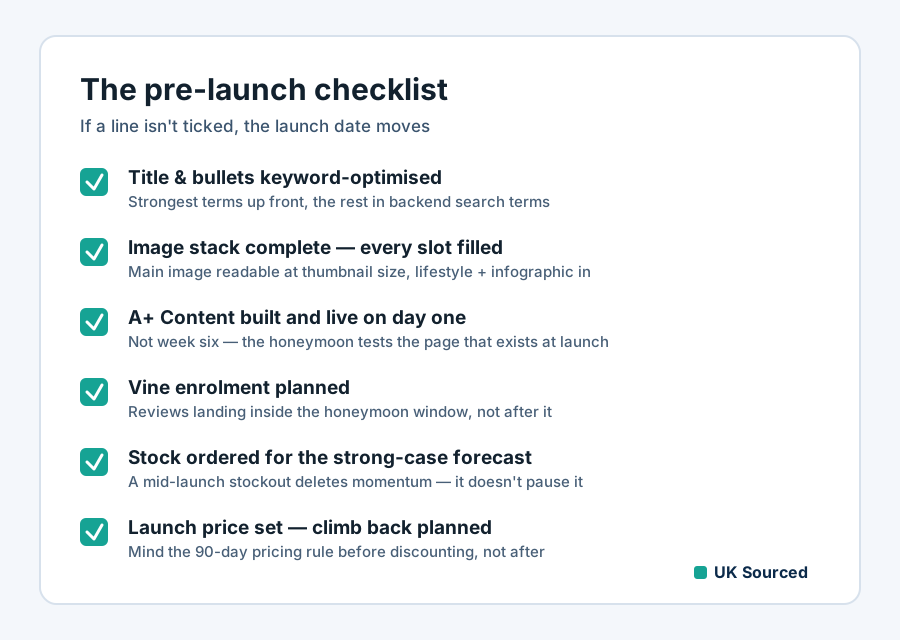 Six lines. If one isn't ticked, the launch date moves — a delayed launch beats a wasted honeymoon every time.
A fully optimised listing, before it's live. Keyword research finished, the strongest terms in your title and bullets, the rest tucked into backend search terms. The honeymoon tests whichever version of your page exists on day one. Fix a weak title in week three and your free trial already ran on the bad one.
The complete image stack. Every slot filled: a main image that reads clearly at thumbnail size, lifestyle shots showing the product in use, an infographic answering the size-and-spec questions nobody scrolls to find. Images do most of the converting on Amazon. "We'll add the rest later" spends the exact impressions you can't get back.
A+ Content ready on day one if you're Brand Registered. Not week six.
A review plan — which almost always means Vine. A listing with zero reviews converts badly however good the page is, and you can't ask customers for positive reviews without putting the whole account at risk. Vine is Amazon's sanctioned answer. Enrolment is tiered: free for one or two units, a modest fee for up to ten, roughly $200-equivalent for the top tier of up to thirty. The reviews are honest and clearly labelled, which cuts both ways — a weak product will get told so in public. We've written up when Vine pays and when it bites, but for a genuinely good product it's the fastest legitimate route to social proof there is.
Stock deep enough to survive success. Order for your strong-case forecast, not your cautious one. A stockout mid-launch doesn't pause your momentum — it deletes it. (We watched one brand reach page one in week three, run dry in week four, and spend the rest of the quarter clawing back up at roughly double the ad cost. The second climb is always steeper.)
Price to win the launch
Go in slightly under the price you eventually want to settle at. You're a stranger with no reviews asking shoppers to pick you over the incumbent, and a sharper price is the argument that works while your review count can't. This isn't a race to the bottom. It's a temporary discount with a job to do.
One warning, and it's a 2026-specific one. Under Amazon's current pricing rules, sell below your standard price for more than half of a 90-day window and the lower figure can become your new baseline. Plan the climb back to full price before you launch, not after — we've unpacked the detail in Amazon's 2026 pricing rules.
Expect ugly ad numbers — on purpose
Launch PPC isn't meant to be profitable. Tolerate an ACOS of 30–50% for the first stretch: you're buying data (which search terms actually convert for your product) and velocity (the sales the algorithm uses to decide where you rank). If your break-even sits at 35% and you deliberately run at 45% for six weeks, that's a funded climb, not a failure — provided it's time-boxed and you know why you're doing it.
Structure can stay simple. One auto campaign to surface search terms you'd never have guessed, one exact-match campaign on the handful of keywords you must own. Everything cleverer can wait until you have data worth being clever with.
The first 90 days, week by week
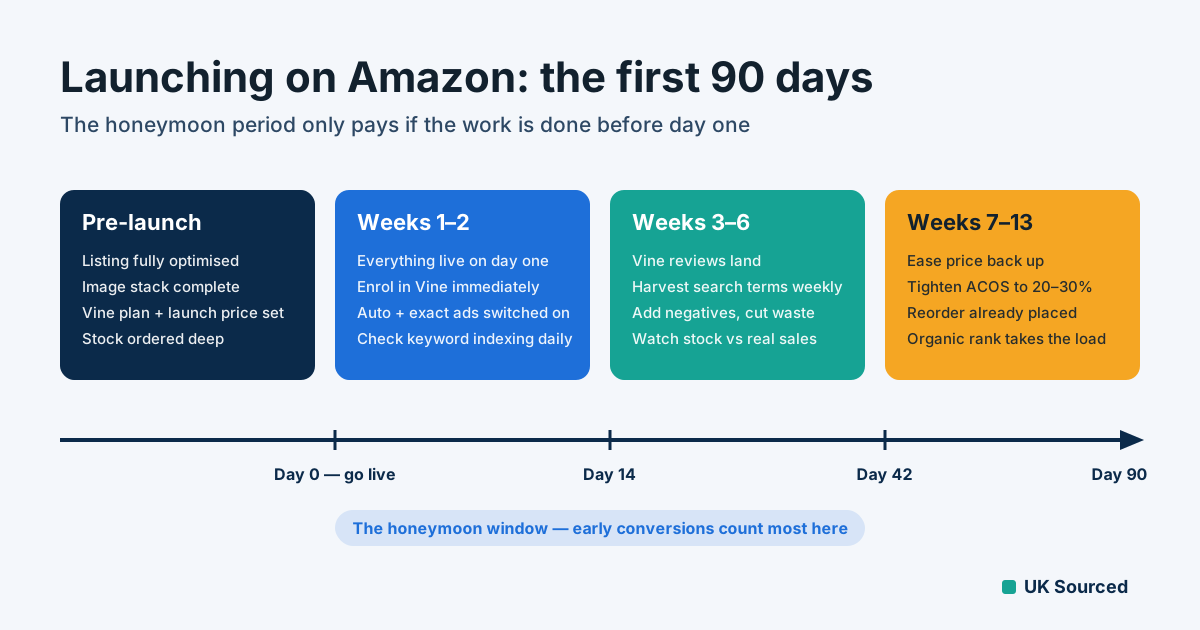
Weeks 1–2. Everything live on day one — listing, images, A+, ads. Enrol in Vine immediately; reviews take weeks to arrive and you want them landing during the honeymoon, not after it. Check daily that you're indexed for your target keywords.
Weeks 3–6. Vine reviews start appearing and conversion lifts, which makes every ad click work harder. Go weekly now: pull the search-term report, promote converting terms into exact match, add negatives to stop the waste on the rest. And check stock against actual sales, not the forecast — this is the window where launches that went better than planned quietly run themselves dry.
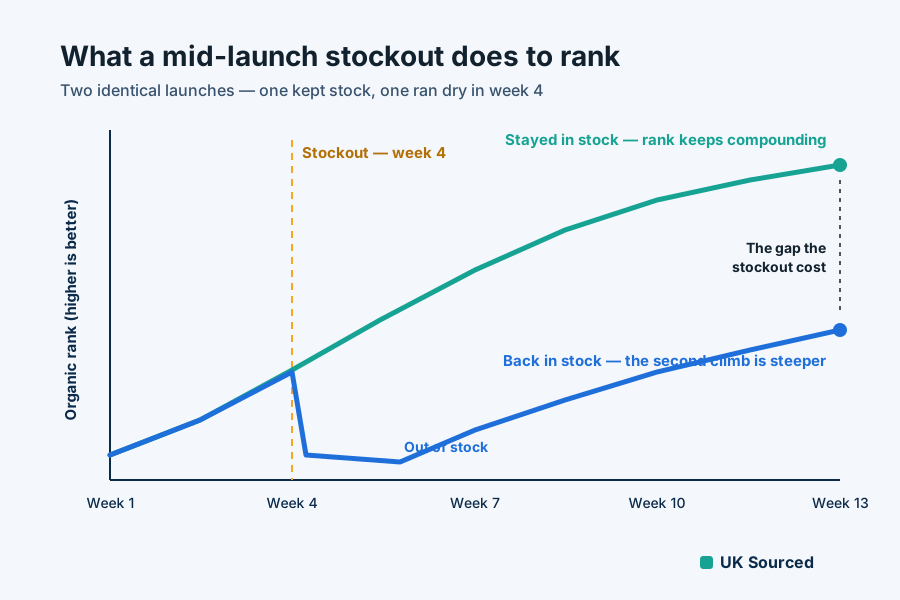 The stockout doesn't pause a launch — it resets it. The second climb costs more and starts lower.
Weeks 7–13. Ease the price toward its resting point, keeping that 90-day rule in mind. Tighten ads toward a growth-stage ACOS of 20–30%. Your reorder should already have been placed weeks ago. By day 90, a healthy launch is standing partly on its own organic legs, with ads shifting from manufacturing sales to supporting them.
The short version
The honeymoon period rewards preparation, not enthusiasm. Finish the listing before it exists publicly. Line up reviews through Vine. Buy more stock than feels comfortable. Then spend the first 90 days deliberately overspending on ads while gradually handing the work over to organic rank.
If you'd rather your first launch wasn't also your practice run, this is the sort of thing we do every month — on client accounts and our own. Drop us a line at enquiries@uksourcedltd.com and tell us what you're launching.