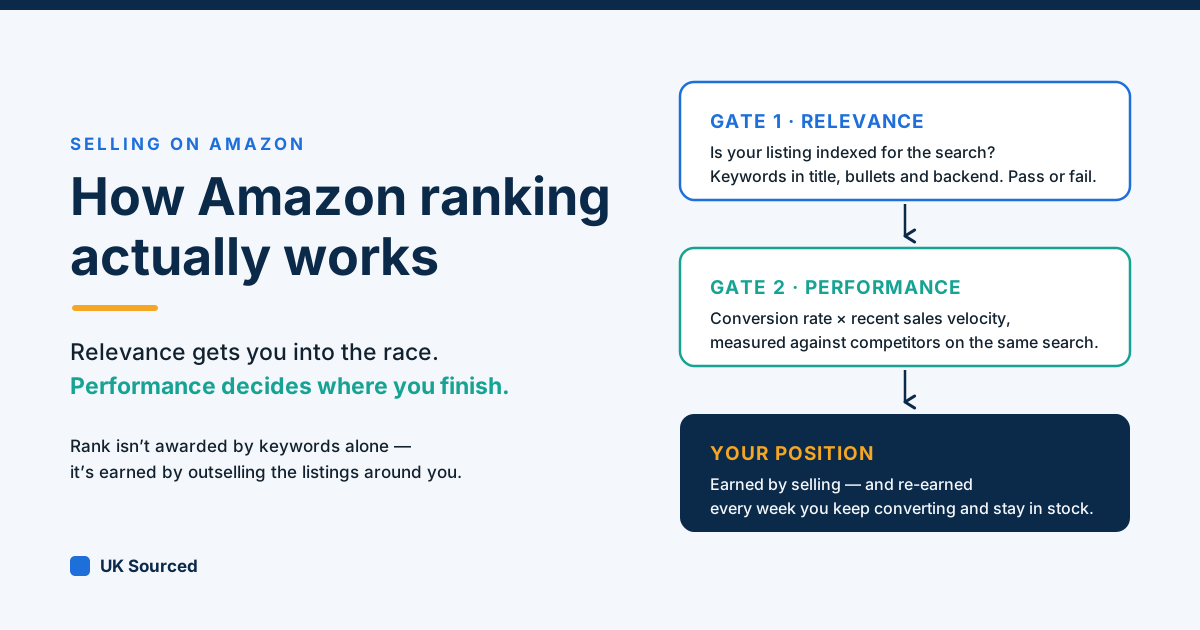
How Do I Rank Higher on Amazon? What the Algorithm Actually Rewards
Amazon ranks what sells, not what's prettiest. How relevance, conversion and sales velocity really decide your rank — and how PPC bootstraps a new listing.
Your product might genuinely be better than the one sitting at the top of page one. Better made. Cheaper, even, with nicer reviews. Doesn't matter. Amazon doesn't rank the best product — it ranks the product most likely to turn that search into a sale.
Once you accept that, ranking stops being a mystery and starts being a to-do list. Here's how the decision actually gets made — and which of the things you've read about it are true.
Amazon is a till, not a library
Google ranks pages that answer questions. Amazon ranks products that make it money. Every time a shopper types "yoga mat", Amazon is placing a bet on which order of results will produce the most sales, because it takes a referral fee on every one of them. There's no reward for elegance and no marks for effort. The algorithm is a shopkeeper deciding what goes at eye level.
So when sellers ask us how to rank higher, the honest answer is short: sell more, through the searches you want to rank for. Rank isn't awarded. It's earned by selling. Everything else is detail — but the detail decides whether you can sell, so let's walk through it.
Gate one: relevance — can you rank at all?
Before Amazon will consider ranking you for a search, it has to believe your product matches it. This is the keyword bit, and it works like a door. Either you're indexed for a phrase or you're not.
Your title carries the most weight, then bullets, then the description and backend search terms. If "collapsible dog crate" appears nowhere in your listing, you will not show up for that search. Full stop. But once you're indexed for a term, repeating it does nothing. Indexing is binary — five extra mentions won't move you up a single place.
Here's our slightly contrarian take: most "Amazon SEO" advice is written back to front. The guides spend thousands of words on keyword placement, which is the pass/fail part, and a paragraph on conversion, which is what actually decides your position. Get your top phrases into the title and bullets once, tuck the long tail into the backend, then stop fiddling.
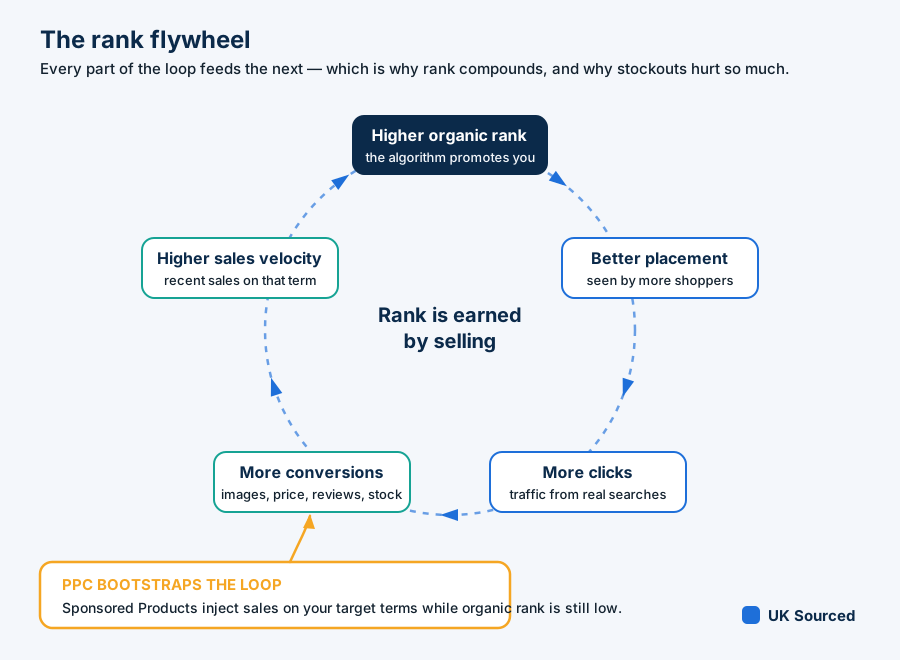
The rank flywheel — and where Sponsored Products give it a push before it can spin on its own.
Gate two: performance — where do you deserve to sit?
Past the relevance gate, two numbers decide your position, and both are measured against the competitors on that same search.
Conversion rate. Of the shoppers who click your listing from that search, how many buy? If you convert better than the products around you, Amazon makes more money showing you higher up. So it does.
Sales velocity. How many sales you've made through that search term recently. Recent sales count far more than historic ones — which is why rank fades when sales do.
Notice what's not on that list. Reviews, price and images aren't direct ranking inputs; they're conversion inputs. A wall of five-star reviews helps because it makes more clickers buy, not because the algorithm counts stars. Everything routes through one question: did the shopper purchase?
Stock deserves its own line. Run out and your velocity hits zero overnight, and the algorithm doesn't hold your spot while you restock. (We watched a client's product slide from page one to page five during a two-week stockout. The fall took days. The climb back took months.) If you protect one thing, protect availability on your ranking terms.
The myths that waste your time
A few beliefs we still hear every month, gently retired:
- "Stuff the keyword in more times." Indexed once is indexed. Extra repetitions cost you readable copy and gain you nothing.
- "Reviews boost rank directly." They boost conversion, which boosts rank. A 4.9-star product that doesn't sell outranks nobody.
- "Blast it out at 99p and the rank sticks." The velocity spike fades about as fast as it arrived, and bargain-hunters aren't the buyers Amazon expects at your real price. You're training the algorithm on the wrong data.
- "The new A10 algorithm has secret levers." People have been selling that story for years. The label changes; relevance-then-performance hasn't.
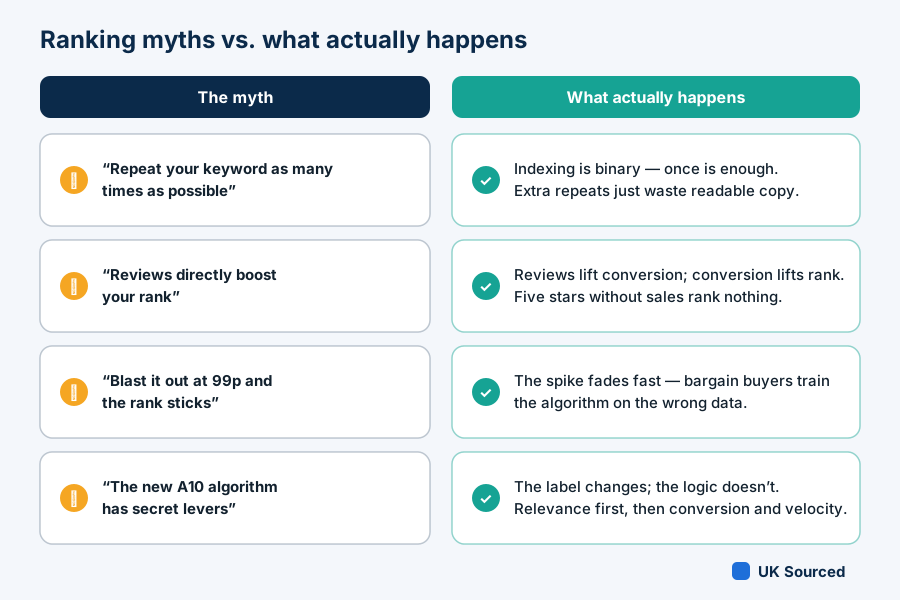
Four persistent myths — and what's actually going on underneath each one.
The chicken-and-egg problem, and why PPC is the answer
Every new or stalled product faces the same bind. You need sales to rank. You need rank to get sales. Organic search won't hand you visibility you haven't earned, and you can't earn it without being seen.
PPC breaks the loop. Sponsored Products lets you buy the top-of-page placement you haven't earned yet, on the exact search terms you want to own. Sales that come through those ads count towards your velocity on those terms, the organic algorithm takes notice, and your unpaid position starts to climb. Paid sales today buy organic sales tomorrow.
That's why we tell clients to stop judging launch advertising as a profit line. It's a rank investment. A 30–50% ACOS during a launch window is normal and, handled properly, temporary — as your organic position rises, organic orders take over the volume and the ad spend can ease off. We've broken down what ACOS to tolerate at each stage in what's a good ACOS on Amazon.
One warning, though. PPC pointed at a listing that doesn't convert is worse than no PPC at all. You'll pay for clicks, convert few of them, and hand Amazon evidence that shoppers don't want your product. Fix conversion first. Then buy traffic.
What we'd actually do this week
If you're stuck on page three, work in this order:
- Check indexing once. Are your top three phrases in the title and bullets? If yes, move on — more keyword surgery won't help.
- Fix conversion before traffic. Main image, price against page one, review count somewhere in the neighbourhood of your competitors'. Be brutal with yourself here.
- Guard your stock. Set reorder points on ranking products before you do anything else in the business.
- Point Sponsored Products at the two or three searches that matter and accept launch-level ACOS until organic catches up.
Most sellers run that list backwards. They pour money into ads for a listing that can't convert, then conclude PPC doesn't work. It works fine — it just amplifies whatever it's pointed at.
Ranking is earned by selling, and selling well is a dozen small things done consistently. If you'd rather not spend your evenings buried in search-term reports, that's the sort of thing we do all day. Drop us a line at enquiries@uksourcedltd.com and we'll take an honest look at where your listings sit.