What is TACoS — and why we watch it more than ACOS
What is TACoS on Amazon? Ad spend divided by total revenue — the number that shows whether ads are growing your business or propping it up. How to read yours.
Here's a pattern that catches out plenty of decent sellers. The PPC dashboard looks lovely — ACOS steady at 22%, campaigns tidy, nothing obviously on fire. But the business feels tighter than it did six months ago. Total sales haven't really moved. Ad spend has. Quietly, month by month, the ads have gone from accelerating the account to holding it up.
ACOS can't see any of that. It was never built to. TACoS — Total Advertising Cost of Sales — is the number that catches it, and it's the one we watch more closely than ACOS on every account we manage.
The definition, minus the jargon
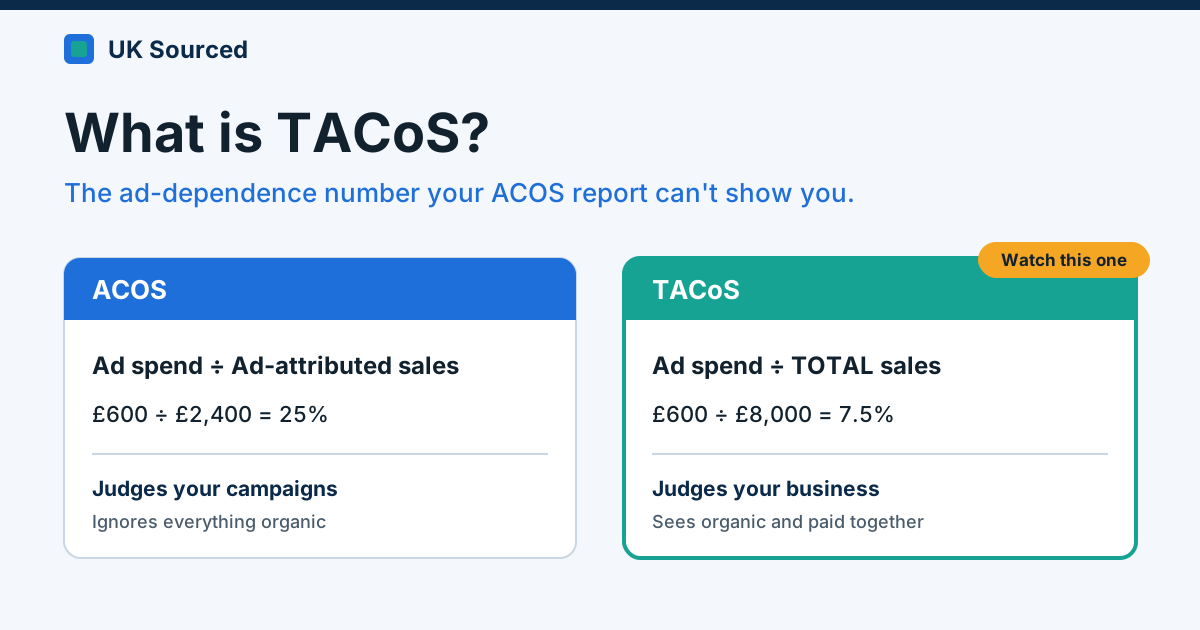
TACoS is your ad spend divided by your total Amazon revenue. Everything — organic orders, ad-attributed orders, the lot.
ACOS, by contrast, is ad spend divided by ad-attributed sales only. Just the sales your ads can claim credit for. (If you're still getting your head around how Sponsored Products work in the first place, start with our PPC beginner's guide — this post assumes the basics.)
A worked example. You spend £600 on ads this month. Those ads generate £2,400 in sales, so your ACOS is 25%. But the whole account did £8,000, because organic sales made up the rest. £600 divided by £8,000 gives you a TACoS of 7.5%.
Same spend. Same campaigns. Two very different stories.
Why we rate TACoS above ACOS
ACOS judges your campaigns. TACoS judges your business. That's the whole argument in two sentences, but it's worth unpacking.
ACOS is a closed loop. It compares ad spend with the sales those ads produced and ignores everything outside that loop. Which means you can have a beautiful ACOS on an account that's slowly rotting — organic sales sliding, rank slipping, an ever-larger share of revenue arriving with an Amazon Ads invoice attached. ACOS won't blink. As far as it's concerned, the campaigns are performing.
TACoS drags the rest of the account into view. It answers a blunter, more commercial question: how much of everything this business earns on Amazon are we spending just to keep the wheels turning? That's your ad-dependence, expressed as one number.
We'll say it plainly: ACOS is the most over-reported figure in Amazon advertising. It's genuinely useful for tuning — deciding which keyword earns a bid rise and which gets binned. We've written about where your ACOS should sit for exactly that job. But as a measure of whether an account is getting healthier or sicker? Nearly useless. If we could only see one metric per account each month, we'd take TACoS and not think twice.
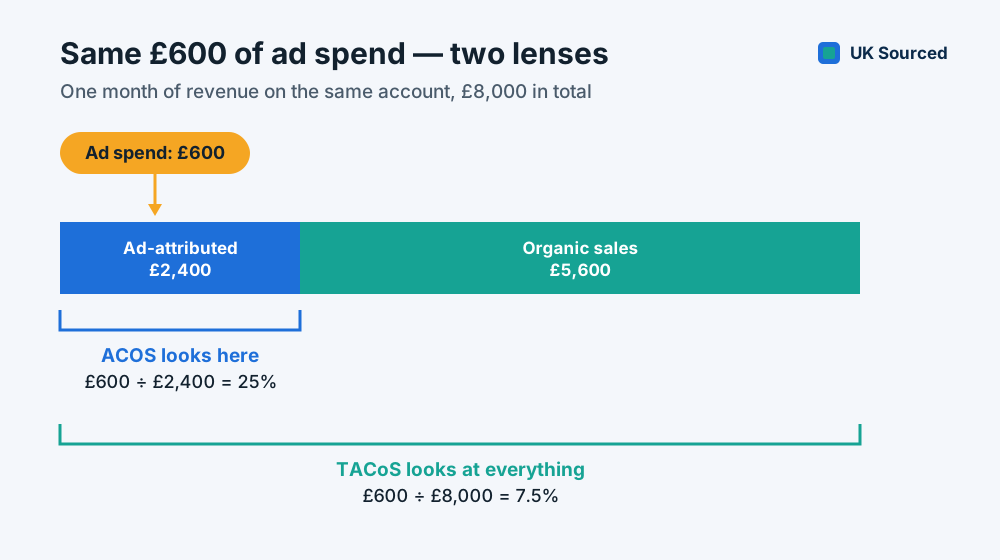 Same £600 of spend, two lenses — ACOS only sees the ad-attributed slice, while TACoS measures it against everything the account earned.
The trend is the signal
A single TACoS reading tells you a little. The direction of travel tells you almost everything. Four patterns cover most accounts we see:
Falling TACoS, steady ACOS. The one you want. Campaigns are converting at the same rate, but total revenue is growing faster than spend — which can only mean organic sales are expanding. Your ads are doing their proper job: buying velocity and rank that then earn sales you don't pay for.
Flat TACoS, growing sales. Respectable. Spend is scaling in line with revenue and the account is holding its shape. Not the flywheel at full tilt, but nothing to lose sleep over.
Rising TACoS with a reason. You've launched a product, pushed into new keywords, backed a Prime Day promotion. A deliberate, temporary rise is investment, not decay. The operative word is temporary — you should be able to say out loud when it ends.
Rising TACoS, flat or falling sales. The alarm bell. Every pound of ad spend is buying less than it used to, and the ads have shifted from growing the business to propping it up. Left alone, this one eats margin from both ends: spend up, organic down.
One quirk of the maths worth knowing: the closer TACoS creeps towards your ACOS, the closer you are to every sale being a paid one. When the two numbers nearly match, organic has all but left the building.
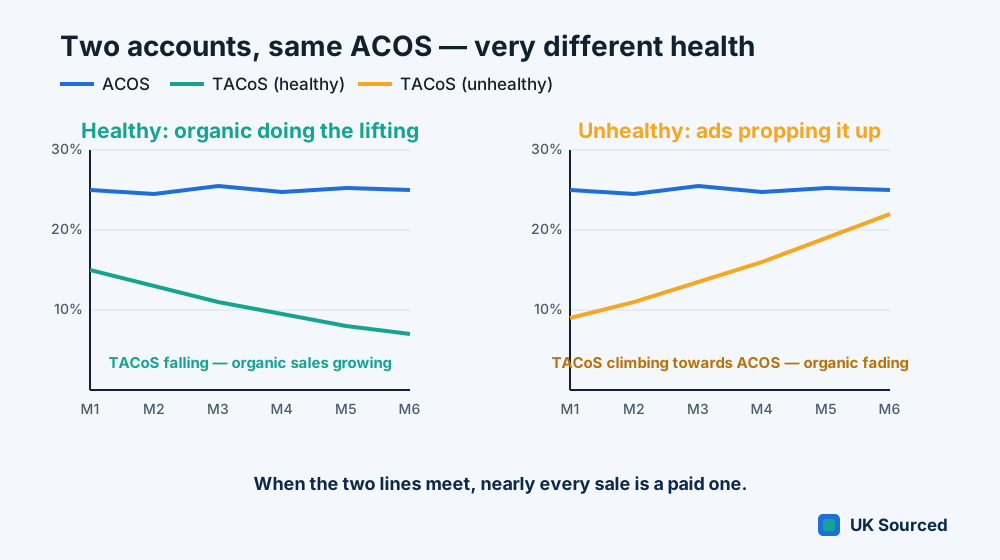 Both accounts report the same ACOS. Only the TACoS line shows which one is actually getting healthier.
What healthy looks like over a product's life
New products should have a scary TACoS. At launch you've got no reviews, no rank and no organic momentum, so nearly every order is ad-fed — it's the same reason we tolerate a 30–50% ACOS during a launch. That's the price of admission, not a problem.
The health check is what happens next. As reviews land and organic rank builds, TACoS should drift downwards while revenue climbs. Not in a straight line — Amazon's far too noisy for that — but over a quarter, the direction should be unmistakable.
It shouldn't drift to zero, though. Mature products still advertise: defending their own brand terms, staying visible on the big head keywords. (We once had a client half-apologise that their TACoS "still wasn't zero". It never should be — zero usually means you've handed your shelf space to whoever's still spending.)
Rising TACoS and no idea why? Do this
Resist the urge to slash spend on day one. Diagnose first, because the right fix depends entirely on the cause.
Check organic rank on your main keywords. If you've slipped down page one, ads are quietly filling a hole that organic used to fill. The fix is rank recovery — listing quality, price, review velocity, stock depth — not a smaller budget.
Check conversion rate. Steady sessions with falling orders means the listing is the problem, and a weak listing inflates every ad metric you have. Sort the page before you touch a bid.
Follow the new spend. Pull the search-term report and find where the extra money actually went. Broad-match drift and forgotten auto campaigns are the usual suspects, and negatives fix most of it.
Look outside your account. A new competitor undercutting you on price will dent organic sales and push TACoS up without you changing a thing. Not every rise is self-inflicted.
And a warning about the panic option. Cutting spend hard will lower TACoS on paper — while also cutting sales velocity, which drags rank, which shrinks organic sales, which pushes TACoS straight back up on a now-smaller business. We've watched sellers ride that spiral all the way down. Wean, don't amputate.
The short version
ACOS tunes campaigns. TACoS judges the account. Falling TACoS with growing sales means your ads are building something; rising TACoS with stalling sales means they're holding something up — and you want to know which long before the P&L tells you.
If the dashboard insists everything's fine but the business doesn't feel it, TACoS is usually where the truth's hiding. Happy to take a look — send a note to enquiries@uksourcedltd.com and we'll tell you what we see.