Does A+ Content actually increase sales?
Does Amazon A+ Content actually increase sales? Brands report a 5–10% conversion lift — but only from A+ built to sell, not decorate. Here's the difference.
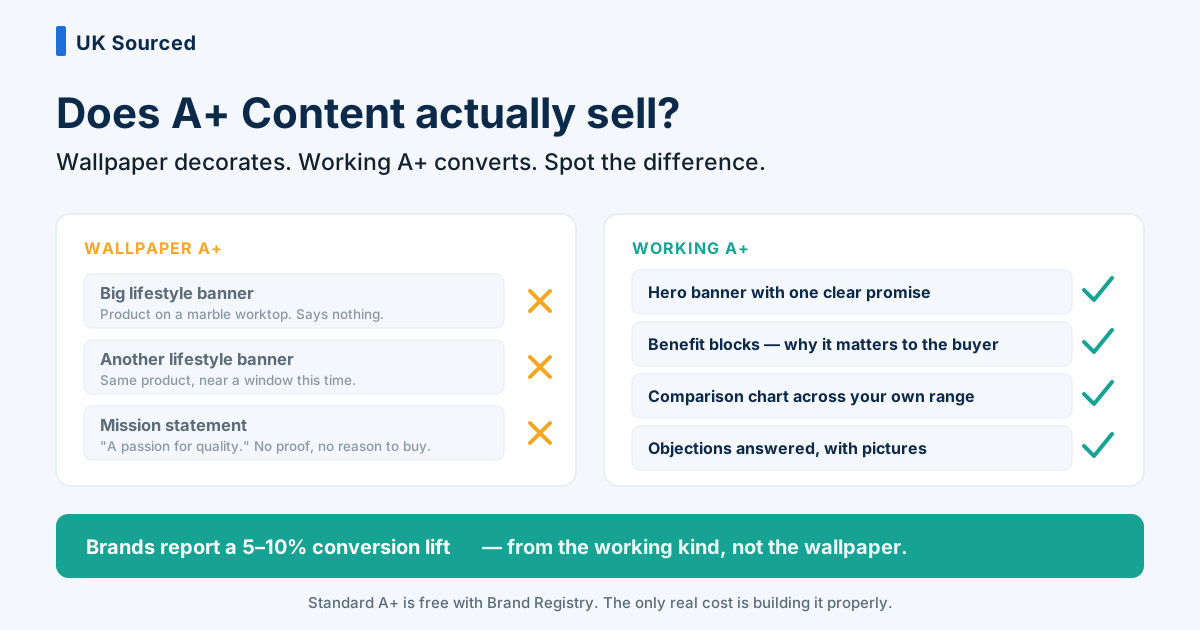
Half the A+ Content on Amazon is expensive wallpaper.
It looks lovely. Brand colours spot on, glossy lifestyle photography, the lot — somebody clearly paid a designer good money. And it sells nothing, because nowhere in those six handsome banners is there a single reason to pick this product over the cheaper one in the next search result.
The other half is different. A+ that answers questions and kills objections genuinely shifts numbers — brands typically report somewhere in the region of a 5–10% lift in conversion when proper A+ replaces the plain text description. So does A+ Content increase sales? Yes. But only the working kind, and most of what we audit isn't it.
The thirty-second version of what A+ actually is
A+ Content is the enhanced section that sits where the bland product description used to be — modular blocks of images and formatted text instead of a grey paragraph nobody reads. Banners, benefit grids, comparison charts, a brand story if you want one. You build it from templates in Seller Central, no coding involved, and Amazon doesn't charge for the standard version.
One gate to pass first: it's exclusive to brand owners enrolled in Brand Registry, which in turn needs a registered trademark. If you're not enrolled yet, that's the actual first job — we've covered whether Brand Registry is worth it for a UK brand separately. Spoiler: for almost every real brand, yes.
The 5–10% claim, examined honestly
That uplift figure gets quoted everywhere, so let's be straight about what it means. It's a relative lift in conversion, not ten percentage points. And it's what brands report — self-selected, mostly brands whose A+ was decent to begin with.
Still. Run the maths on even the bottom end and it's hard to argue with. Say your listing gets 3,000 sessions a month and converts at 10% — that's 300 orders. A 5–10% relative lift takes you to roughly 315–330. That's 15–30 extra sales every single month, from the same traffic, at no extra ad spend. On a £24 product you were leaving £360–£720 a month on the table. Standard A+ costs you nothing but the effort of building it, so the return-on-effort question mostly answers itself.
Two caveats before you get carried away:
- A+ fixes conversion, not traffic. If nobody's finding your listing, better mid-page content won't summon them. Rankings and ads bring people in; A+ helps close them.
- Don't build it for keywords. Text baked into A+ images isn't read by Amazon's search algorithm. Fill in your image alt text sensibly and move on — the SEO job lives in your title, bullets and backend terms.
What working A+ actually contains
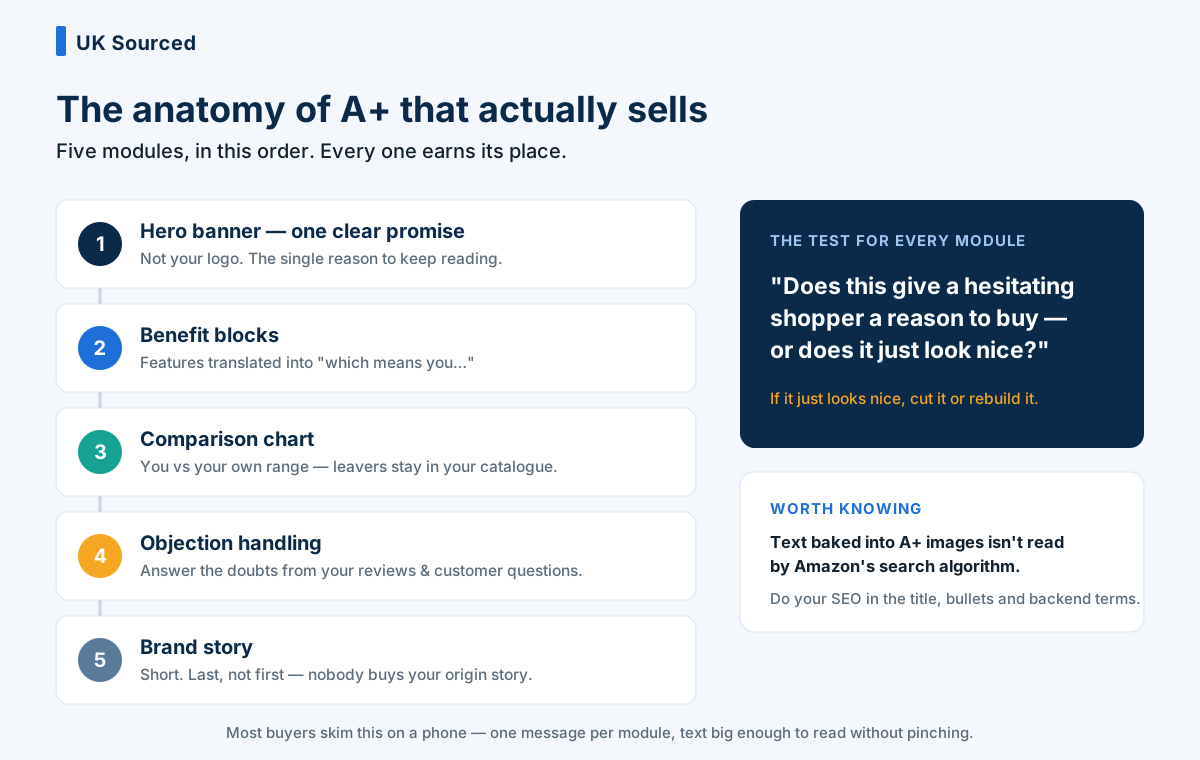 The working anatomy. Note where the brand story sits — last, not first.
We've built and audited a lot of these. The A+ that moves conversion has a recognisable anatomy.
A comparison chart — nearly always. If we could only add one module to a listing, it'd be this. It does two jobs at once: answers "which version do I need?" for the hesitating shopper, and cross-sells your own range, so someone who bounces off this product lands on your other one instead of a competitor's. Shoppers leaving your listing should leave into your catalogue, not back to search.
Benefit blocks, not feature lists. "600D ripstop nylon" is a feature. "Survives being dragged across a wet car park twice a day" is why anyone cares. Every block should complete the sentence "which means you…". If a module just restates the spec sheet, it's dead weight.
Objection handling. The one almost everyone skips. Open your reviews and customer questions and list the doubts that come up again and again — will it fit, is it really waterproof, does it work with what I already own. Then answer them, in the A+, with pictures. Every unanswered doubt is a shopper who's gone back to the search results to double-check a rival listing, and plenty never come back.
Built for a phone. Most of your buyers are thumbing through on mobile. One message per module, text big enough to read without pinching, and assume people skim. Because they do.
The pretty-but-pointless trap
Now the failure mode, because it's endemic. Brochure A+: full-width banner of the product on a marble worktop, another of it near a window, a mission statement about passion for quality, logo, done. (We once audited a listing whose entire A+ was six beautiful banners and not one sentence about what the product actually did. Gorgeous. Useless.)
The test is brutal but simple: for each module, ask "does this give a hesitating shopper a reason to buy, or does it just look nice?" Aesthetics do matter — scruffy A+ hurts trust — but design is the packaging, not the argument. If your A+ would work equally well for any product in your category with the name swapped out, it isn't saying anything.
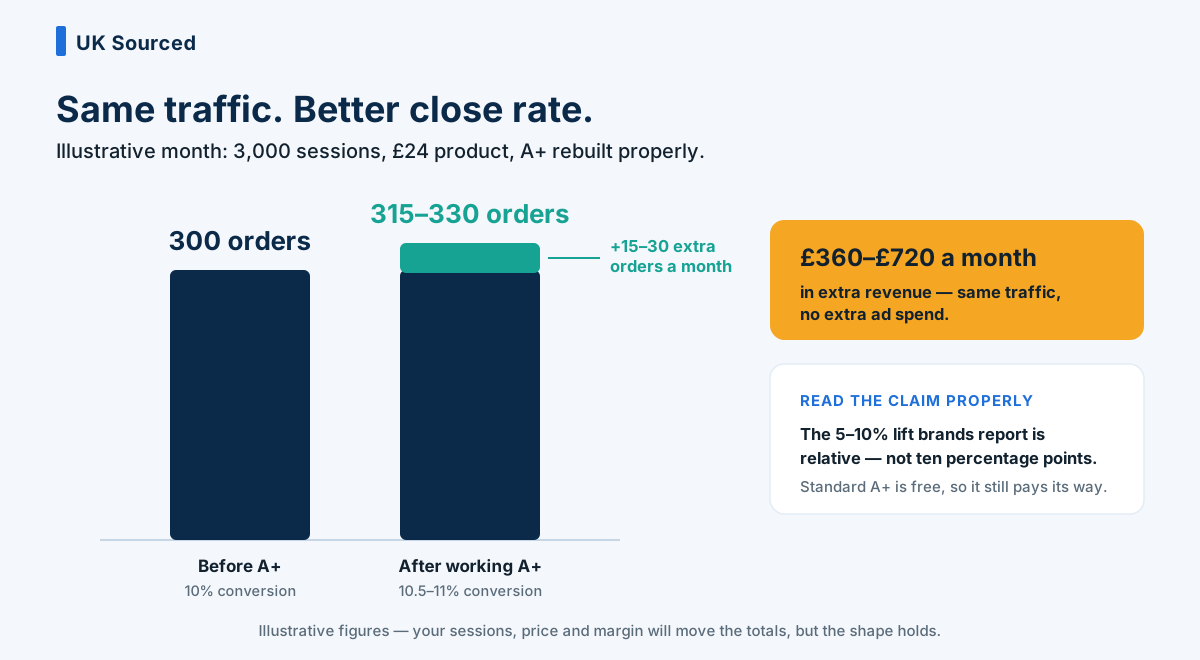 Illustrative numbers — but this is the shape of it: same visitors, more of them buying.
Premium A+, briefly
There's a bigger version: Premium A+, sometimes called A++. Larger modules, video, interactive comparison tables, carousels — proper rich media, and it looks noticeably more polished on the page. Amazon grants it to brands that meet eligibility criteria rather than charging a flat fee, though those criteria involve having brand story content live and a track record of approved A+ across your catalogue, so there's groundwork to do first.
Our take: Premium amplifies a good message; it doesn't rescue a missing one. Get standard A+ doing the persuasion job before you chase the upgrade. If you've got a decent-sized catalogue, real traffic and video assets sitting unused, then it's worth the push — video in particular does things a static banner can't.
So — worth it?
Yes, and for most brands it's one of the cheapest conversion wins available: the standard version is free, the uplift is real, and it compounds with everything else on the page. But it's a mid-page lever, not the main one. Main images, price and reviews still do the heavy lifting — A+ catches the shopper who scrolled past all three and still isn't sure. If the rest of your listing needs work too, start with what makes an Amazon listing actually convert.
If you'd rather someone built the working kind — comparison charts, objections answered properly, the lot — that's bread-and-butter work for us. Drop us a line and we'll tell you what your listings are missing.