Vendor Central vs Seller Central: should you switch?
Got an invite to Vendor Central? Here's the honest 1P vs 3P trade-off — price control, chargebacks, PO games — and why most brands are better off on Seller Central.
An email lands from Amazon. "We'd like to buy your products directly." It reads like a promotion — Amazon itself wants to stock you. Flattering, isn't it? And for a fair few brands, it's the start of a decision they get wrong.
That email is an invitation to Vendor Central, the "first-party" (1P) side of Amazon. What you're on now, almost certainly, is Seller Central — "third-party", or 3P. From the outside they look like the same shop. They are very different businesses to run. Here's what actually changes, and why we usually tell brands to sit on their hands before jumping.
1P and 3P, in plain English
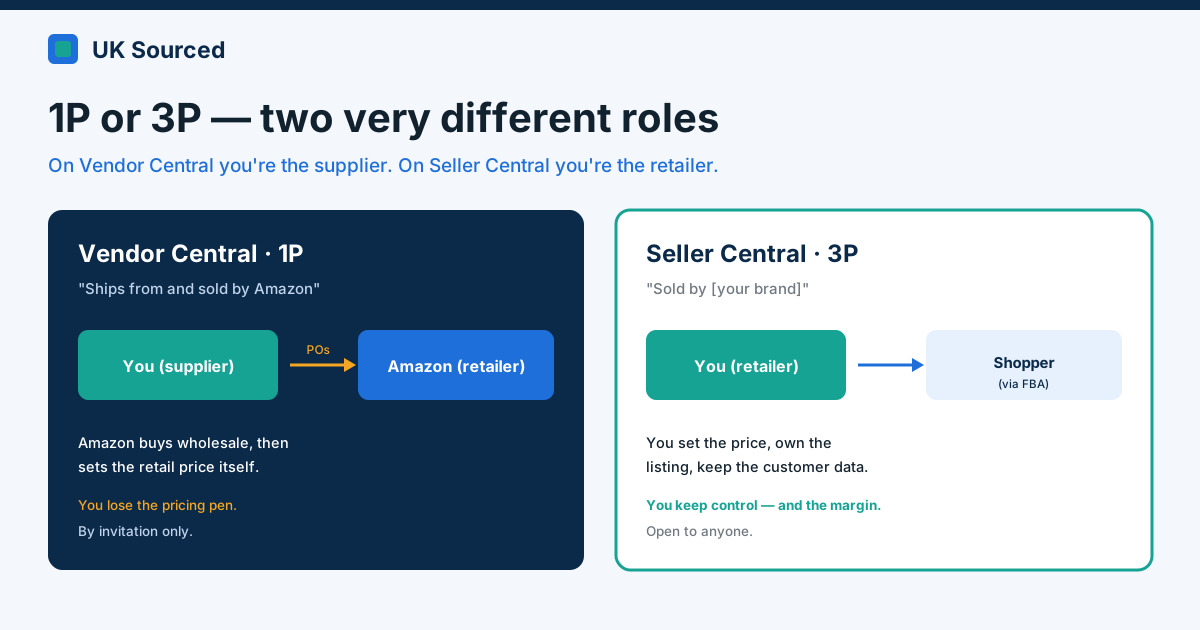
Seller Central (3P): you sell straight to shoppers. You own the listing, set the price, hold the stock (or send it into FBA), and Amazon takes a referral fee on each sale. You are the retailer.
Vendor Central (1P): Amazon buys your stock wholesale, at a price you negotiate, through purchase orders. Then Amazon is the retailer — the listing reads "Ships from and sold by Amazon." You're the supplier. You invoice Amazon; they sell to the public at whatever price they fancy.
That last line is the whole game. On 1P, you hand Amazon the pricing pen.
What you gain on Vendor Central
There are real upsides, and it's only fair to lay them out.
- Hands-off selling. Amazon buys in bulk, you fulfil the POs, they deal with the customer.
- The "sold by Amazon" badge, which a slice of shoppers trust a touch more.
- Bigger, lumpier orders instead of a steady drip of single sales.
- Wholesale simplicity — if you think like a manufacturer, not a retailer, that's a genuine draw.
For a supplier who wants to shift volume and never think about a consumer again, that's appealing. No argument.
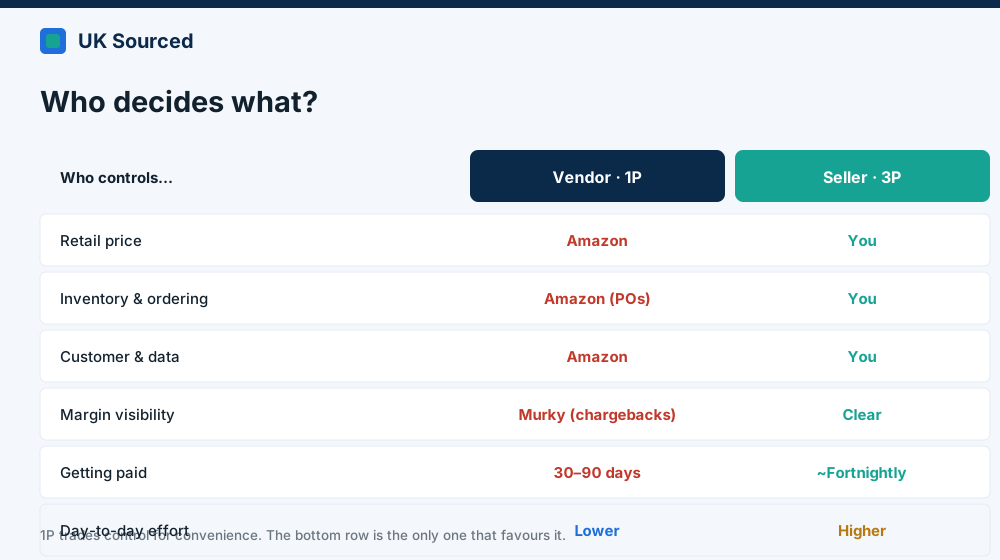 Run your eye down the "who decides" column. On the things that build a brand, 3P keeps you in the chair.
What you give up (the bit the invite email skips)
- Price control. Amazon prices your product however it likes. Decide to discount to match a rival? Your carefully built positioning is gone — and a low Amazon price can drag your other channels down with it.
- Margin, quietly eroded. Chargebacks and deductions are a way of life on 1P: fees for non-compliant cartons, late deliveries, shortages, "co-op" contributions. They stack up. Brands routinely find their real 1P margin is far thinner than the wholesale price implied.
- PO games. Amazon decides what to order and when. It can slash orders, lean on you at the annual negotiation ("we'd like another 3% or we buy less"), or drop a line without ceremony.
- Payment terms. You wait 30, 60, sometimes 90 days to be paid, versus 3P's roughly fortnightly payouts. That's a real hit to cash flow.
- Distance from your customer — and from the data that tells you what's working.
Honestly, this trips up nearly everyone who's new to it. We once watched a brand pop the champagne over their first big Amazon PO, then spend the following year scrapping over deductions they'd never budgeted for. The gross number looked wonderful. The net told a very different story.
So why does anyone choose 1P?
Scale and simplicity, mostly. If you're a manufacturer who genuinely wants to sell pallets rather than parcels, and you've no appetite for running ads or answering customer messages, 1P can fit. Some categories and some very large brands do better there. It isn't wrong. It's just a different game — one where Amazon holds more of the cards, and you feel it at every annual review.
Why we usually lean 3P
On Seller Central you keep the things that matter for a brand: your price, your margin, your listing, your customer, your data. You can build the listing the way you want, defend your pricing (which matters more than ever under the 2026 pricing rules), and scale advertising on your own terms. You carry more of the work, yes. You also keep more of the control, and — more often than not — more of the money.
Our blunt view: unless you've a specific reason to be 1P, the "Amazon buys everything" pitch costs more than it looks.
The hybrid nobody mentions
It isn't strictly either/or. Some brands run both — a few commodity or bulky lines on 1P that Amazon's happy to stock, and their hero products on 3P where control counts. Done on purpose, that can work nicely. Done by accident — you said yes to a Vendor invite and forgot to pull the 3P listings — it turns into a mess where you and Amazon compete on your own catalogue and drive each other's price down.
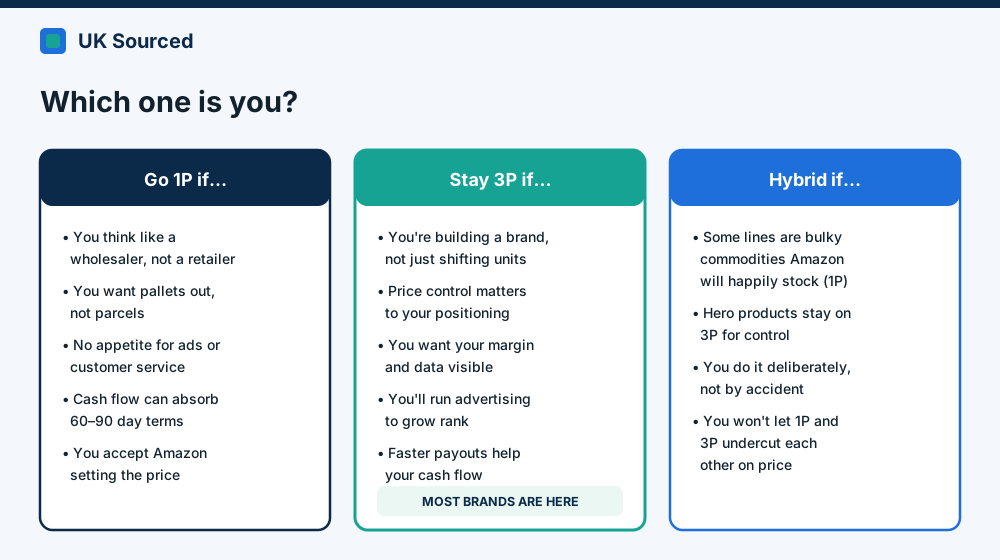 Most brand owners reading this belong in the middle column. Switch only for a reason you can name.
If the invite lands in your inbox
Don't reply "yes" to the flattery. Ask the awkward questions first. What wholesale price would Amazon expect — and does it survive their chargebacks? Who sets the retail price? What happens to my existing 3P listings? Model the net, not the gross, and do it before you sign anything.
Weighing up a Vendor invitation, or trying to work out whether a hybrid setup would help or hurt? That's exactly the sort of thing we pick apart for brands day to day — drop us a line at enquiries@uksourcedltd.com and we'll give you a straight read on your numbers.