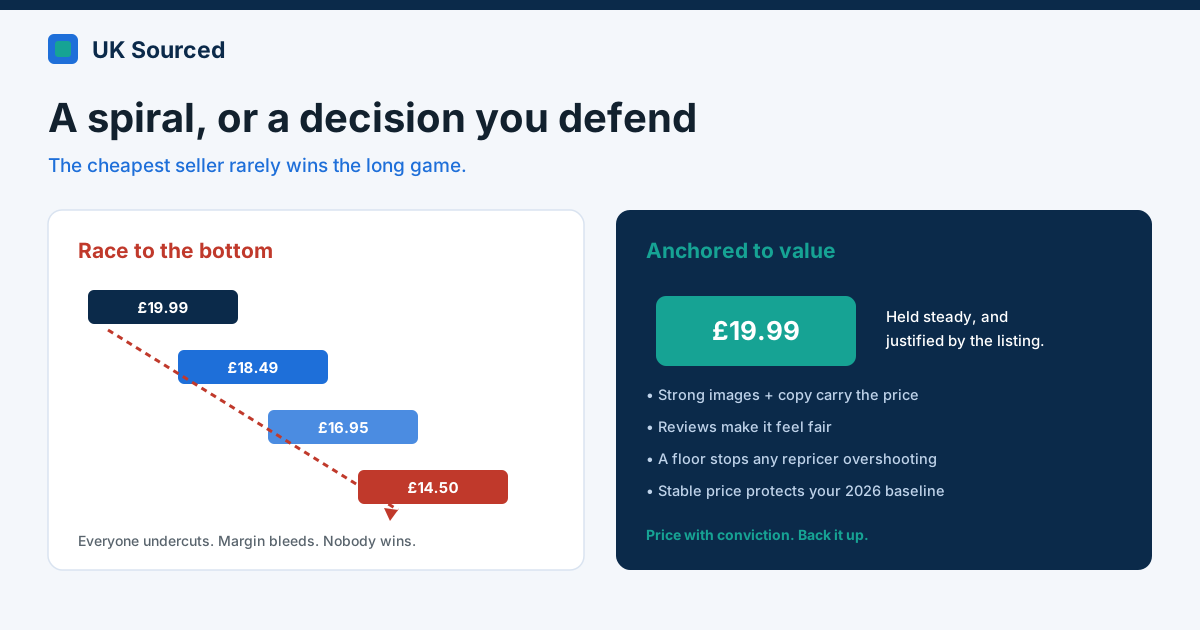
How should you actually price on Amazon?
Racing to the bottom or anchoring to value? Here's how to price on Amazon, when a repricer helps versus torches your margin, and how to test price without losing rank.
A repricer can lose you money faster than almost any other tool on Amazon. It can also be the smartest switch you flick all year. Which one it turns out to be depends entirely on what you sell and who you're up against — and that's the bit most pricing advice skips straight past.
So let's not skip it. There are really two pricing worlds on Amazon, and the right move in one is a mistake in the other. Work out which you're in first. Everything else follows from that.
World one: you're a reseller
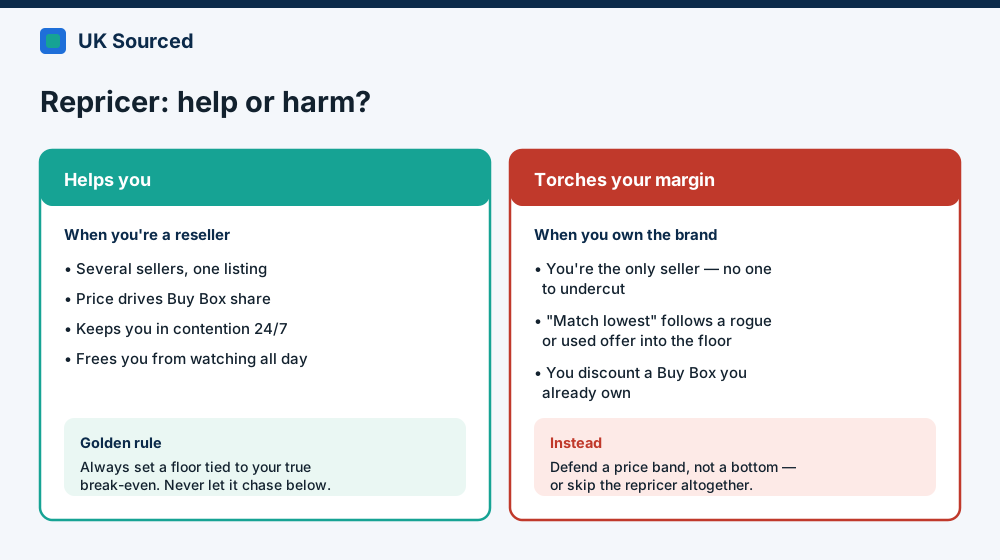
If several sellers share one listing — you're all offering the same branded product — you're in the reseller world. Here, price is a big lever on Buy Box share. Match or beat the competitive price (with strong metrics behind you) and you win the box; drift too high and you vanish from it.
This is where a repricer earns its keep. It watches the competition and nudges your price to stay in contention, around the clock, so you're not glued to a screen. Genuinely useful. But — and this matters — set a floor. A repricer with no floor will happily chase a rival right down to a price where you're paying Amazon for the privilege of losing money. Tie that floor to your true break-even, fees and all, and never let it dip below.
World two: you own the brand
If you're the only seller on your listing — it's your brand, your product — the reseller logic doesn't apply, and copying it will quietly hurt you. There's nobody to undercut. Racing your own price down doesn't win a Buy Box you already own; it just trains shoppers to value your product less and hands margin back for nothing.
Here the lever isn't price. It's value. Price is a signal shoppers read before they read a word of your copy. Pitch it too low and plenty of people assume the product's cheap in the other sense. Your job is to justify a healthy price with a listing that earns it — images, copy, reviews, the lot — not to apologise for it with a discount.
 Same tool, opposite outcomes. The reseller wants a repricer. The brand owner usually wants a firm hand and a floor.
The trap: a repricer in the wrong world
We've seen brand owners bolt a repricer onto a listing they solely control, point it at "match the lowest offer," and wonder why their margin evaporated. What happened? A mispriced used offer, or a rogue seller who'd jumped on the listing for a day, dragged the "competition" price down — and the repricer loyally followed it into the floor. Honestly, it's a horrible thing to discover in a month-end report.
If you run a repricer as a brand, it should defend a band, not chase a bottom. Better still, for a single-seller listing, you often don't need one at all.
Price stability is now a strategy, not laziness
There's a new reason to hold your nerve on price: the 2026 pricing rules. Discount below your standard price for more than half of a rolling 90-day window and Amazon can permanently reset your baseline down to that lower number. Constant repricing and endless promotions used to be harmless fiddling. Now they can cost you your everyday price for good.
Holding a steady, well-justified price is a genuine tactic in 2026 — not a sign you can't be bothered to optimise.
How to test a price change without killing your rank
You should still test. Just do it like a grown-up, not a yo-yo.
- Change one thing at a time. If you move price and rework the images the same week, you'll never know which did what.
- Give it room — two to four weeks. Amazon's algorithm and your shoppers both need time to react. Judging a price after three days tells you nothing.
- Watch the right numbers. Not price in isolation — track units, sessions and conversion together. A higher price that holds conversion and lifts margin is a win, even if units dip slightly.
- Don't bounce it around. Frequent swings confuse the algorithm, unsettle repeat buyers, and — again — risk that baseline reset.
- Respect the floor and the reset line. Know the price below which you lose money, and the price below which you'd trigger the 90-day reset. Test between them, not through them.
Our honest opinion, after years of watching this: the cheapest seller rarely wins the long game. The brands that do well price with conviction, back it with a listing that makes the number feel fair, and stop treating a discount as the answer to every wobble.
Not sure whether your listings want a repricer, a floor, or simply a steadier hand — or worried a past run of discounts has already dented your baseline? That's exactly the sort of thing we untangle for brands. Drop us a line at enquiries@uksourcedltd.com and we'll take a proper look.